
Fragrance families group related impressions. They support conversation but cannot replace smelling or deciding for yourself. A scent can cross several families and change during wear. Use the labels to identify both a broad direction and the particular quality you want.
Begin with four directions
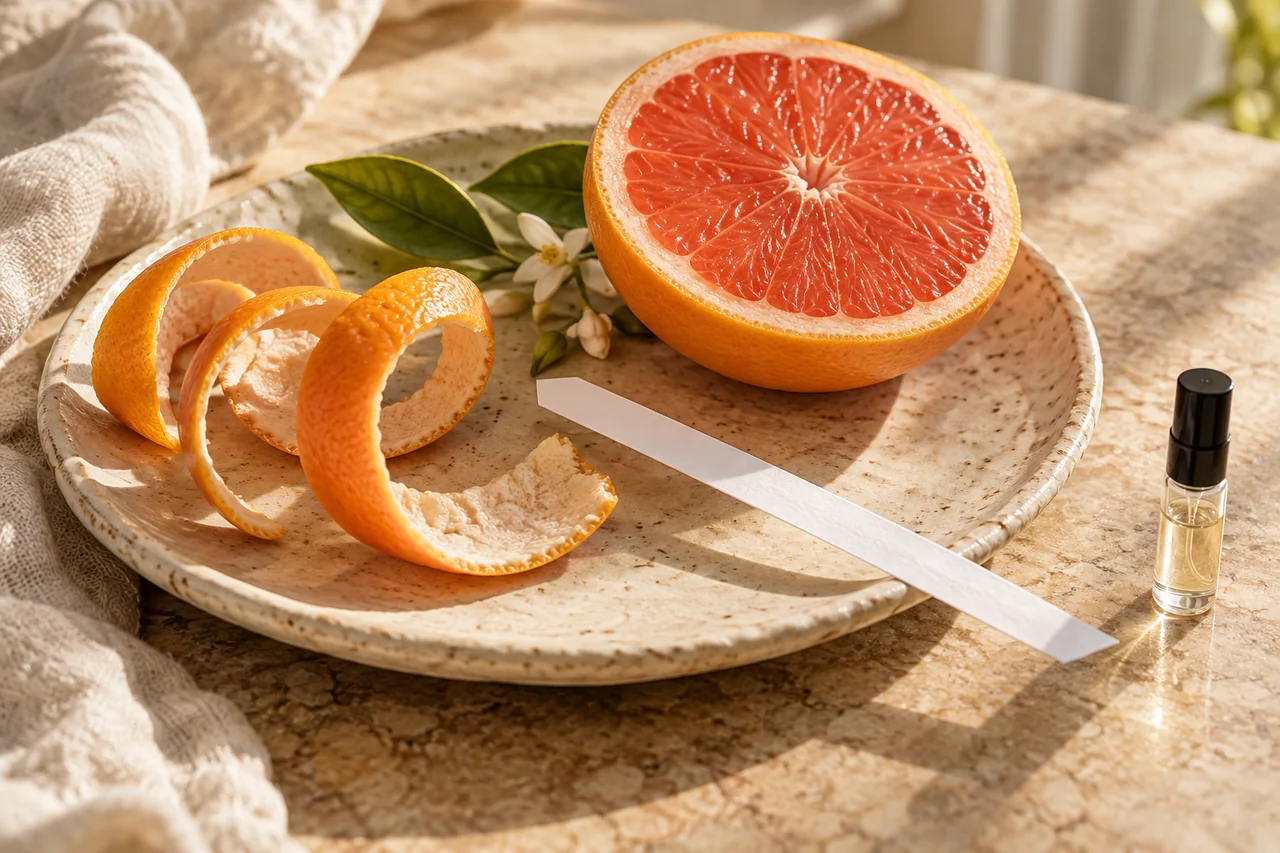
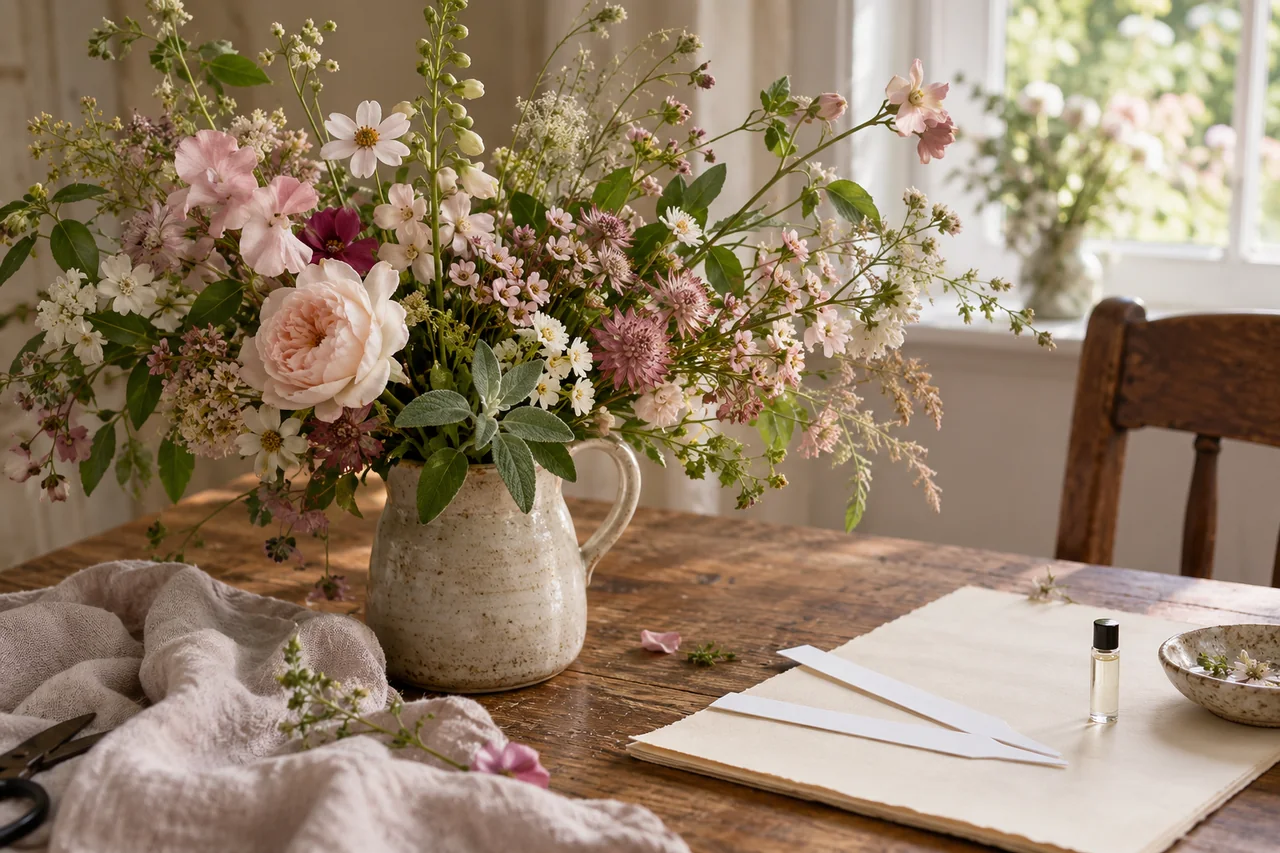
Fresh may suggest citrus, leaves or airy water; floral suggests blossoms; woody may feel dry, soft or dark. Warm can describe balsamic, sweet or spicy impressions. This is a practical starting map, not an official universal classification. Two words, such as fresh-woody, often communicate more than one.
Separate family from other qualities
Powdery, sweet, smoky and soapy can occur across families. A floral scent may be dry and a woody one sweet. Instead of rejecting every floral after one sugary sample, specify “floral without creaminess” or “wood without strong smoke”. That makes both comparisons and shop conversations more precise.
Do not read notes as recipes
Sea, cashmere, leather and white flowers may describe artistic scent ideas. Images and note lists do not establish ingredients or quantities. Ingredient questions require product labelling. With known allergies, do not infer suitability from a family; check actual information and seek professional advice where needed.
Draw a personal map
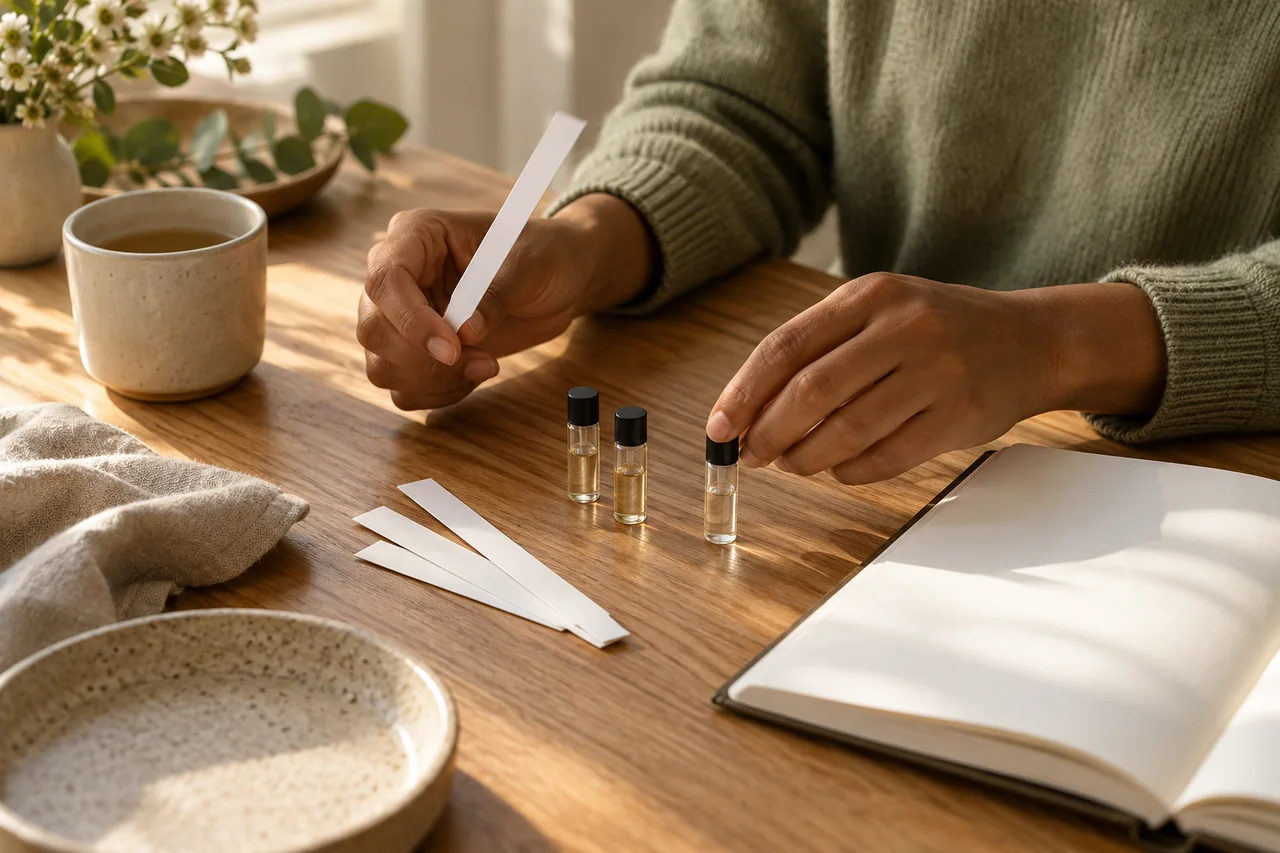
Draw one axis from fresh to warm and another from dry to sweet. Place only samples you have smelled, using approximate positions. Add their suggested families. Two rose scents may sit far apart, while green and citrus samples feel close. This records your perception, not a scientific classification.
Explore neighbouring directions
For more depth in a fresh scent, try fresh-woody. For less sweetness in floral, try a dry or green interpretation. Change one major feature so you can understand the result. Turn the notes into an ordinary sentence before adding technical terms. Online filters guide a sample search; they cannot guarantee a purchase will suit you.
Frequently asked questions
Do all systems use the same families?
No. Sellers and teaching systems divide groups differently. Read the accompanying descriptions rather than assuming a label has one fixed meaning.
Are some families only masculine or feminine?
You may explore any direction. Retail gender categories can help some shoppers navigate, but they do not prescribe personal taste.
Questions and experiences
Share a question or a useful experience about this topic. Every contribution is checked before publication. Comments may be written in different languages.
Loading reader contributions…
Opening the form sets a necessary session cookie. No email address is required. Publication is subject to moderation and is not guaranteed. For deletion requests: Contact