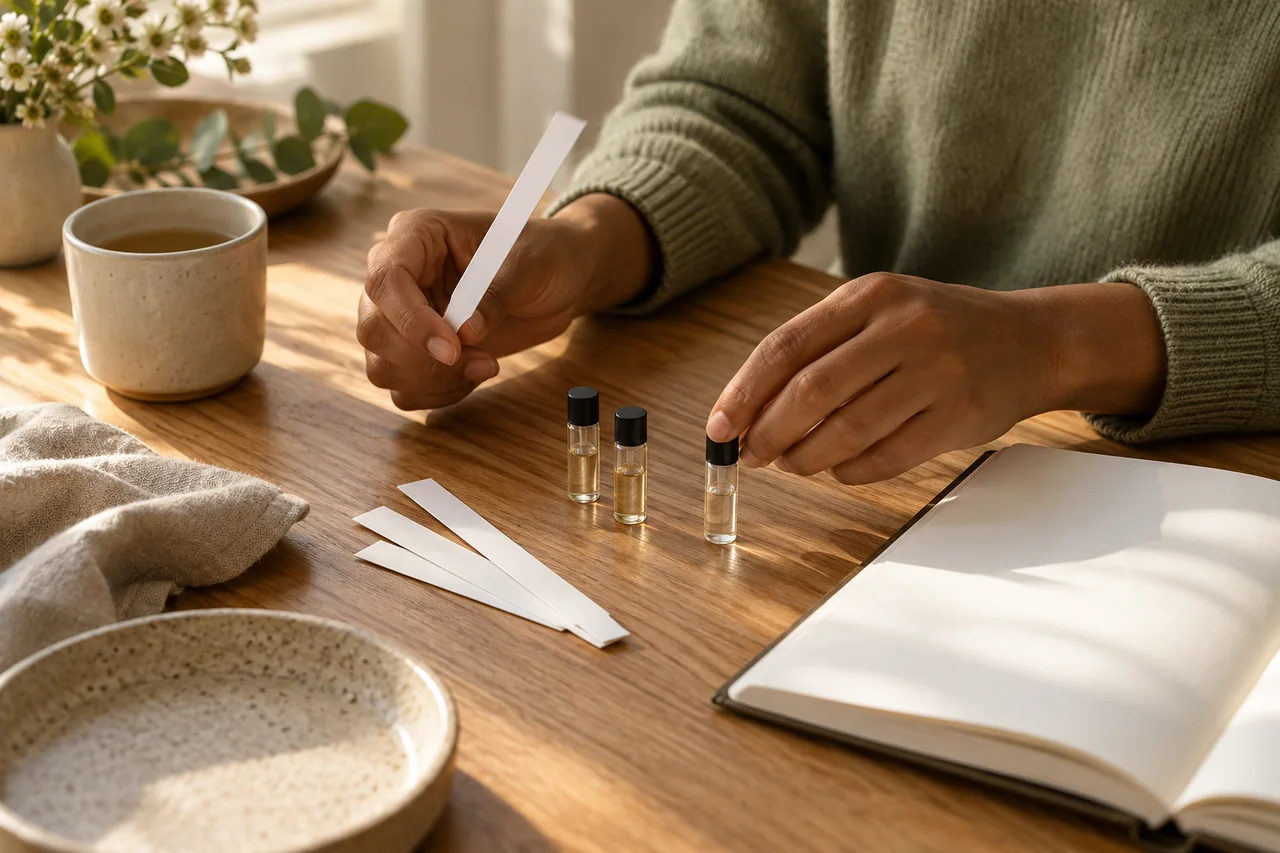
A fragrance need not match hair colour or a personality category. It should appeal to you, suit the intended situation and feel pleasant to wear. A short search profile and a few samples are more useful than a long shopping list.
Give the fragrance a job
Write when you want to wear it, such as quiet evenings or occasional restaurant visits. Add a boundary: little sweetness, restrained presence or no large bottle. Consider shared spaces and fragrance-free rules. A scent may be lovely but suitable only for limited situations.
Use your own scent memories
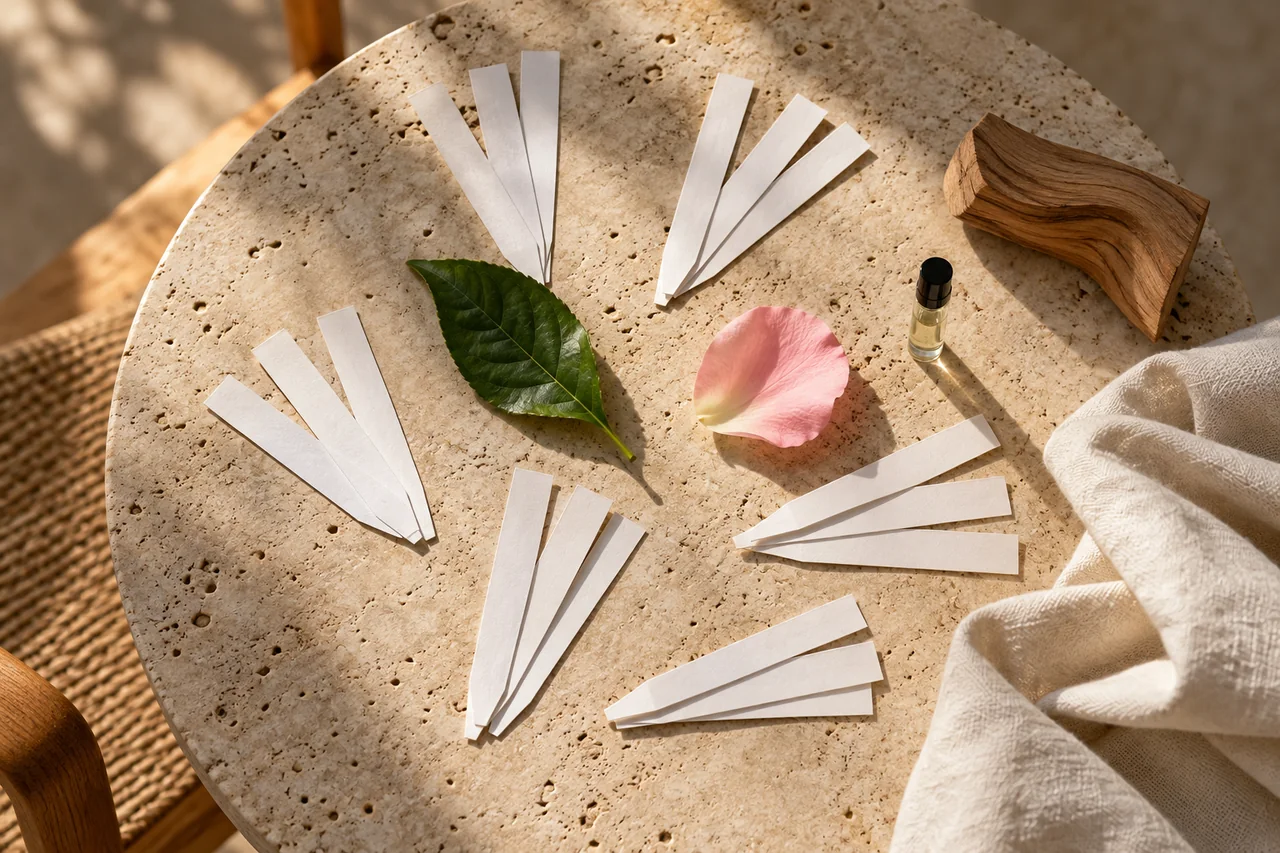
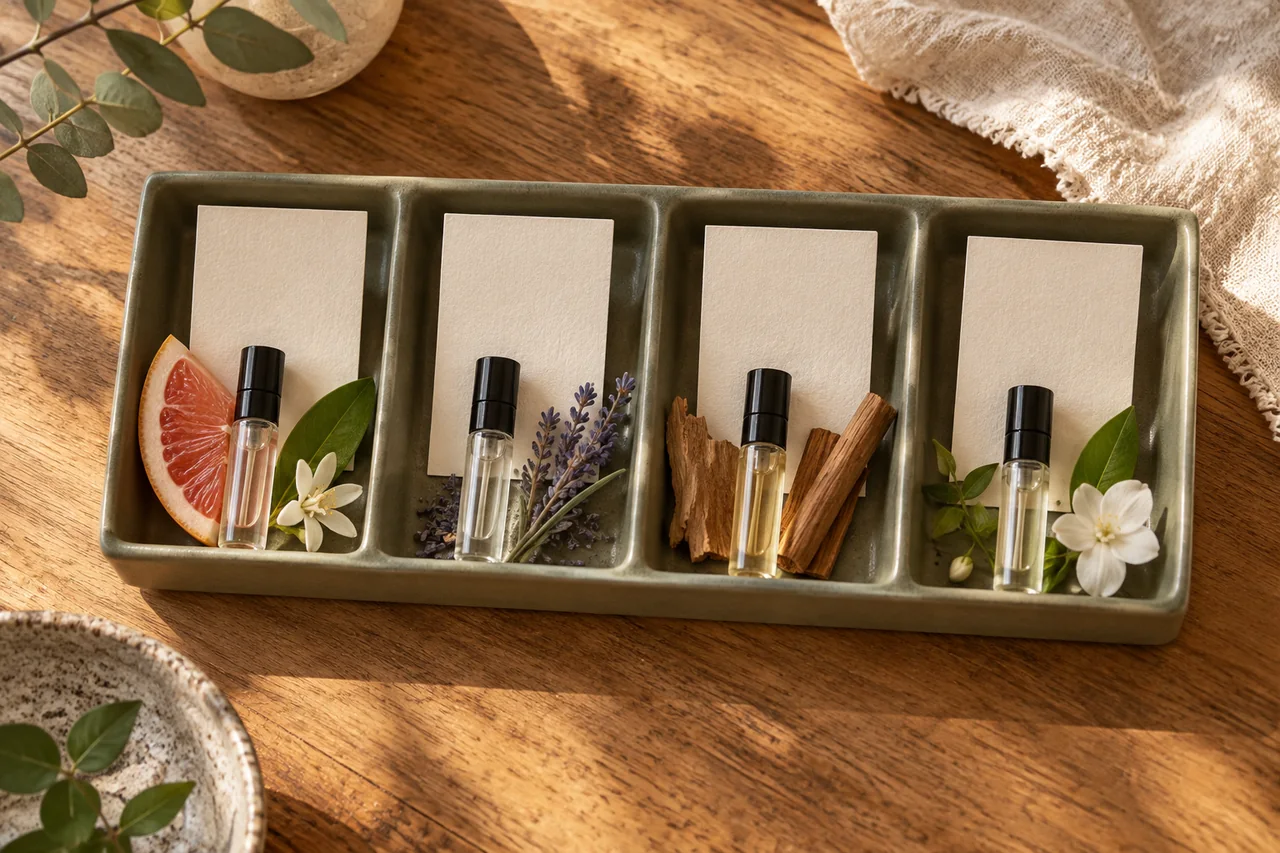
List three impressions you like and three you dislike: grapefruit, dry wood, fresh linen, syrup or harsh cleaner. Personal language is sufficient. A memory only suggests a direction; a marketed rose note may be fresh, dark or sweet. Ask for different interpretations rather than assuming a named ingredient guarantees enjoyment.
Choose a small comparison
Try a close match, a neighbouring style and a deliberately different direction. Properly labelled samples from a traceable source are enough. Keep names, versions and instructions together. Avoid anonymous decants of unclear origin. Uncertainty may call for another wear, not an ever-larger sample collection.
Observe ordinary wear
Ask what it recalls, how present it feels, how it changes and whether you still want it later. Follow product directions and record an early, later and final impression without continuously sniffing. These are observation points, not longevity promises. Stop if the experience becomes unpleasant.
Decide, then refine
Mark each candidate “I like it”, “it fits the task” and “I would wear it again” with yes, no or unresolved. An unresolved answer deserves another trial. Compare the total price of a useful size, not only cost per millilitre, and wait overnight. If all fail through sweetness or presence, change that feature next time; appearance, age and gender need not guide the search. Using an existing scent or choosing none remains valid.
Frequently asked questions
Do I need a fixed fragrance type?
No. A provisional preference profile can change with your situation and taste.
Should I ask other people for favourites?
Yes, for ideas, but also ask what they enjoy about them. The characteristic is usually more useful than the product name alone.

Questions and experiences
Share a question or a useful experience about this topic. Every contribution is checked before publication. Comments may be written in different languages.
Loading reader contributions…
Opening the form sets a necessary session cookie. No email address is required. Publication is subject to moderation and is not guaranteed. For deletion requests: Contact