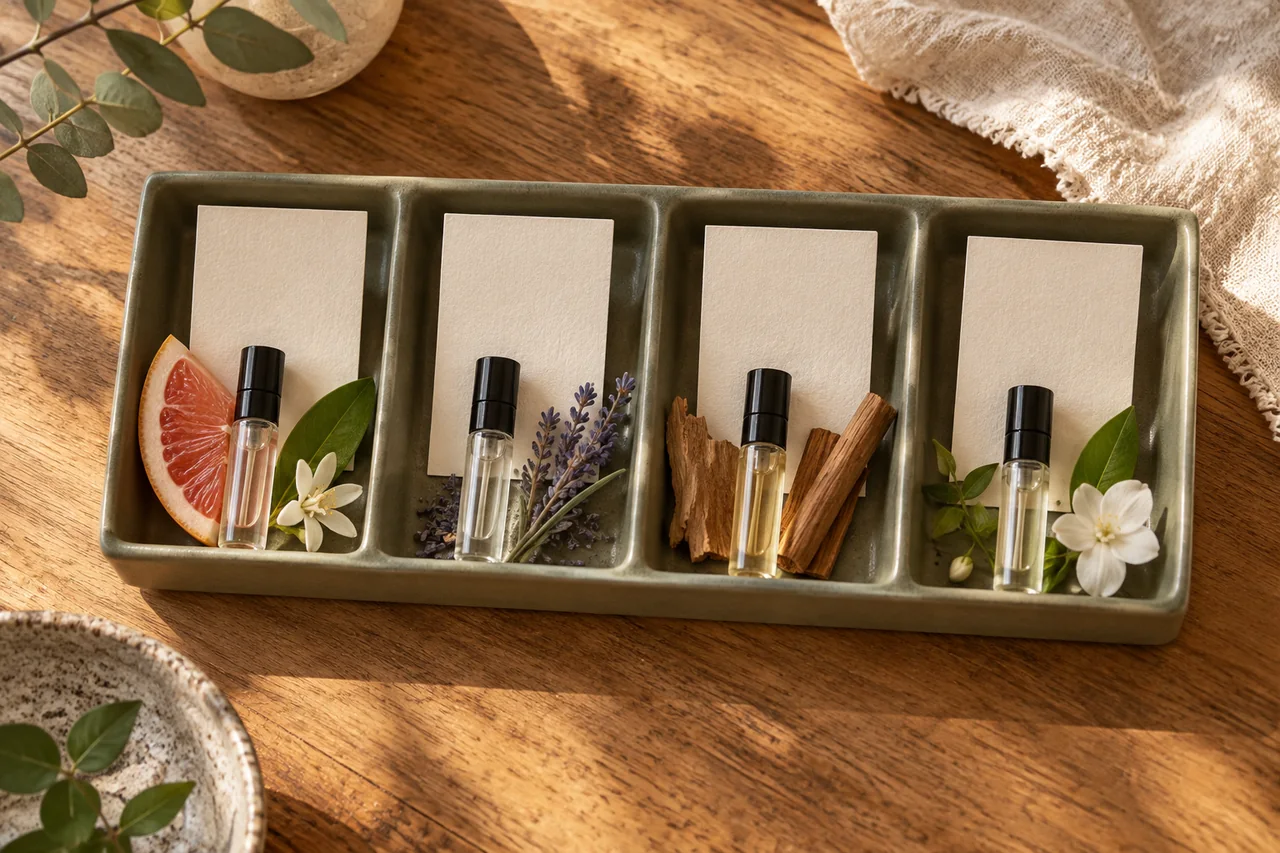
A sample box can help find a fragrance, but it can also become another shopping habit. Ask what each round clarifies rather than how many scents you have tried. A paper comparison table works without an app, registration or sharing personal information online.
Create a manageable round
For example, compare dry and creamy woods instead of an unrelated assortment. Record full name, version, source and available product information. Keep samples closed, away from food and with their labels. If older remnants have unknown age or storage, record that uncertainty rather than treating it as normal product behaviour.
Draw a useful table
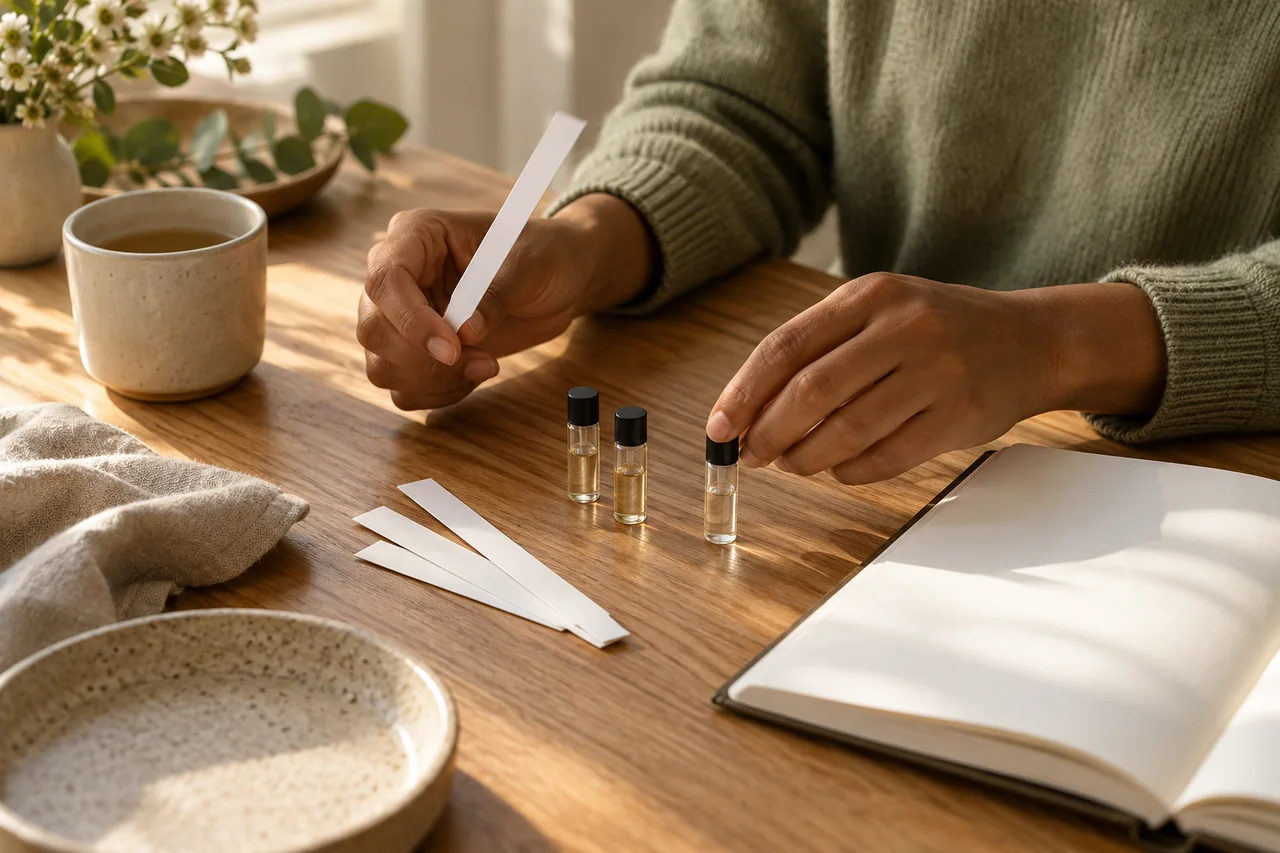
Give each candidate columns for first impression, later impression, intended use and open question; optionally add the total cost of the smallest useful size. Begin with suitable, unclear or unsuitable rather than a total score. A beautiful scent with no likely use is not automatically a good purchase. Every unclear answer should specify the next observation needed.
Compare similar days
Use reasonably similar everyday circumstances. Do not compare a hectic shopping trip with a quiet Sunday as if only the perfume changed. Keep quantity and other scented products broadly consistent and note major differences. Repeat only the candidate with a meaningful unresolved question, not the entire box automatically.
Use exclusions and tie-breakers
“Too sweet later” is more informative than “bad”. Repeated exclusions help refine the next search and are personal fit judgments, not universal quality claims. For two favourites, ask which you would actually wear next week, which adds something different or which doses more easily. If equal, lower total expense can decide; finishing samples before buying is also reasonable.
Close the round
Choose buy, reassess or do not buy. For reassessment, state exactly what remains unknown rather than leaving an unlimited maybe list. Keep useful preferences, exclusions and exact versions. Your own consistent notes are more relevant to your needs than collecting large numbers of other people’s ratings.
Frequently asked questions
Should I compare samples blind?
You may cover names while smelling if helpful, but retain reliable identification and labelling. Blind comparison is an optional method, not proof of quality.
Is every sample box good value?
Only if its contents fit your question and its source and labels are clear. A low per-sample price does not make unsuitable samples useful.

Questions and experiences
Share a question or a useful experience about this topic. Every contribution is checked before publication. Comments may be written in different languages.
Loading reader contributions…
Opening the form sets a necessary session cookie. No email address is required. Publication is subject to moderation and is not guaranteed. For deletion requests: Contact