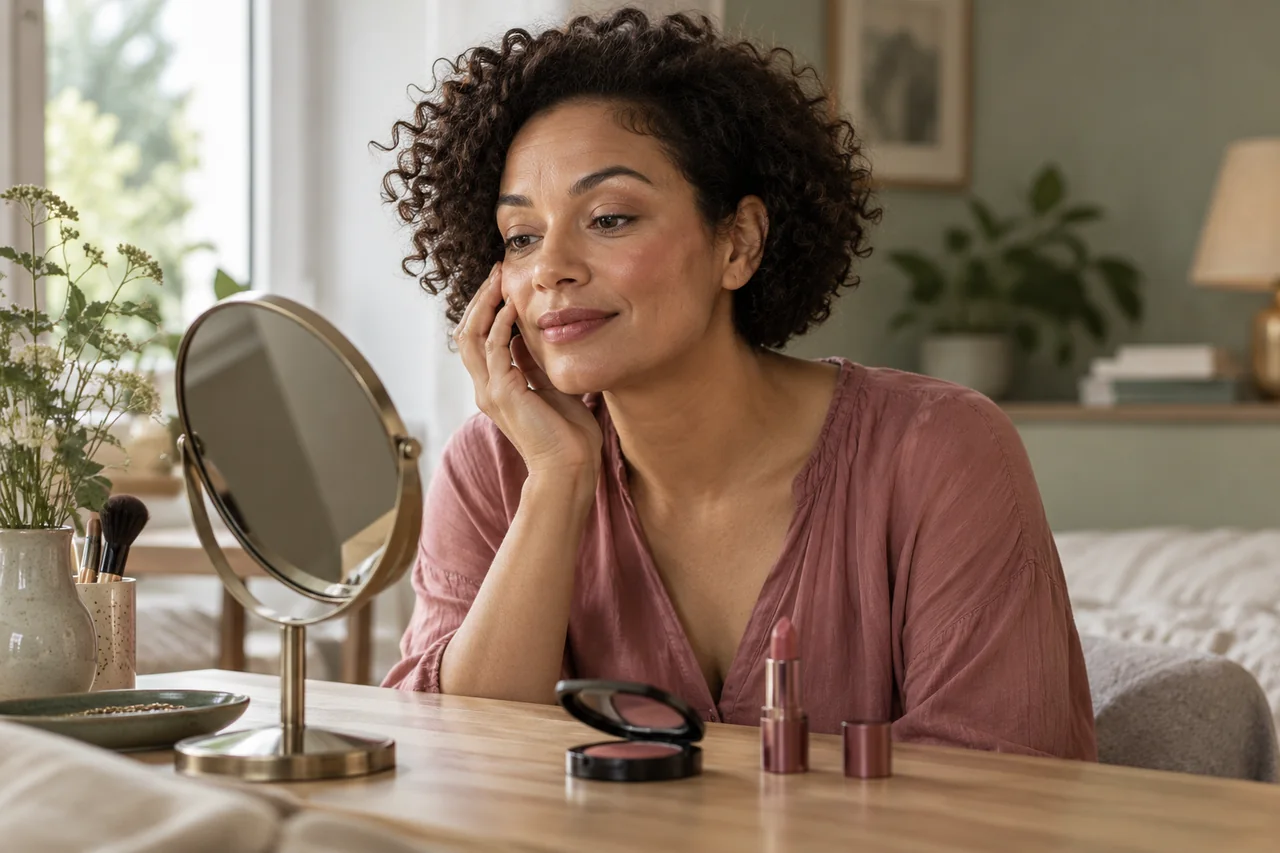
Summer palettes are often described as cooler and muted. Rose, mauve and taupe can suggest a quiet look without assigning you a definite type. They come in many depths and textures and are not reserved for one skin colour.
Use a familiar rose as a reference
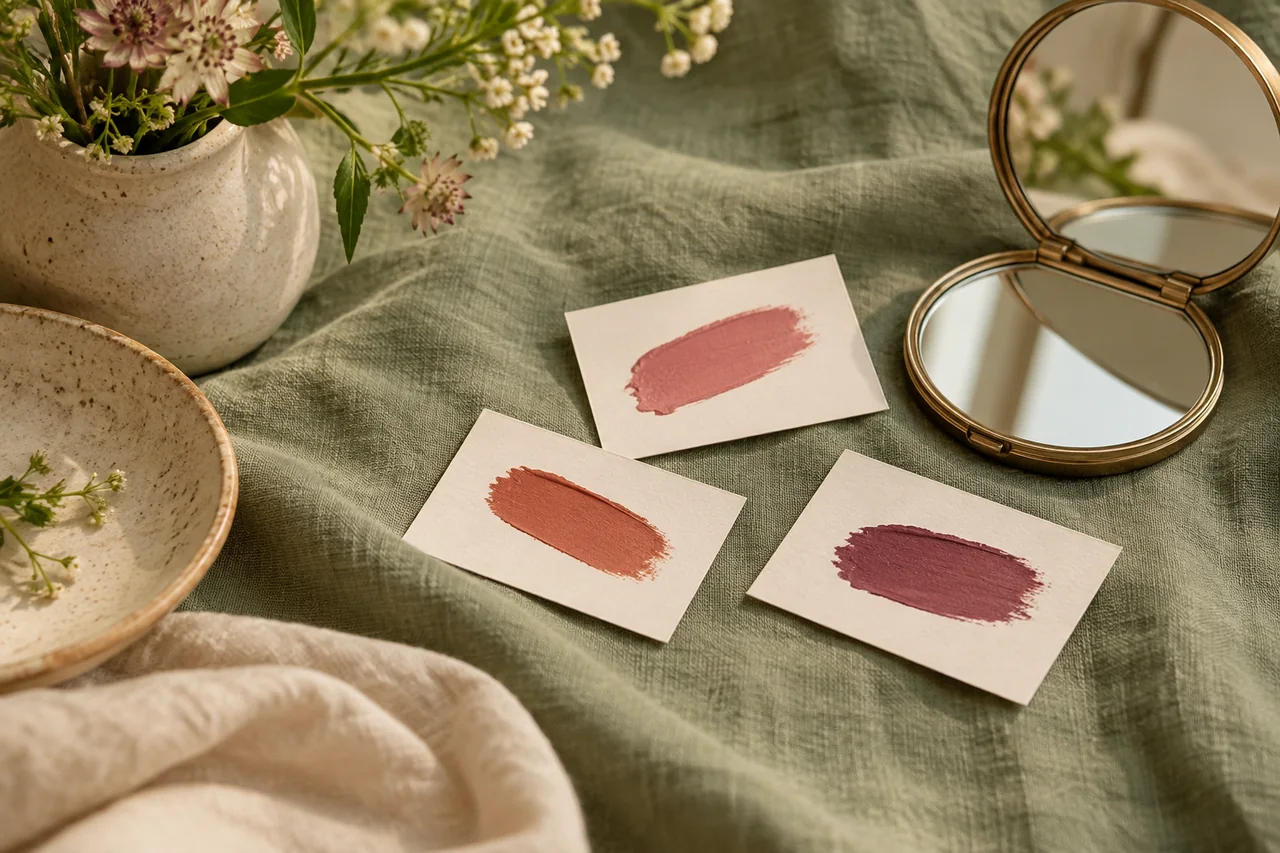
Compare it with a slightly cooler or more muted shade at similar coverage. Rose can mean beige, violet, brown or vivid pink. A sheer formula combines with your own lip colour. Decide whether you want a quiet transition or a visible outline rather than assuming both require the same product.
Look for the right depth
A deeper rosewood or muted berry may create the softness on deeper skin that a pale rose creates elsewhere. If a product appears whitish, try a deeper member of the family before rejecting cool shades altogether. Amount and the contrast with your own colouring matter more than the pan.
Choose one taupe carefully
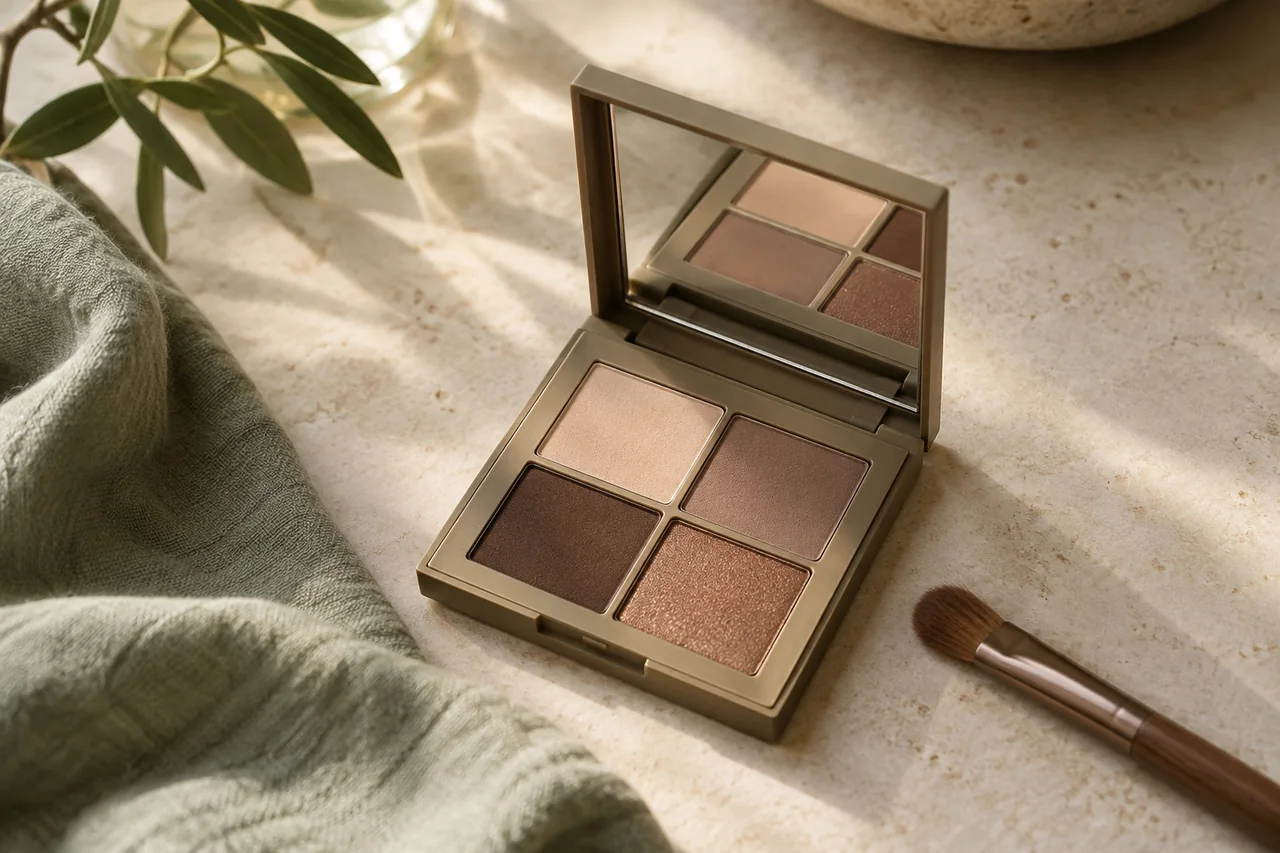
Taupe is not a precise grey–brown standard. Some shades lean warm brown, cool grey or violet. Start with one for a soft lid area or narrow accent. Check open eyes and glasses; a browner version may soften a severe-looking grey, or a rosy-grey may replace a brown you find too warm.
Assess the complete combination
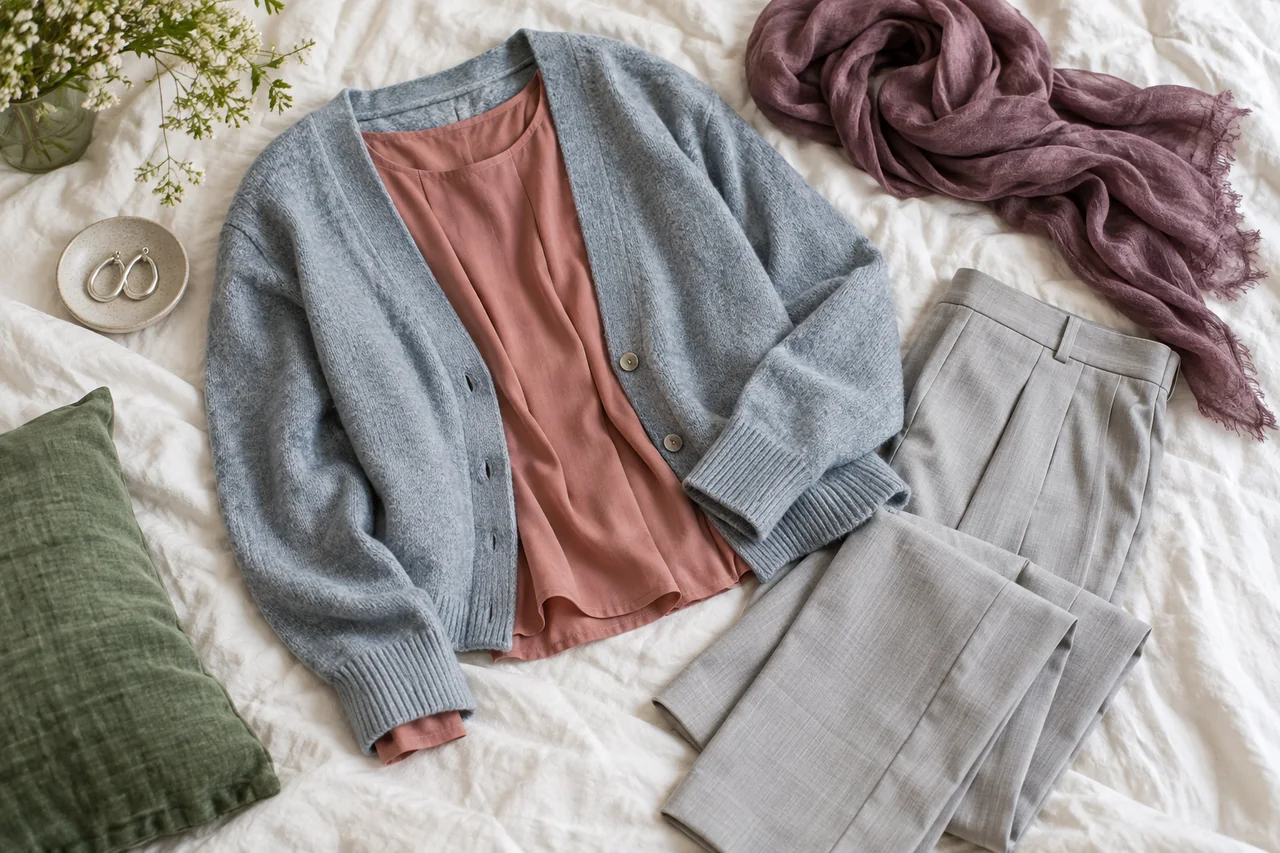
Try sheer rosewood lips, a little muted rose blush and soft taupe, first with grey-blue clothing and then cream. Describe how they connect. If the look lacks focus, strengthen just the lips or try clearer raspberry rather than intensifying every area together.
Test a real day
A matte colour may appeal but feel inconvenient; a glossy one may change after meals. Record handling separately from shade and decide whether you want to repeat or repair it. A warmer favourite can remain alongside muted colours. A useful personal palette need not reproduce a printed seasonal card exactly.
Frequently asked questions
Is black excluded?
No. A black line can be an intentional contrast. Compare grey or brown at a similar width if you want a softer effect.
Must blush be cool?
No. Begin with what you enjoy and compare a rosier alternative. Lips, coverage and clothing are more useful evidence than a rigid label.
Questions and experiences
Share a question or a useful experience about this topic. Every contribution is checked before publication. Comments may be written in different languages.
Loading reader contributions…
Opening the form sets a necessary session cookie. No email address is required. Publication is subject to moderation and is not guaranteed. For deletion requests: Contact