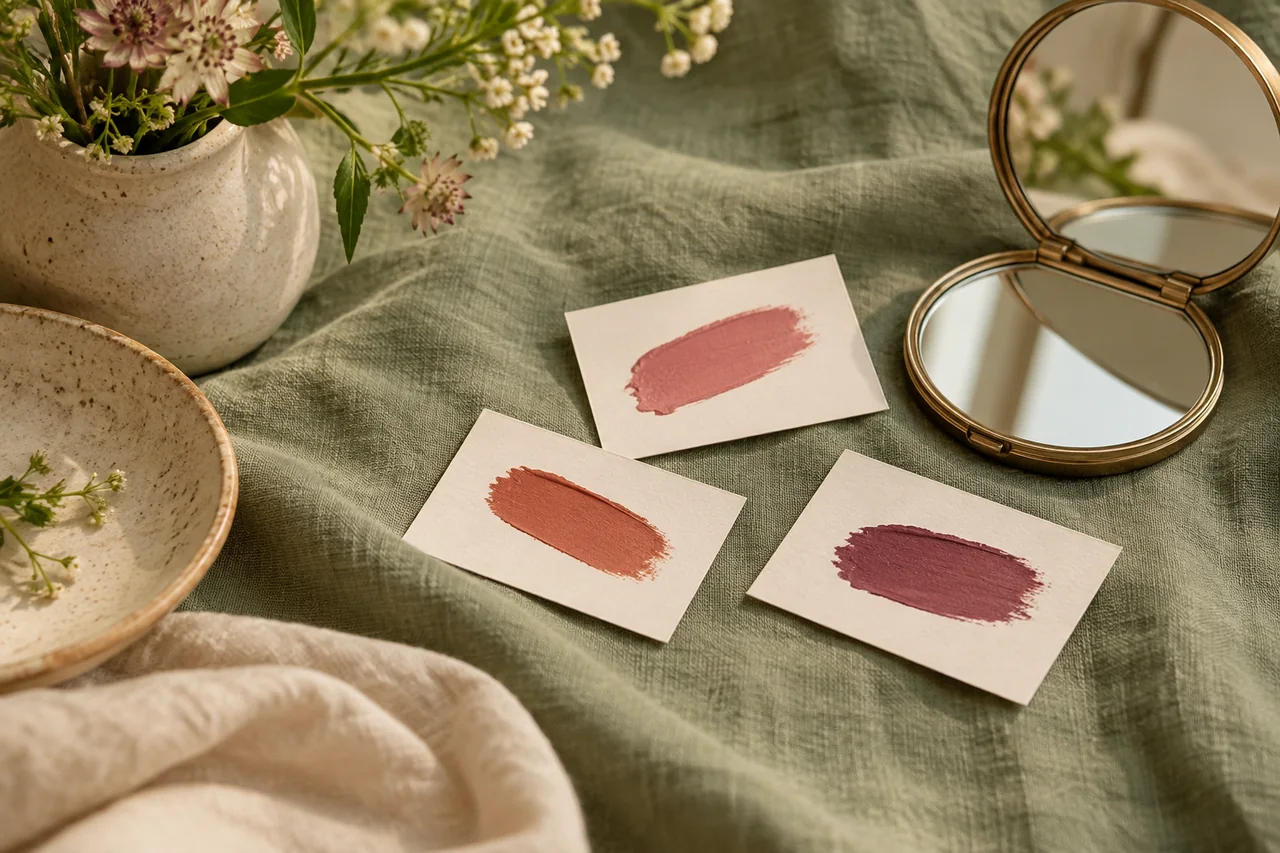
You can choose make-up directly from your preferences, existing products and daily life. A useful palette is not an objectively correct colour label: it is a set of effects you can describe and repeat.
Describe your starting point
Choose a lipstick or blush you actually use and separate why: colour, easy application or habit. Simple words such as medium rose-brown with soft shine are enough. Compare one existing alternative. If starting from nothing, choose one product type and a specific aim rather than buying a complete face at once.
Compare depth first
Try related colours at different depths and decide between a soft transition and a clear accent. A pale lipstick can stand out strongly against natural lips; a darker shade may blend quietly. Describe the product-to-skin relationship neutrally, rather than judging your face as wrong.
Explore warmth, then intensity
Once depth is clearer, compare warmer and cooler versions at a similar level. Next compare clear and muted colours. Pale coral and dark plum change too many factors at once. Use existing products, adjusting amount carefully; record an unresolved comparison for later rather than buying a full colour wheel.
Add texture and ordinary wear
Now consider matte, creamy and glossy surfaces. A colour may appeal while its handling does not. Wear a promising combination through meals and routine hours, noting whether you want to touch it up. This is personal use experience, not a standardised product test; an event look may reasonably take more effort.
Assign three practical roles
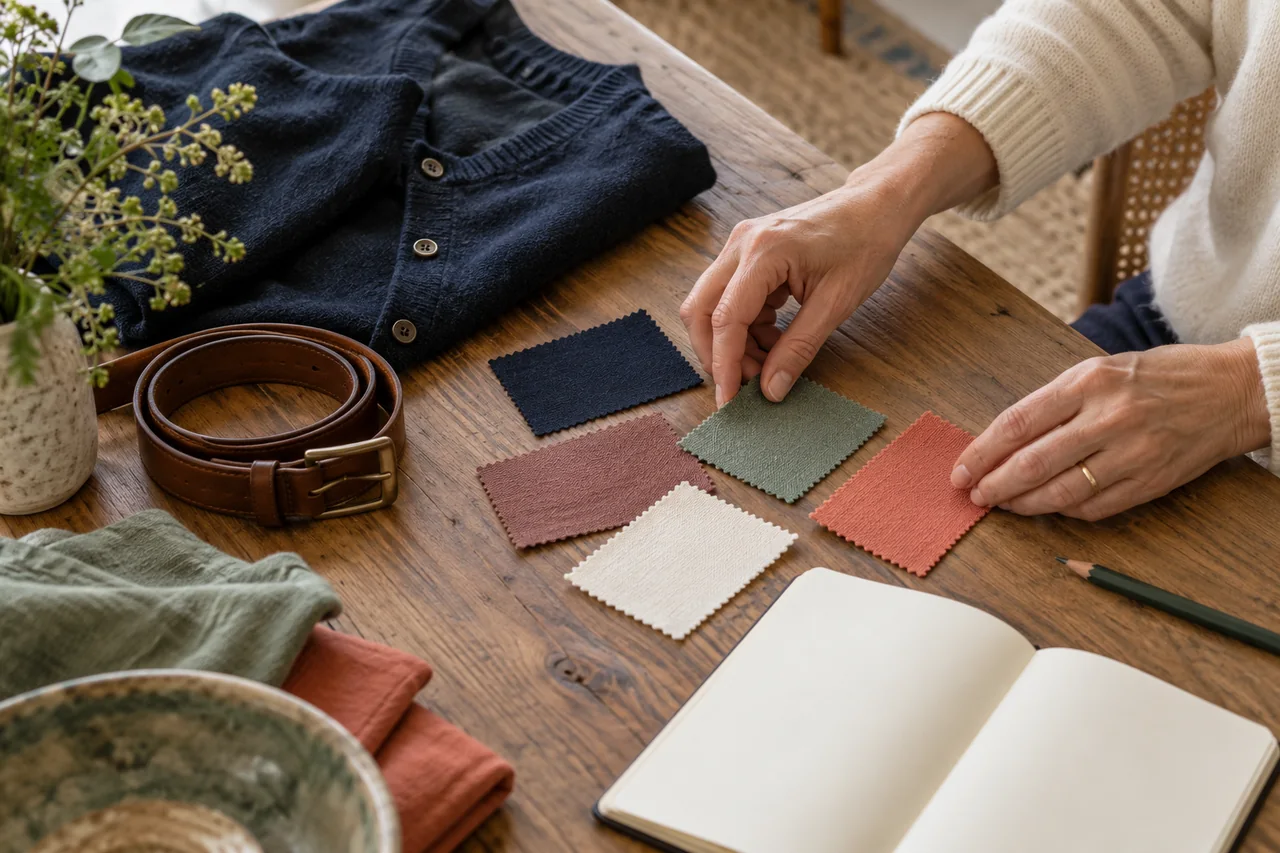
You might want a dependable everyday accent, a stronger version and an occasional playful colour. Two products can sometimes fulfil all three. Check clothing and usual light, keep private notes without uploading facial photos and buy only when a useful role remains missing. Preferences can change without requiring a new type diagnosis.
Frequently asked questions
Does that make professional colour advice unnecessary?
Not necessarily. Personal help may make comparisons easier. A useful consultation explains observations and respects your preferences instead of only assigning a label.
How long should comparison take?
Use several short trials on ordinary days. Two or three genuinely worn combinations with notes usually reveal more about practicality than one large make-up session.


Questions and experiences
Share a question or a useful experience about this topic. Every contribution is checked before publication. Comments may be written in different languages.
Loading reader contributions…
Opening the form sets a necessary session cookie. No email address is required. Publication is subject to moderation and is not guaranteed. For deletion requests: Contact