
Skin depth does not prescribe what a face may wear. What matters is how a product stands out beside skin, lips, hair and clothing. A pale shade can be conspicuous while a deeper one blends quietly.
Compare depth independently
Two reds may have very different depths, while brown and berry can be similarly dark. Start with related colours in different depths under comparable light and with the same top. Notice what catches attention first and whether that is your aim. Quiet and stronger looks can both belong in your palette.
Recognise a pale base
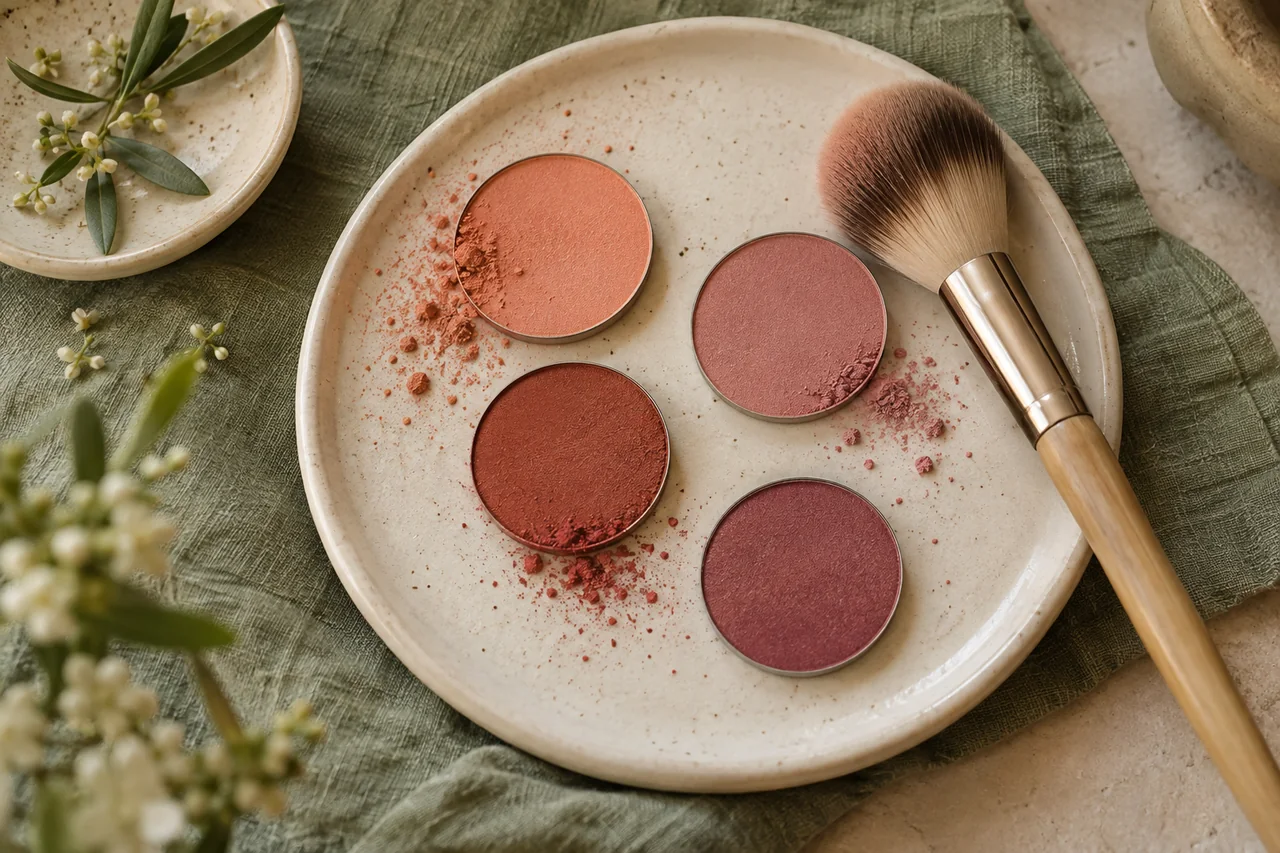
A blush that looks vivid in its pan can leave a mainly pale patch on skin. Compare coverage as well as shade. A deeper or sheerer rose may create the desired effect on deeper skin; a thin berry can remain subtle on lighter skin. These are trials, not rules. A different formulation may be easier than endlessly adjusting an unwanted opaque result.
Use the lips as their own reference
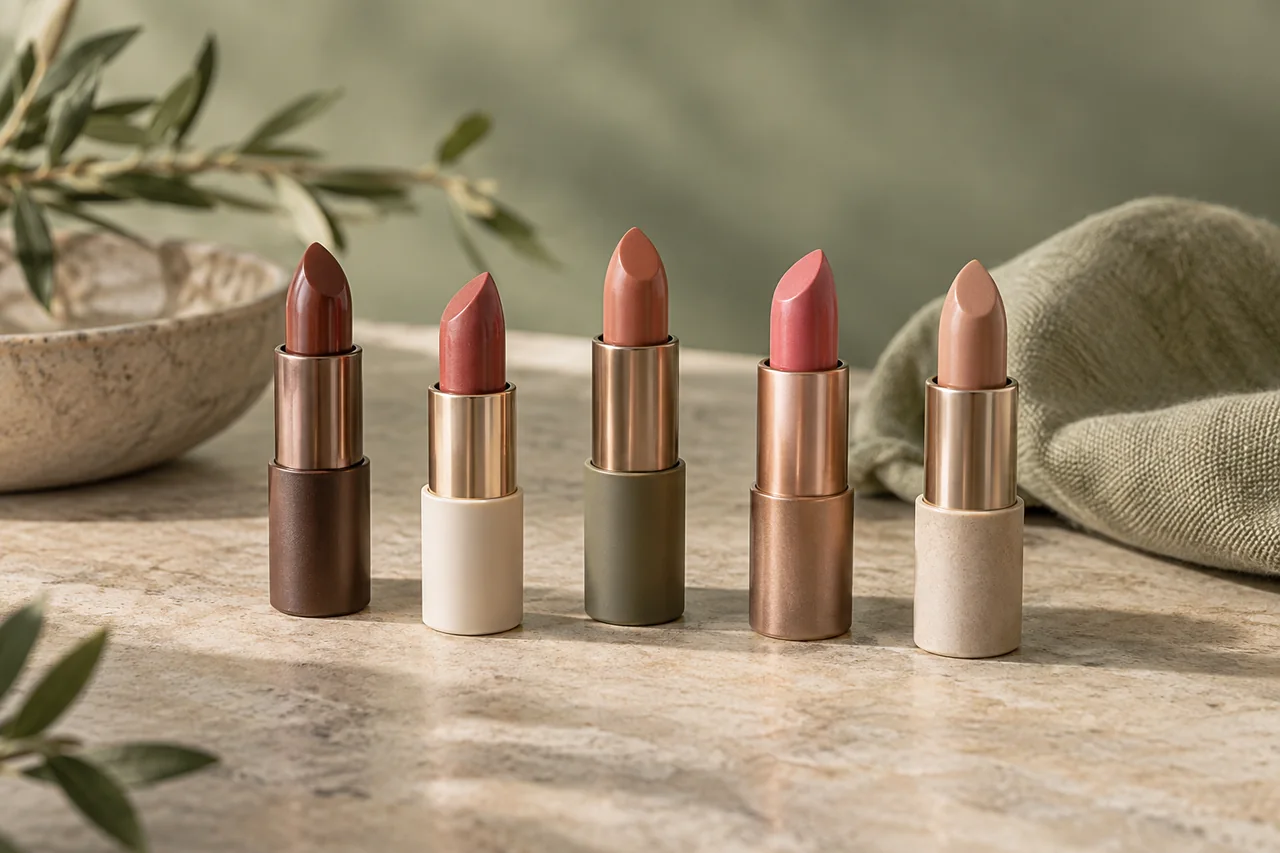
Natural lip colour may differ substantially from surrounding skin. Nude beige therefore cannot be assigned by skin depth alone. Decide whether you want to blend, emphasise or deliberately lighten the lips. A deeper rosewood closer to your natural colour may be quieter than pale beige.
Change the surrounding frame
Compare with and without glasses, then light and dark tops. The same lipstick may appeal strongly with one collar and more thinly with another. A hair-colour change likewise does not automatically require new cosmetics; retest what works before buying.
Keep a practical contrast note
Record quiet, clear and experimental combinations with product, amount, clothing and occasion. Add how easily each repeats. Photos can help if lighting is similar, but digital colour is limited. Replace “my skin cannot wear light colours” with the more useful observation that one pale opaque blush creates more surface than you want.
Frequently asked questions
Does deeper skin require stronger make-up?
No. Desired visibility, product base and amount matter. Restrained or intentionally pale effects are possible at any skin depth.
Can a monochrome photo determine contrast?
It provides a limited light–dark impression but removes colour information. Use it only as an addition to the mirror, real light and wearing experience.

Questions and experiences
Share a question or a useful experience about this topic. Every contribution is checked before publication. Comments may be written in different languages.
Loading reader contributions…
Opening the form sets a necessary session cookie. No email address is required. Publication is subject to moderation and is not guaranteed. For deletion requests: Contact