
Grey blending and complete coverage are different aims. Begin with your existing pattern and decide whether you want to reveal it, soften contrast or conceal it. A pleasing first result should also fit the appointments and care you want afterwards.
Observe your starting pattern
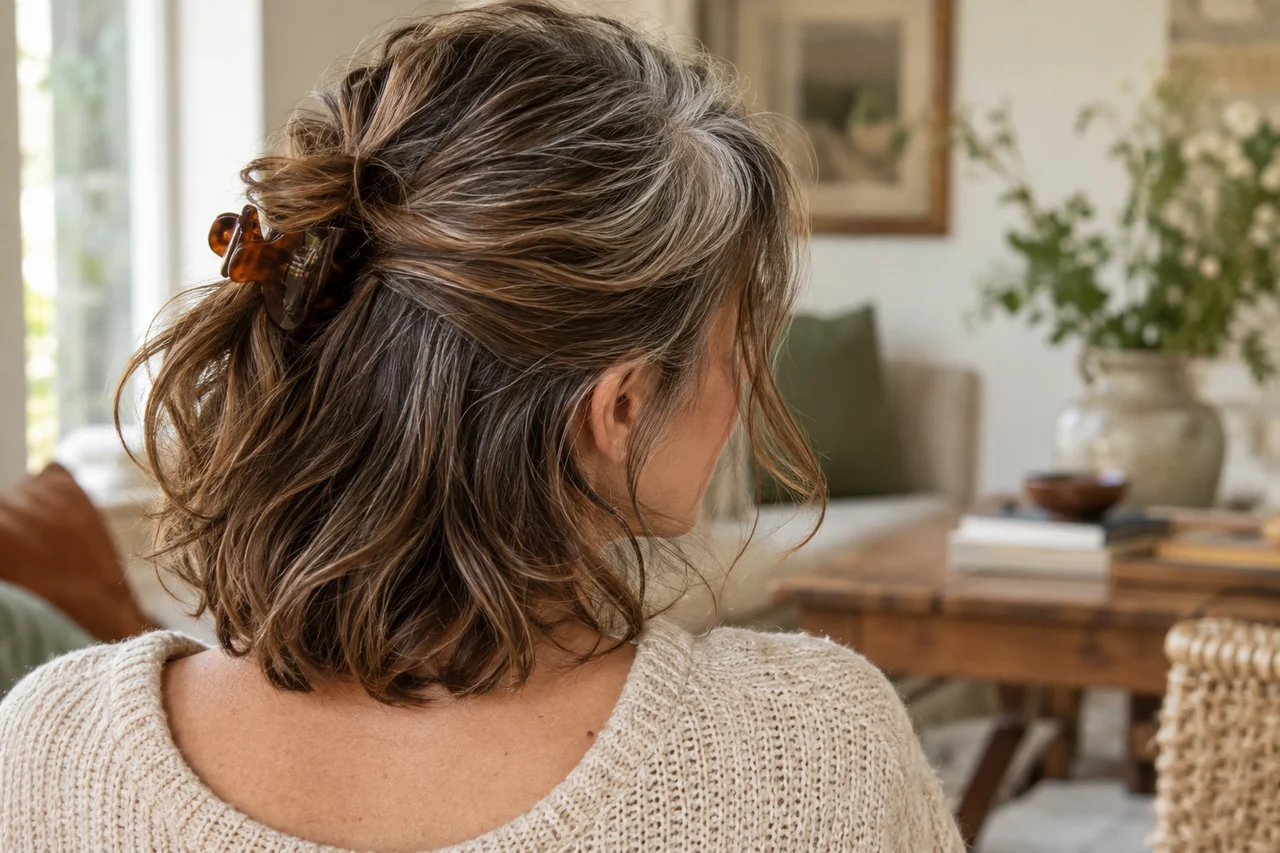
In indirect daylight, compare temples, parting, back and lengths without trying to calculate an exact grey percentage. Describe areas you want to show or connect more quietly. Previously coloured lengths are a separate starting condition that a uniform inspiration image does not explain.
Choose among three aims
Showing grey, softening its transitions and covering it lead to different contrast and upkeep decisions. Define natural in practical terms: visible silver strands or a less noticeable root line, for example. Ask which areas would change and which would remain.
Compare lightness and distribution
Bring one lighter example and another retaining more depth. Review face-framing and outline. Darker accents and extra light sections have different visual roles, and suitability needs assessment. Grey-brown or grey-blonde may be your preferred mix; becoming maximally silver is not compulsory.
Think in stages
Strongly coloured lengths may require several decisions. Ask what a sensible first stage changes and what remains, without expecting an immediate perfect end image. Keeping length may mean a longer transition; cutting more is optional. Coordinate colour and cut so their plans support each other.
Make priorities explicit
Hypothetically, someone wants to show a grey parting while preserving shoulder-length dark-coloured hair. They prioritise length and reject drastic one-session lightening, asking about a gradual reduction in contrast. Professional assessment determines whether and which treatment is appropriate; the example illustrates planning rather than a formula.
Agree an honest care plan
Ask what each product does: cleaning, feel or tone. Grey hair does not automatically require pigmented care. Follow instructions and observe the effect. Clarify signs for refreshing and the work involved. If fewer appointments are the main aim, that must shape the original design.
Frequently asked questions
Is grey blending the same as growing grey out?
Not necessarily. Growing out mainly uses time and cutting, while grey blending adds colour design. They may overlap but are not inseparable or equally demanding.
Can I become entirely silver immediately?
The term cannot promise that. Current colour and treated lengths need assessment, with realistic stages and possible limits explained.
Will I need more colour later?
That depends on the areas treated and effect you want to preserve. Discuss the following months before starting, particularly if low maintenance is the goal.


Questions and experiences
Share a question or a useful experience about this topic. Every contribution is checked before publication. Comments may be written in different languages.
Loading reader contributions…
Opening the form sets a necessary session cookie. No email address is required. Publication is subject to moderation and is not guaranteed. For deletion requests: Contact