
A focused salon brief connects the change you want with the way you actually live. Describe one main aim and one clear limit, using reference images for specific features rather than requesting an entire photographed appearance.
Write the main aim in one sentence
For example, keeping hair away from the face at work without a tight daily ponytail is more concrete than looking modern. Add a boundary: front sections must tuck behind the ears, colour remains unchanged or no extra morning tool. Rank further wishes instead of making every aim equally essential.
Describe the real routine
Record normal drying, products actually used, glasses, headphones, work clothing and exercise. Simple care needs no apology. Explain what already works so a change preserves useful features. An elaborate salon result is of limited value if you do not want to reproduce it.
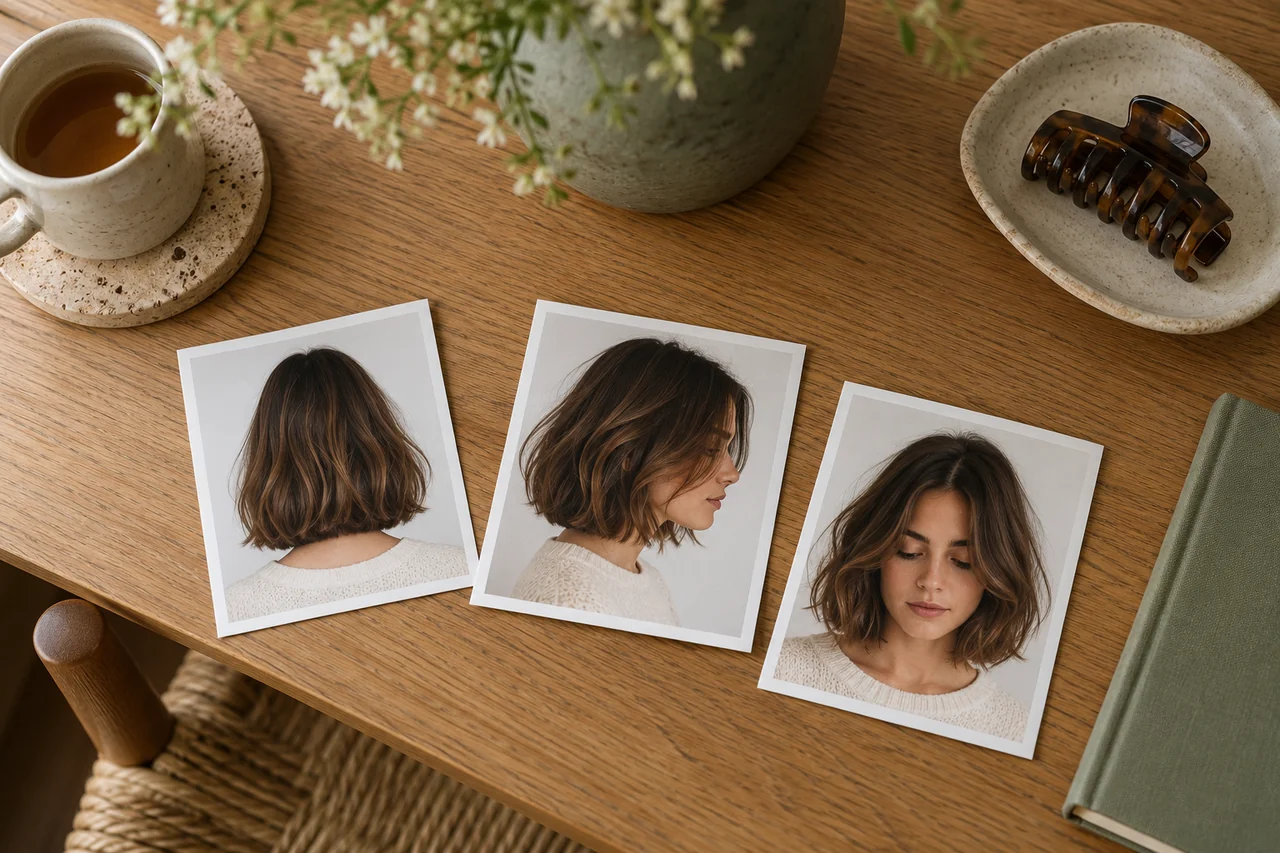
Choose purposeful images
Bring a few clear pictures and explain each desired feature, such as nape or fringe length. Similar structure and styling conditions help. Discuss straightening, waves, lighting or editing that may affect the image. Include your own ordinary-day photo; references support discussion rather than guarantee identity.
Resolve open questions before starting
Ask for the proposed length to be shown and the plan summarised before cutting or colouring. For colour, disclose earlier chemical treatments, discuss a realistic first stage and avoid improvised online mixing recipes. Confirm included services and how additional work is priced. Consultation alone is a valid outcome if plan and budget do not yet fit.
Translate a vague request into functions
Hypothetically, an easy bob request becomes more specific when the person explains daily cycling with a helmet, air-drying and tying back at work. A longer contour may preserve those needs better than the original reference. That is a clarified decision rather than a failed request.
Use the finish as a learning moment
Practise the key movement yourself while questions are possible. Note product types, quantities and technique rather than only a shopping list. Agree observable reasons to return, such as fringe blocking vision, nape shape or regrowth. Give early, specific feedback about an area and a daily situation.
Frequently asked questions
Should I use technical cutting terms?
Only if they express your meaning accurately. A picture and clear contour description may work better. Ask the stylist to explain proposed terms on your actual hair.
What if the stylist advises against my idea?
Ask for the specific reason and an alternative with a similar effect. You may defer the decision if the explanation is not clear enough.
How do I report that the cut does not work at home?
Describe your routine and exact problem area, with a relevant photo if useful. Ask about a small adjustment or technique before assuming the whole style needs replacing.


Questions and experiences
Share a question or a useful experience about this topic. Every contribution is checked before publication. Comments may be written in different languages.
Loading reader contributions…
Opening the form sets a necessary session cookie. No email address is required. Publication is subject to moderation and is not guaranteed. For deletion requests: Contact