
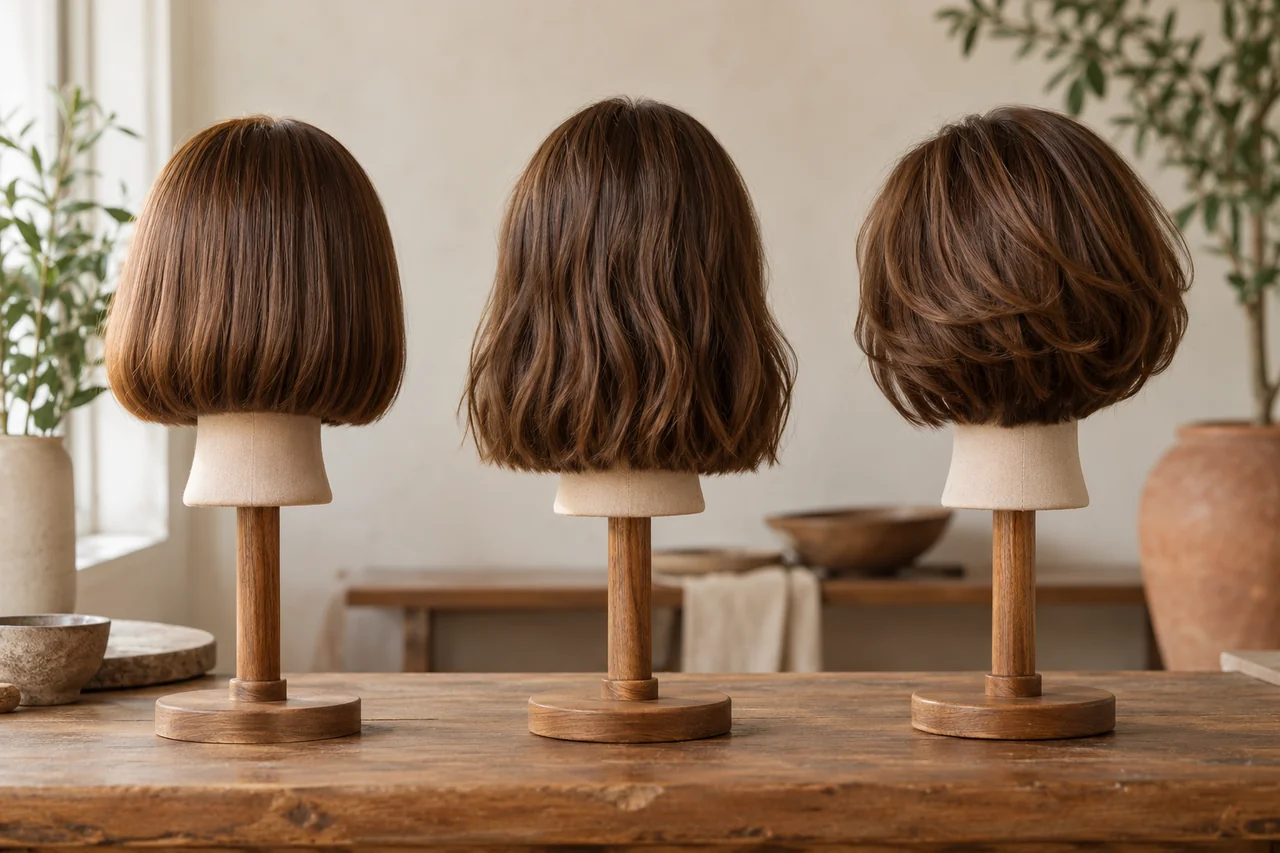
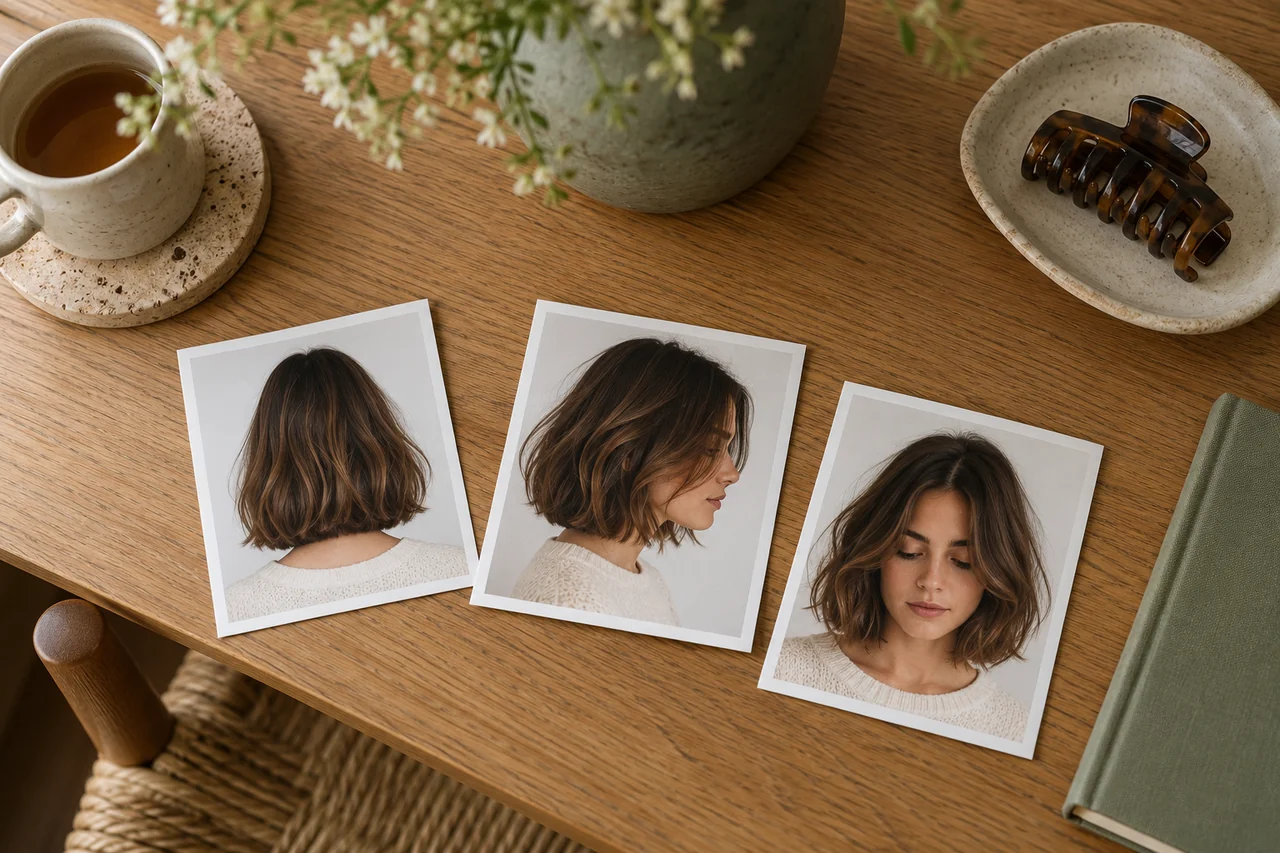
Italian-bob images often show a defined edge with moving ends and a relaxed finish, but the name is not consistently defined. Separate the outline you like from apparent volume and styling effort to find a wearable interpretation.
Identify what attracts you
Compare three saved pictures and mark side width, the closed edge or movement away from the face. Words such as luxurious and effortless do not specify construction. If shine is the main attraction, a styling change may answer the wish without major shortening.
Describe fullness without promising density
A full outline can mean a clearly visible lower edge, not a guaranteed amount of hair. Discuss whether separate shorter pieces should show. Ask what is realistic for your density and usual wear; a styled photograph cannot assess your starting point or promise identical volume.
Choose length alongside movement
Chin-level and lower outlines create different shapes. Ends touching shoulders or collars may move differently from a studio image. Show your everyday hair and agree on dry visible length and the shortest front section. A more gradual first step can leave room to learn the shape.
Test parting preferences
Move existing hair to different sides and turn your head to see whether it naturally stays. This is not an exact cut preview, but it reveals questions. State if you want ear-tucking or to switch partings so the cut is not planned around one unwanted fixed arrangement.
Compare ordinary and finished versions
Ask what your simplest routine produces and what extra steps create the reference finish. Learn the movements before buying tools. Avoid a rigid time promise; practice and skill affect duration. Separate the desired edge, side volume and end movement into specific questions.
Accept a useful interpretation
In a hypothetical example, Nora wants the compact edge of an Italian-bob image but prefers air-drying. She shows her natural result and chooses a slightly longer compact version, keeping an inward-shaped finish as an occasional option rather than a daily obligation.
Write a practical brief
For example: a clear outline below the chin, enough front length to tuck behind the ears and a moving rather than strictly straight finish. Confirm what may vary. Ask which area changes first during growth and photograph the simple home version for the next discussion.
Frequently asked questions
Is an Italian bob always chin-length?
No. Interpretations vary. Agree on the actual line on your head rather than relying on the name.
Do I need especially thick hair?
The name cannot answer that. A stylist can assess what contour and movement are realistic; a reference image does not guarantee matching fullness.
Must I turn the ends under daily?
Only if that is your desired daily finish and it does not happen naturally. Discuss a version you can wear without extra shaping too.

Questions and experiences
Share a question or a useful experience about this topic. Every contribution is checked before publication. Comments may be written in different languages.
Loading reader contributions…
Opening the form sets a necessary session cookie. No email address is required. Publication is subject to moderation and is not guaranteed. For deletion requests: Contact