
More volume can mean a clearer edge, a wider side shape or movement on top. Those are different design questions. Identify the area you want to change before choosing a shorter cut or requesting extra layers.
Separate fine strands from apparent density
Describe what you see: transparent-looking ends, a flat upper section or too little side width. You need no measurement, but a marked personal photo helps. This article concerns the shape of existing hair, not the causes of a change in hair amount.
Inspect the ordinary lower edge
Look at your usual dry style against a quiet background. Decide whether you want a clearer edge or prefer light movement. A compact outline is an option, not a universal instruction to get a straight bob. Ask what can change while preserving your minimum length.
Discuss where layers belong
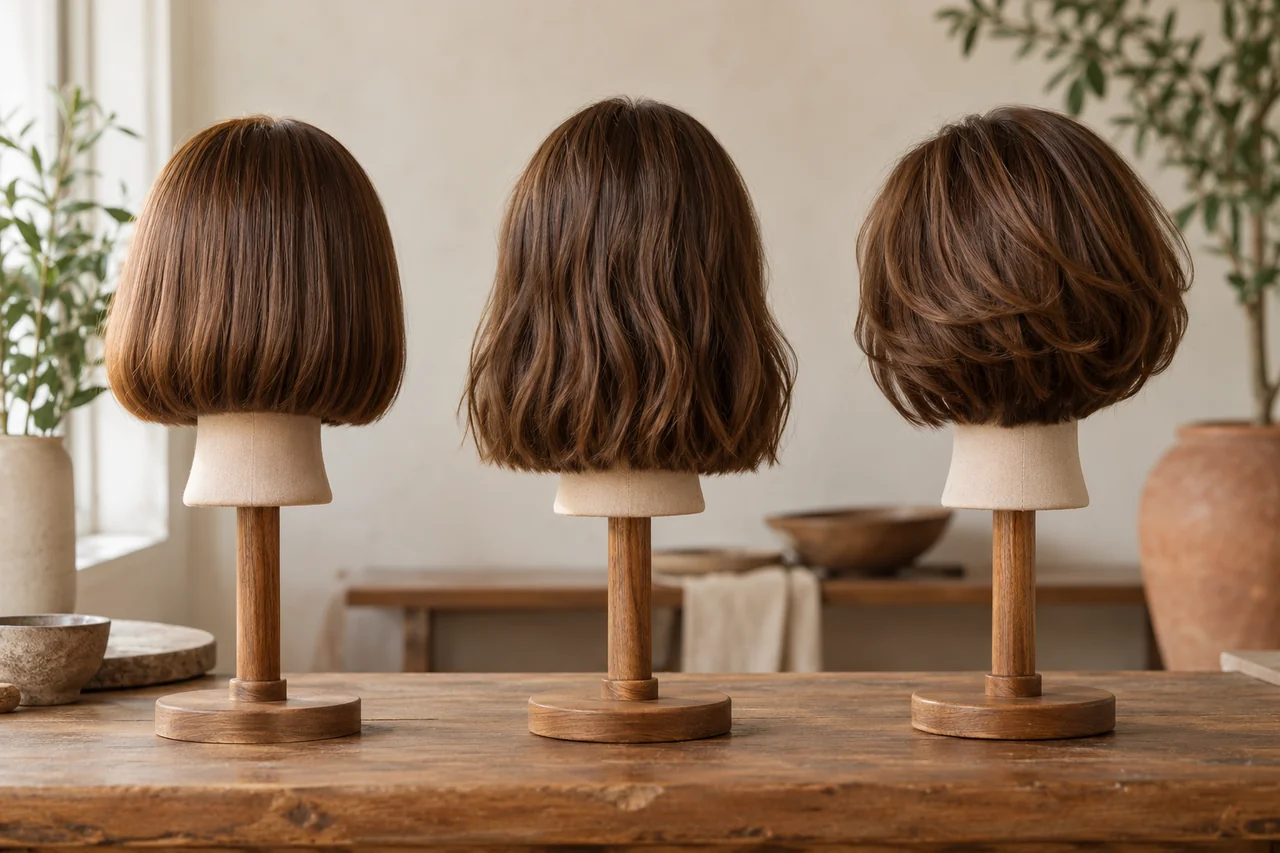
Layers yes or no is too broad. Ask where shorter pieces begin, how the lower edge remains and which upper movement would still need styling. Request two explainable options for front, sides and ends instead of accepting blanket rules for fine hair.
Connect length to daily function
Shorter may give a clearer shape but change tying and ear-tucking. Longer may preserve those tasks while offering a different edge. State priorities and compare an alternative below the preferred minimum without committing. Include normal drying and parting habits.
Read fullness in photos cautiously
Side placement, waves and raised sections can create the visible effect. A photograph cannot reliably reveal the person’s starting hair. Ask for a simpler interpretation for your own hair and acknowledge competing wishes, such as maximum tying length and a very compact short outline.
Choose the specific problem
Hypothetically, Kim requests more layers for fullness but discovers that only the unsettled lower edge is bothersome. A clearer edge and small length change may address the aim while preserving movement. The elaborate waves in a reference remain an occasional styling idea.
Change one thing at a time
Agree a checkable goal, such as a calmer outline with tying retained. Keep the routine familiar initially, then test one technique or modest product amount if wanted. Compare your own hair in similar conditions rather than measuring success against someone else’s photograph.
Frequently asked questions
Must fine hair be short?
No. Desired shape, available hair and required functions determine useful options. A blanket short-hair rule cannot replace individual assessment or preference.
Should I avoid all layers?
Not automatically. Ask where they would sit and what they do to the outline, stating clearly if a closed lower edge matters.
Can a haircut create more hairs?
No such promise is made here. Cutting can change silhouette and outline, not the amount of hair. Keep styling questions separate from concerns about noticeable changes.


Questions and experiences
Share a question or a useful experience about this topic. Every contribution is checked before publication. Comments may be written in different languages.
Loading reader contributions…
Opening the form sets a necessary session cookie. No email address is required. Publication is subject to moderation and is not guaranteed. For deletion requests: Contact