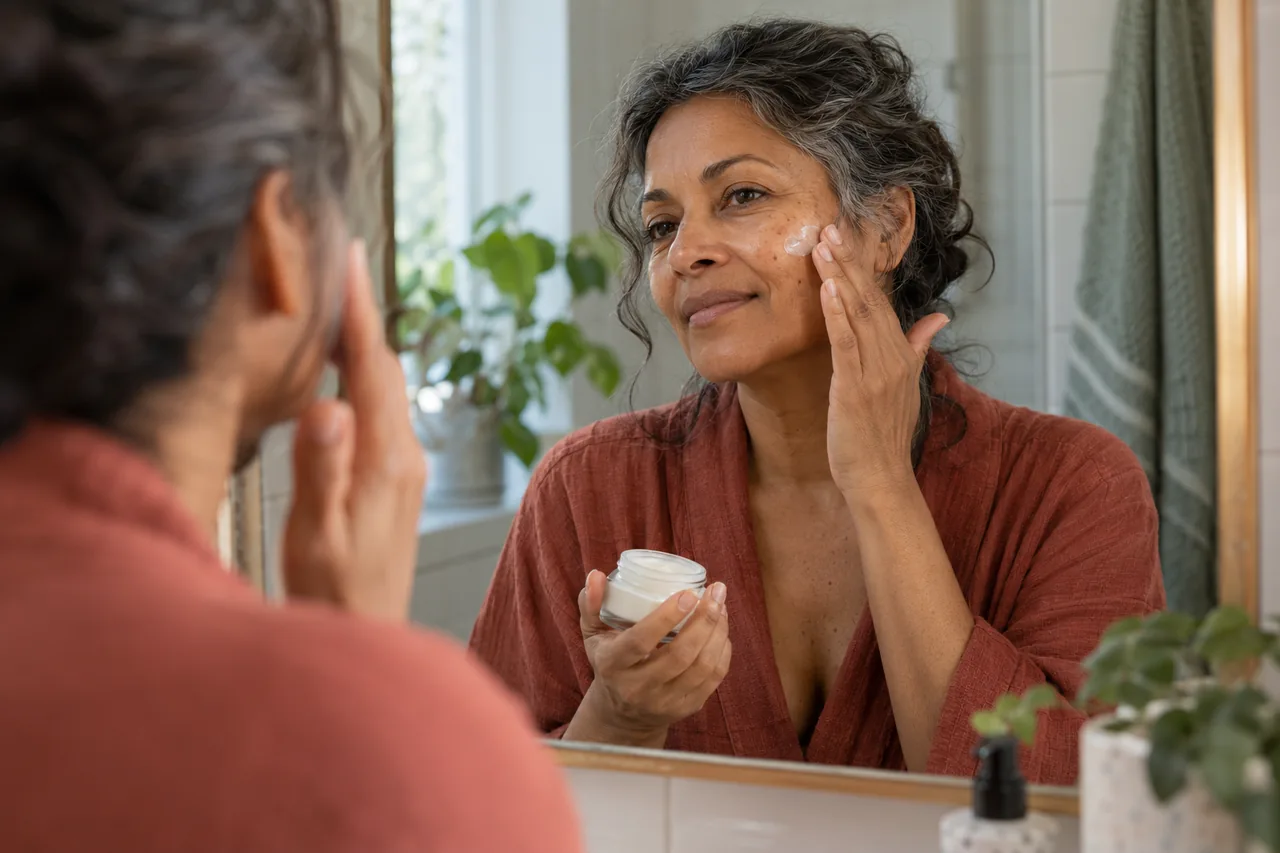
Midlife spots can be confusing, especially when skin is also dry or sensitive. Hormonal changes may contribute, but not every red patch is acne. Products that suited you as a teenager may no longer fit. Start with gentle basic care and seek targeted assessment when symptoms persist, hurt or leave scars.
General information, not a diagnosis or an individual treatment recommendation. Discuss persistent or concerning symptoms and treatment choices with a qualified healthcare professional.
Observe without diagnosing yourself
Where are the changes, how long have they lasted and are they painful? Note burning, persistent redness or scaling as well. Record new products, medicines and changes in contraception or hormone treatment. These details help distinguish conditions; a forum label of hormonal acne is not a diagnosis. An occasional photograph in consistent lighting can help without requiring daily inspection of every mark.
Simplify cleansing
Wash gently and avoid vigorous scrubbing. Skin that feels tight afterwards does not automatically need another drying product. Remove make-up thoroughly without several harsh steps. Choose a routine manageable even when tired. Frequent product changes can cause further irritation and make effects difficult to interpret. Establish a clear baseline before adding or adjusting a targeted treatment.
Do not automatically omit moisturiser
Blemish-prone skin may still need moisture care. Look for a tolerated texture and, where helpful, non-comedogenic labelling, while recognising that labels offer guidance rather than guarantees. Try new products individually. Heavy layers do not suit everyone, but complete avoidance can also be uncomfortable. Consider your actual response and how moisturiser fits any prescribed treatment.
Avoid squeezing and treating every tiny mark
Picking can worsen inflammation and later marks. Keep tools clean and do not share make-up applicators. Magnifying mirrors can encourage prolonged manipulation of small irregularities; normal viewing distance may be enough for daily care. Have deep, very painful or unusual lesions assessed. Rapidly removing a visible spot is less important than allowing skin to heal with minimal additional damage.
Use active treatments with a clear plan
Acne treatments may irritate and must suit your skin and medical circumstances. Ask how to apply them, when benefit should be reviewed and which reactions require contact. Do not start several acids, retinoids and drying products together. Certain ingredients have pregnancy-related restrictions, and pregnancy can still be relevant during perimenopause. Explicitly mention contraception and any possibility of pregnancy.
Use cosmetics for your own comfort
Wear make-up if you want to and tolerate it. Light, targeted coverage may feel better than several heavy layers. Clean brushes regularly and remove products gently in the evening. You do not have to hide skin changes to appear professional or well cared for. Choose what gives confidence, while remembering that coverage does not treat painful or scarring acne or replace attention to unusual changes.
Seek support when problems continue
A dermatology consultation is useful when basic care is insufficient, inflammation is substantial or skin problems significantly affect wellbeing. Bring a record of previous attempts, how you used them and approximate duration to avoid unnecessary repetition. Several treatment approaches exist; diagnosis and circumstances guide selection. You need not try every shop product first or justify why adult skin problems are upsetting.
Frequently asked questions
Should I wash dry skin with spots more often?
No. Frequent or aggressive cleansing can irritate. Gentle care and appropriate targeted treatment are more useful than repeated washing. If you are unsure whether the problem is acne, seek assessment.
Can a new tablet affect my skin?
Some medicines can contribute to skin changes. Do not stop a prescription independently. Record the timing and discuss it with the prescribing team; another cause may also be present.