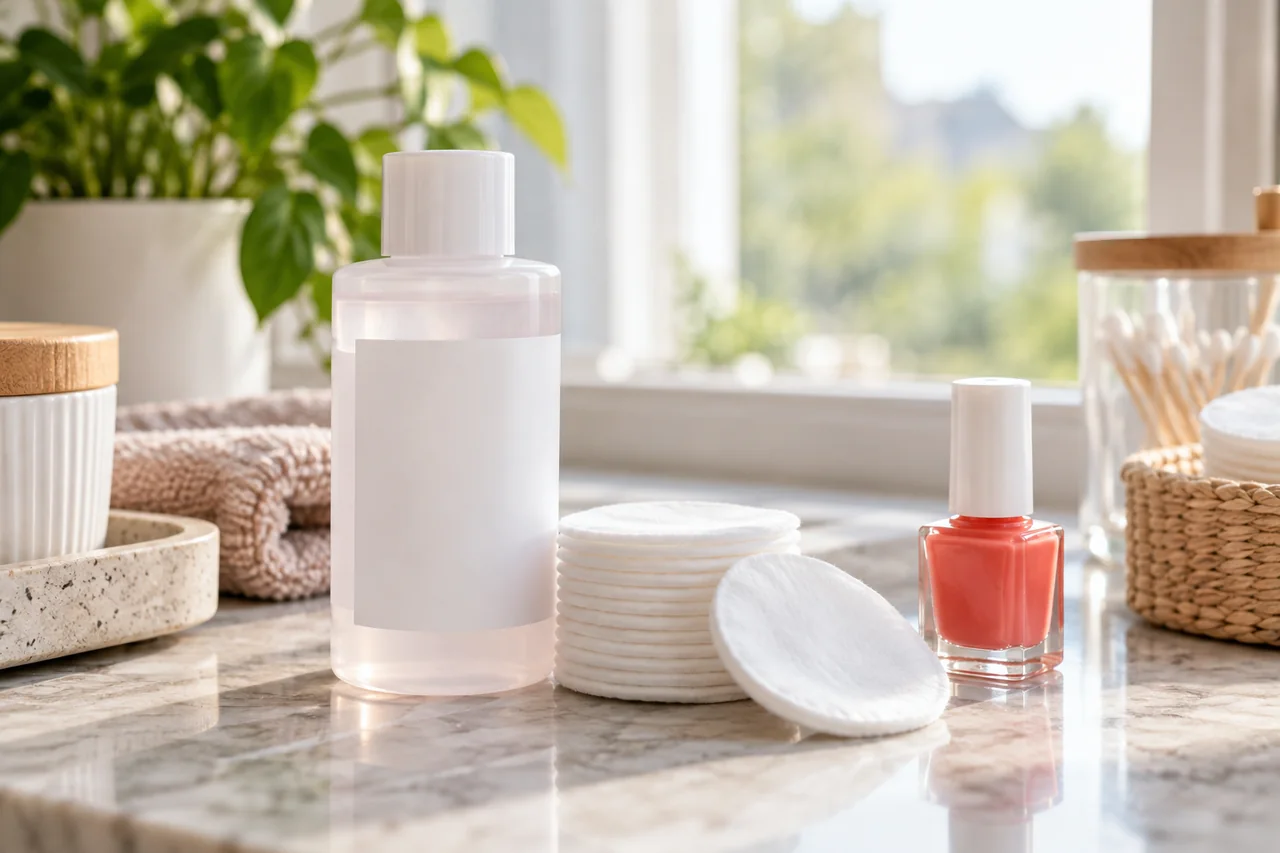
A glossy appearance cannot tell you how a coating was made or should be removed. Identify the system before choosing a remover or applying force.
Establish what is on the nails
For home-applied ordinary polish, record complete names and layers. For a salon treatment, ask what was used and how removal is intended. Everyday terms such as gel-look, Shellac or long-lasting are sometimes used loosely. Shine does not reliably distinguish air-dried from light-cured coatings. If the information is missing, ask first rather than experimenting with several chemicals.
Match remover to its stated purpose
Read which polish or material the remover is intended for. Ordinary polish remover is not automatically suitable for every artificial coating. “Acetone-free” does not mean universally better tolerated. The US Food and Drug Administration emphasises following nail-product warnings and intended use. Compare actual purpose and your known needs rather than ranking products by one ingredient name.
Prepare the workspace
Set out the materials specified in the instructions and protect the surface. Keep bottles stable, pads accessible and labels with their containers. Provide the recommended surroundings and keep children away. Avoid removal beside a candle or immediately before cooking. Do not set up large open containers unless the intended procedure requires them. A clear setup reduces the temptation to improvise with unsuitable substitutes.
Follow the intended process
Use remover according to its directions for ordinary polish. If the coating does not release as expected, stop troubleshooting by force and reconsider the system. It may be another material or special finish. More pressure, sharp tools or extended improvised exposure are not automatic solutions. Do not work against pain or scrape the natural nail to remove a visual fragment.
Plan gel and artificial-nail removal separately
The American Academy of Dermatology advises against picking off peeling gel polish; organise appropriate removal. This especially matters when the materials are unknown. Agree on removal and cost when booking application, and ask what the salon needs to know about work done elsewhere. A procedure for one soak-off product does not apply to every enhancement. If you do not want this removal commitment, include that preference when choosing the next look.
Observe before applying another coating
After removal, look at nails and surrounding skin without attempting self-diagnosis. Record unusual changes or symptoms and seek assessment where needed. A new coating does not have to follow immediately. Keep normal handcare as a separate step appropriate to the products. Do not begin another experiment to conceal an unresolved problem.
Note whether the remover, instructions and setup were adequate. Document which remover belongs with which polish while storing each as directed. For future salon visits, keep removal on the consultation list: a complete styling decision includes how you will later change or remove the material.
Frequently asked questions
Can ordinary remover remove every enhancement?
No. Identify the system first, then read its directions or ask the salon. Effectiveness on ordinary colour polish does not establish suitability for every artificial material.
What if the coating does not come off?
Do not automatically increase force or try other chemicals. Check the product and coating, then obtain suitable instructions or professional help. Do not continue a cosmetic experiment when symptoms occur.

Questions and experiences
Share a question or a useful experience about this topic. Every contribution is checked before publication. Comments may be written in different languages.
Loading reader contributions…
Opening the form sets a necessary session cookie. No email address is required. Publication is subject to moderation and is not guaranteed. For deletion requests: Contact