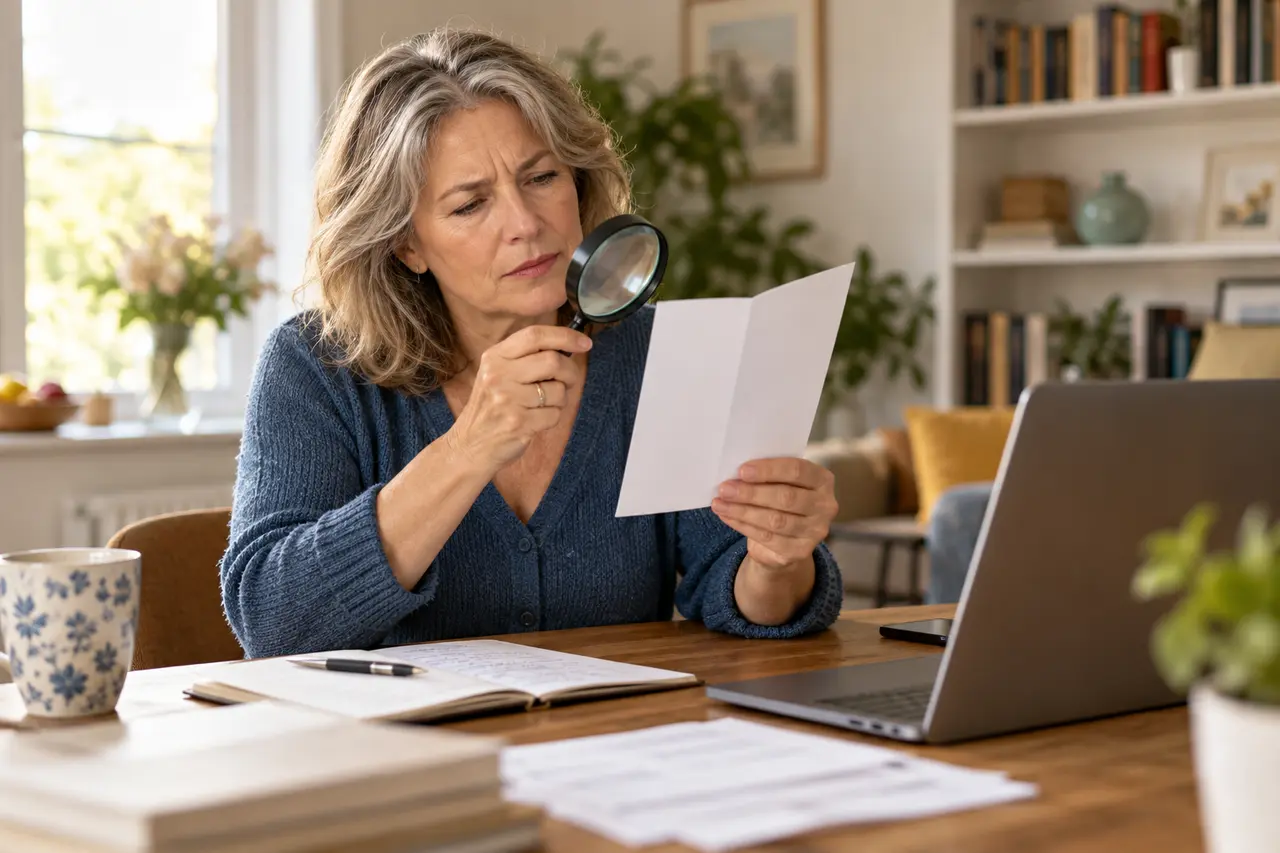
A persuasive graphic can make a weak claim look strong. This checker helps separate the parts of a statement you can investigate. It does not certify a product as safe or detect counterfeits automatically. The result is a list of open questions, not a medical judgement.
Your tool
This tool does not send your entries. They remain in this open page.
Write down the exact claim
Describe what is promised in your own words. Is it lower body weight, a change in one area, more energy or an alleged alternative to a medicine? A clear statement prevents the promise shifting while you investigate it. You do not need personal health information for this step or for the rest of the checklist.
Follow the advertisement back to its source
Look for the original report or study and its date. Linking to research about one substance does not automatically support a different product. Check whether the same product, use and population were actually studied. If you cannot inspect or connect the source to the claim, leave that point open rather than guessing.
Read the numbers in context
A percentage needs a denominator. Ask who took part, what the comparison was and how long observation lasted. Is the figure an average or the proportion reaching a particular result? A striking before-and-after image does not replace those details. The study calculator explains percentages and percentage points with fictional numbers you can change.
Check interests and sellers separately
Advertising can have a commercial purpose, but that purpose should be clear. Notice funding, sales links and the speaker’s role. For medicines, the provider and claimed authorisation also need independent checking through the relevant authorities. An attractive logo or professional page design is not sufficient evidence that an offer is genuine.
Use unanswered points constructively
Choose clearly documented or unclear for each check. Unanswered fields are also listed as open. The result can help you ask focused questions or step away from an offer. It is not a trust score and does not make a purchase decision. Even if every point appears clear, medical assessment remains a separate task.
Common questions
Can the checker detect counterfeit medicines?
No. It does not analyse packaging or search provider registers. It organises your checks and highlights the need for independent information.
Does an unanswered question prove fraud?
No. It initially shows a gap in information. Equally, many good answers cannot prove that a product is effective or safe.
Sources & further reading
Sources checked:


Questions and experiences
Share a question or a useful experience about this topic. Every contribution is checked before publication. Comments may be written in different languages.
Loading reader contributions…
Opening the form sets a necessary session cookie. No email address is required. Publication is subject to moderation and is not guaranteed. For deletion requests: Contact