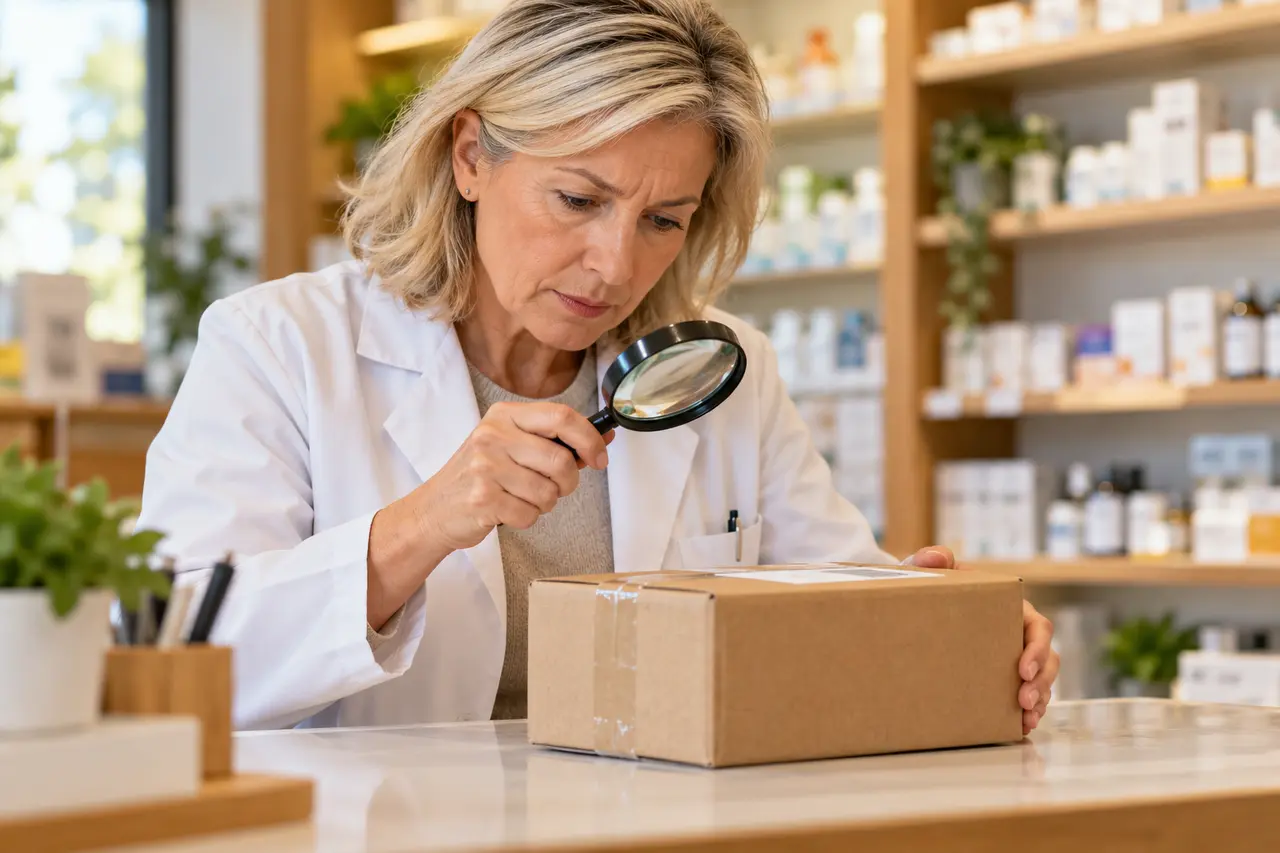
If an offer seems unusually easy or a pack raises doubts, you do not need to invent an authenticity test. A traceable supply route and professional assessment matter. A polished product photograph can be just as misleading as a convincing-looking box.
What the authorities have warned about
In September 2025, EMA and national authorities warned of a sharp rise in illegal online products marketed as GLP-1 medicines. These products may lack the claimed ingredient or contain other harmful substances. The possible harm therefore extends beyond not losing weight.
An earlier warning about falsified Ozempic pens in 2023 documents a particular incident at that time. It does not mean that every pack now dispensed through regular channels is suspect. Current warnings and specific concerns need careful assessment without treating all supply as unreliable.
Why appearance is not enough
Boxes, printing and product images can be imitated. Even a plausible batch code or QR code does not establish the origin of the contents for a consumer. An online image comparison may reveal an obvious difference, but it cannot reliably clear a pack that looks normal.
A pharmacy can assess the source and available verification processes. When asking for help, take the complete pack if possible without unnecessarily altering it. Do not test suspicious liquid by tasting it, transferring it into another container or trying a dose.
Offers that need particular scrutiny
Pay attention to claims that bypass clinical assessment or prescription requirements. A supposed personal endorsement from EMA or a national authority is another warning sign: authorities do not make these sales recommendations for particular brands.
- Sales through unfamiliar social profiles or private classified advertisements.
- No identifiable pharmacy or responsible contact point.
- Guaranteed results or superiority claims without verifiable evidence.
- Copied authority logos, false endorsements or a register link that does not match the seller.
If you have already received the product
Do not continue using a product you suspect may be falsified until it has been professionally assessed. Contact a pharmacy and your treating practice promptly. Be open about where it came from; that helps the assessment and should not be a reason to delay getting assistance.
Keep the product, outer packaging, order receipt and seller details securely. Photographs can support documentation but do not replace assessment. Discuss how to continue your legitimate supply. Do not sell or give the suspected pack to someone else, or discard it before asking for advice.
Medical help comes first if symptoms occur
If you have already used the product, tell the medical team when you used it, what it was called and what symptoms occurred. Breathing difficulty, unconsciousness, seizures or a rapidly severe condition require immediate contact with local emergency services. Do not wait for the seller’s response.
Other new symptoms following a suspected product also need prompt medical assessment. Reporting it to the relevant medicines authority may be important as well. A report does not replace treatment or a professional decision about how to maintain your medicine supply safely.
Common questions
Can you confirm from a photograph that my pen is genuine?
A photograph cannot provide reliable confirmation. Even an ordinary-looking picture does not establish the contents, storage history or supply chain. Ask a pharmacy to assess the pack and source, and use photographs only as supporting documentation rather than a pass-or-fail test.
Does a low price prove that a medicine is falsified?
No. Price alone proves neither authenticity nor falsification. The retailer’s verifiable authorisation, lawful supply route and professional investigation of specific concerns are what matter. Paying a high price does not provide a safety guarantee either.



Questions and experiences
Share a question or a useful experience about this topic. Every contribution is checked before publication. Comments may be written in different languages.
Loading reader contributions…
Opening the form sets a necessary session cookie. No email address is required. Publication is subject to moderation and is not guaranteed. For deletion requests: Contact