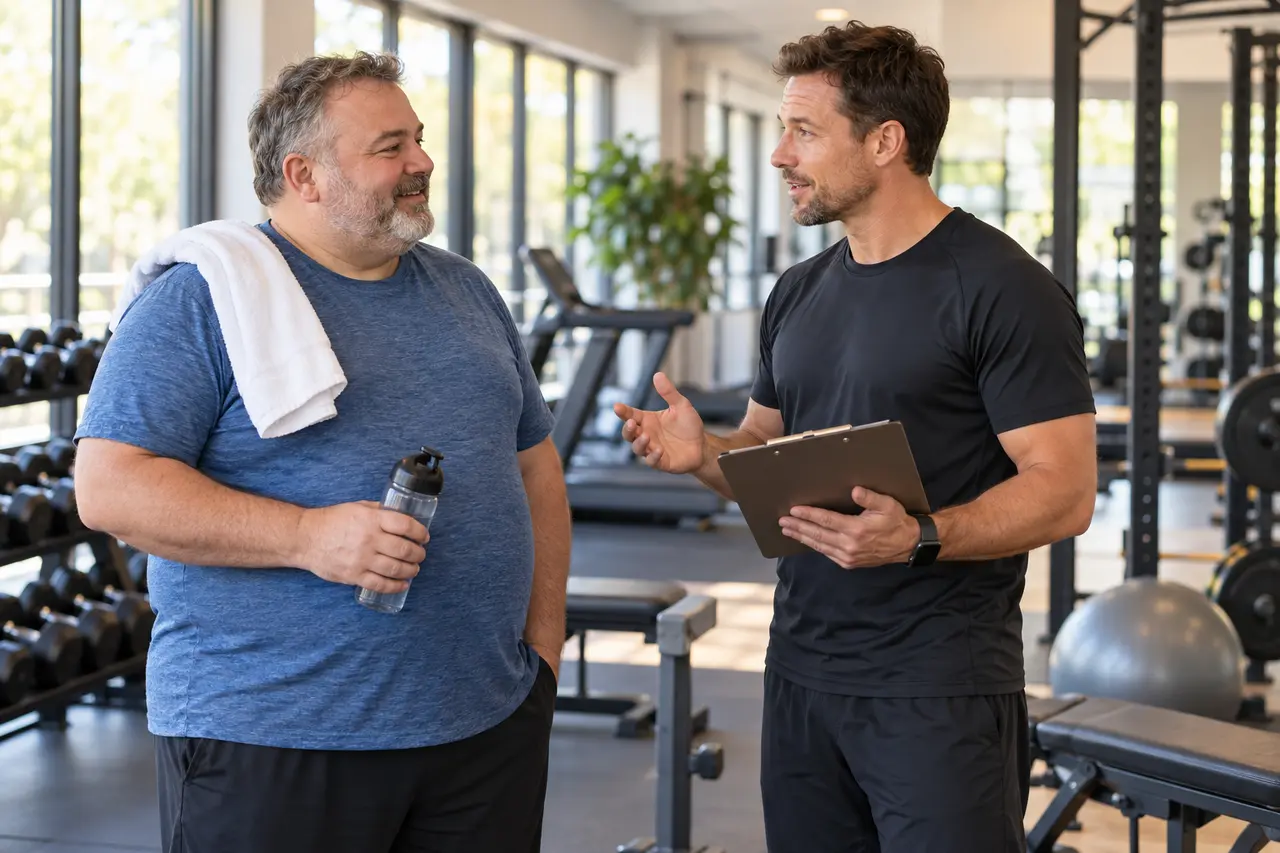
A first gym appointment does not need to be a performance. You can ask questions, learn the equipment and explain what you want to do more easily in daily life. During weight-management treatment, a clear, adaptable plan is more useful than one designed simply to look demanding.
Look at support before signing up
Ask who will guide your introduction, what qualifications they hold and how later reviews work. Do they work with people returning after inactivity or living with health limitations? Can you try equipment without feeling rushed? Consider atmosphere, access and opening times. A low price is less helpful if you feel unsafe or travel is consistently difficult. Pressure to buy supplements is not evidence of good coaching. Choose support you can realistically use rather than an impressive package you will avoid.
Describe your goal in one sentence
Instead of only saying “lose weight”, you might say, “I want to carry shopping more easily and build strength regularly.” Add how much time you can realistically commit and what activity you already do. Explain previous barriers such as pain, uncertainty, shift work or lack of experience. This helps create an everyday starting point. A small plan can still be a serious plan. You do not need to compare your starting resistance, appearance or stamina with other members.
Share health information purposefully
Relevant information includes known exercise limits, injuries, falls, recent procedures and symptoms that could affect a session. An instructor cannot take over diagnosis or medication adjustment. If you have a diabetes hypoglycaemia plan, clarify how activity fits into it. Discuss unresolved medical questions with your clinical team first. You decide what further private information to share, but relevant restrictions need to be understood for safe guidance. Ask who can access any information recorded and how it is protected.
Make sure the first plan is understandable
Ask for a demonstration of seat, pad and resistance settings. Write them down in a way that lets you find them next time. Ask for an easier alternative and how to recognise when a movement is too demanding. The plan should include rests and a clear approach to progression. You should be able to explain the main instructions in your own words. If you cannot, another explanation is more useful than copying a movement while unsure or guessing which setting was used.
Review the session briefly
Note what was clear, where you needed help and how you felt later. Unfamiliar effort differs from severe or increasing pain. Chest pain, fainting or severe breathlessness require urgent medical help. Continuing dizziness, marked exhaustion or repeated symptoms need discussion. Agree a specific review point for the programme. Reliable support responds to feedback rather than requiring you to lift more every week regardless of how you feel. Consistency and appropriate adjustment matter more than proving yourself at the first visit.
Common questions
Must I hand the gym my entire medication list?
Not automatically. Relevant safety instructions should be understood, while medical assessment remains with your clinical team. Ask how sensitive information is stored and protected.
Is expensive personal training essential?
Not for everyone. A qualified introduction and accessible help can already be valuable. Suitable guidance, safe movement and a plan you understand are the key considerations.
Sources & further reading
- World Health Organization: Physical activity
- Nutritional priorities to support GLP-1 therapy for obesity: joint advisory
- NHS: Improving strength and flexibility
Sources checked:



Questions and experiences
Share a question or a useful experience about this topic. Every contribution is checked before publication. Comments may be written in different languages.
Loading reader contributions…
Opening the form sets a necessary session cookie. No email address is required. Publication is subject to moderation and is not guaranteed. For deletion requests: Contact