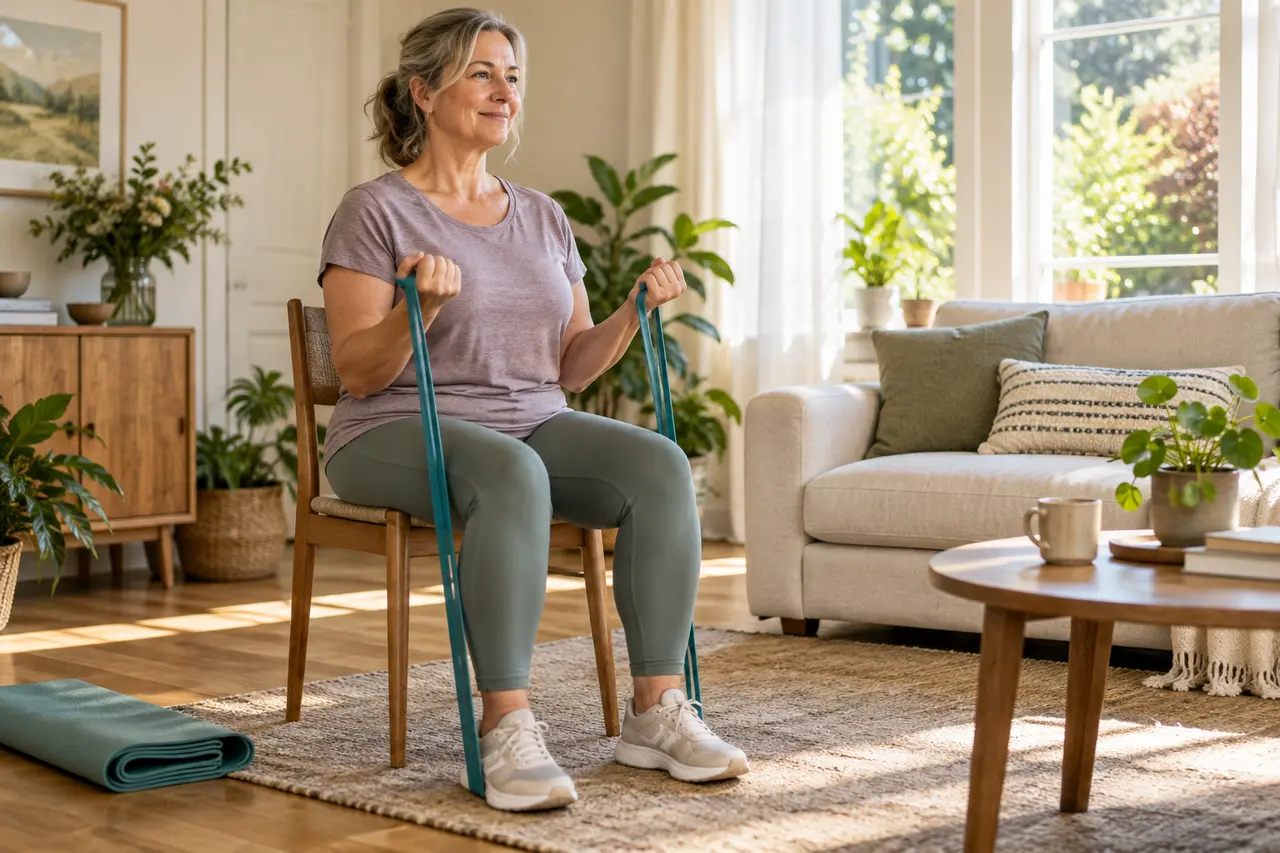
Training at home may save travel and cost. A stable chair and clear wall can support initial movement patterns; a resistance band is optional. What matters is a safe setting, a suitable variation and controlled movement. This overview does not replace a personal check of your technique.
Prepare your space
Choose a clear, non-slip area and a sturdy chair without wheels that will not tip or slide. Remove cables, loose rugs and other trip hazards. Keep necessary supports within reach. A resistance band should be undamaged and used according to its instructions. Improvised attachments to unsuitable doors or furniture can come loose. If you are unsteady or have fallen, ask a qualified professional to assess appropriate support and exercise choices before training alone. Being at home does not remove the need for safe equipment.
Understand sitting and standing
Controlled standing from a suitable chair can work the legs. Place your feet securely, rise steadily and lower yourself back with control. Chair height, hand support and range of movement must suit your ability. Pain or balance limitations may call for a different version. The aim is not to stand as fast or as many times as possible. Dropping onto the seat or needing considerable momentum may suggest that the current version is too demanding. Ask for an easier approach instead of forcing the movement.
Consider a wall press
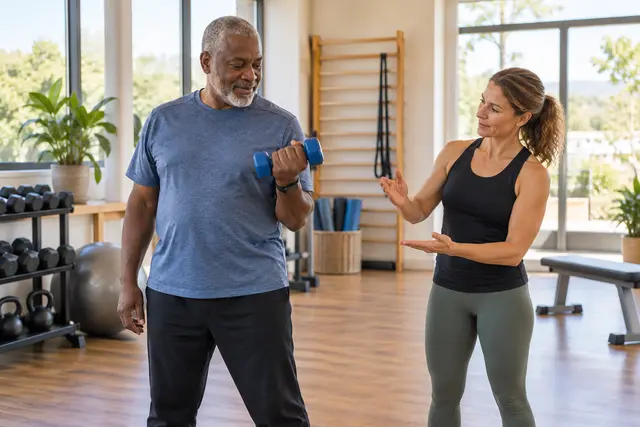
A wall may offer an easier alternative to floor press-ups. With your hands supported on a solid surface, controlled bending and straightening of the arms moves your body towards and away from it. Distance, hand position and range change the load. Ask someone qualified to demonstrate a suitable version, particularly with shoulder, wrist or back problems. Do not use a moving door or unstable surface. Regular breathing and controlled movement are more useful than forcing a predetermined number of repetitions.
Add a band deliberately
Bands allow different pulling movements, but colours and resistance levels are not standardised across brands. Do not choose only from an online colour comparison. A qualified person can explain grip, direction and secure attachment, or select a movement that needs no anchor. Inspect the material regularly and keep it away from sharp edges. A band is not compulsory. If handling it is confusing, another tool or a simpler movement may offer a more useful starting point.
Keep the routine short and reviewable
Write down a few agreed exercises instead of starting a new video every day. Do only as much as you can control within the agreed range; rest is part of the session. Pause for sharp pain, marked dizziness or unusual breathlessness. Chest pain, fainting or severe breathlessness need urgent medical help. Persistent or worsening symptoms after sessions call for review. A gentle start is not poor performance: it gives useful information about the next suitable step.
Common questions
Do I definitely need a resistance band?
No. Adapted chair, wall or other movements may be enough to begin. Equipment is useful when it has a clear purpose and can be used safely.
How many repetitions should I do?
One number cannot suit every starting point. Agree an initial range and progression rule, especially with symptoms or long inactivity. Control matters more than forcing a target.
Sources & further reading
- World Health Organization: Physical activity
- NHS: Strength exercises
- NHS: Improving strength and flexibility
Sources checked:


Questions and experiences
Share a question or a useful experience about this topic. Every contribution is checked before publication. Comments may be written in different languages.
Loading reader contributions…
Opening the form sets a necessary session cookie. No email address is required. Publication is subject to moderation and is not guaranteed. For deletion requests: Contact