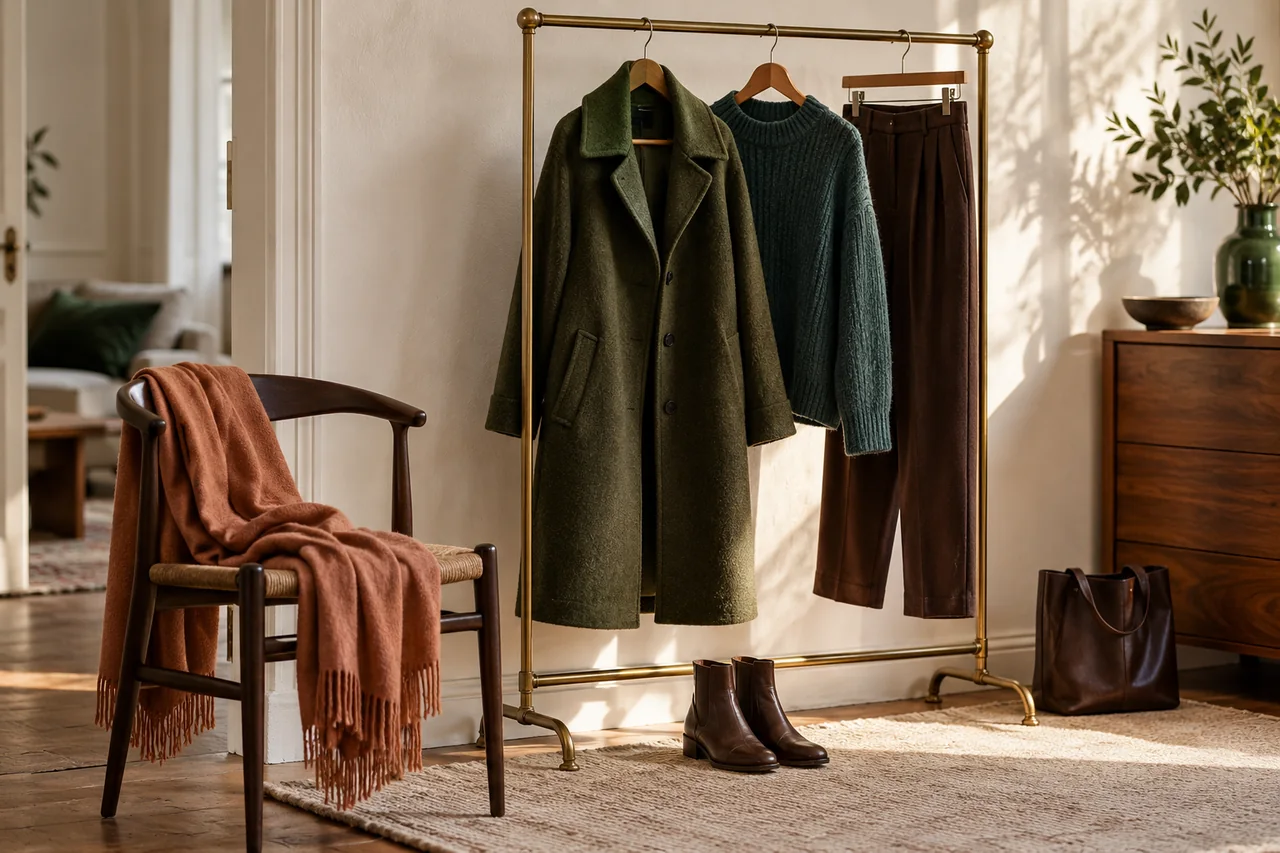
Olive, warm teal, deep brown and soft cream can look urban or formal as well as rustic. An autumn palette groups warm, generally muted shades. Red hair, freckles and any particular skin colour are not requirements.
Choose a base you actually like
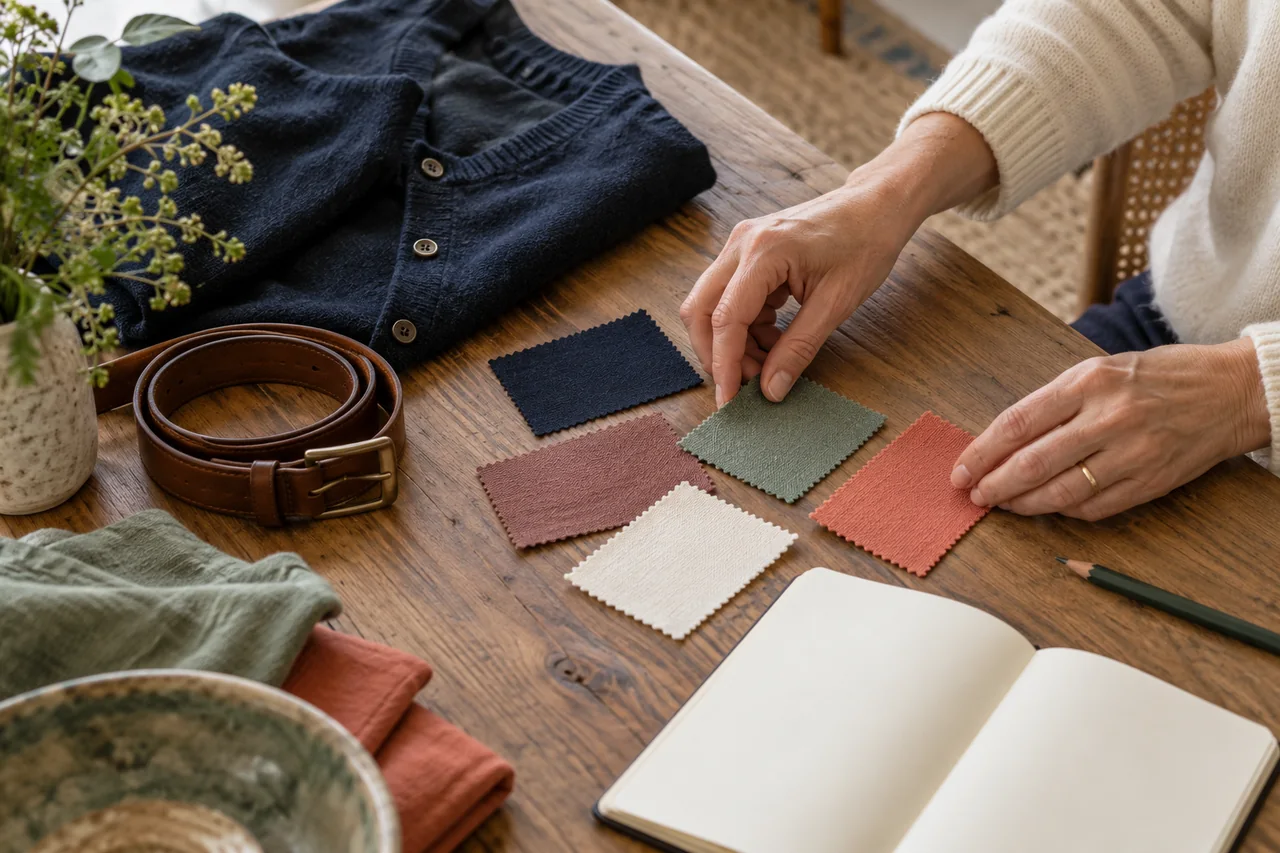
Brown is optional. Deep olive, warm navy or muted teal may work better with your shoes, belts and bags. If choosing brown, compare chocolate, chestnut and cognac in real fabrics; manufacturers use these names inconsistently.
Control the rustic effect
Olive and rust in corduroy, chunky knits and many leather details differ from smooth wool or a plain shirt. For a clearer urban outfit, use simpler shapes. Olive trousers with cream need no further earth tones; a brown suit can take a small teal accent.
Separate depth with a lighter tone
Rust, olive and brown of similar darkness can merge into a dense area. A light top or shirt under the jacket helps separate them. Compare soft off-white, warm stone and cream. Crisp white is also possible if you enjoy its stronger contrast.
Replace colours you dislike
Mustard and orange are not compulsory. Try deep green, muted turquoise or warm reddish brown with your main trousers. Changing one accent can produce a different direction without rebuilding the wardrobe or repeating the same three earth tones.
Check the intended lighting
Dark olive, brown and teal can look alike in dim rooms. Review an evening outfit in comparable light. Add a lighter detail, different surface or greater lightness difference if structure disappears. Colour cannot compensate for uncomfortable fit or an unsuitable garment.
Frequently asked questions
Is black excluded?
No. Use it as a deliberate contrast or add a warmer top. Dark brown or olive are alternatives for a softer transition, not reasons to replace useful clothes.
How do I recognise warmer teal?
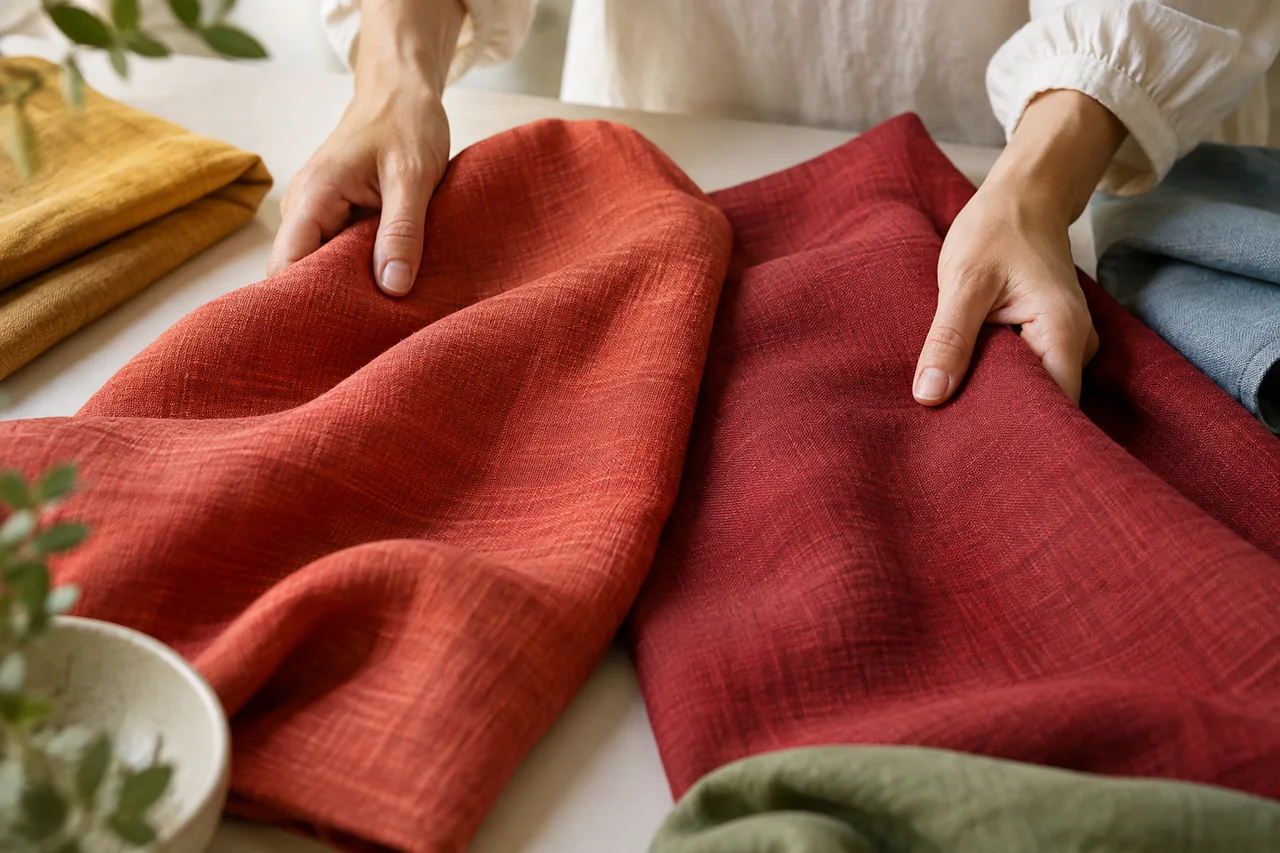
Compare several actual fabrics: some lean bluer, others greener. Their relationship with your browns and lighter bases is more useful than the product name.

Questions and experiences
Share a question or a useful experience about this topic. Every contribution is checked before publication. Comments may be written in different languages.
Loading reader contributions…
Opening the form sets a necessary session cookie. No email address is required. Publication is subject to moderation and is not guaranteed. For deletion requests: Contact