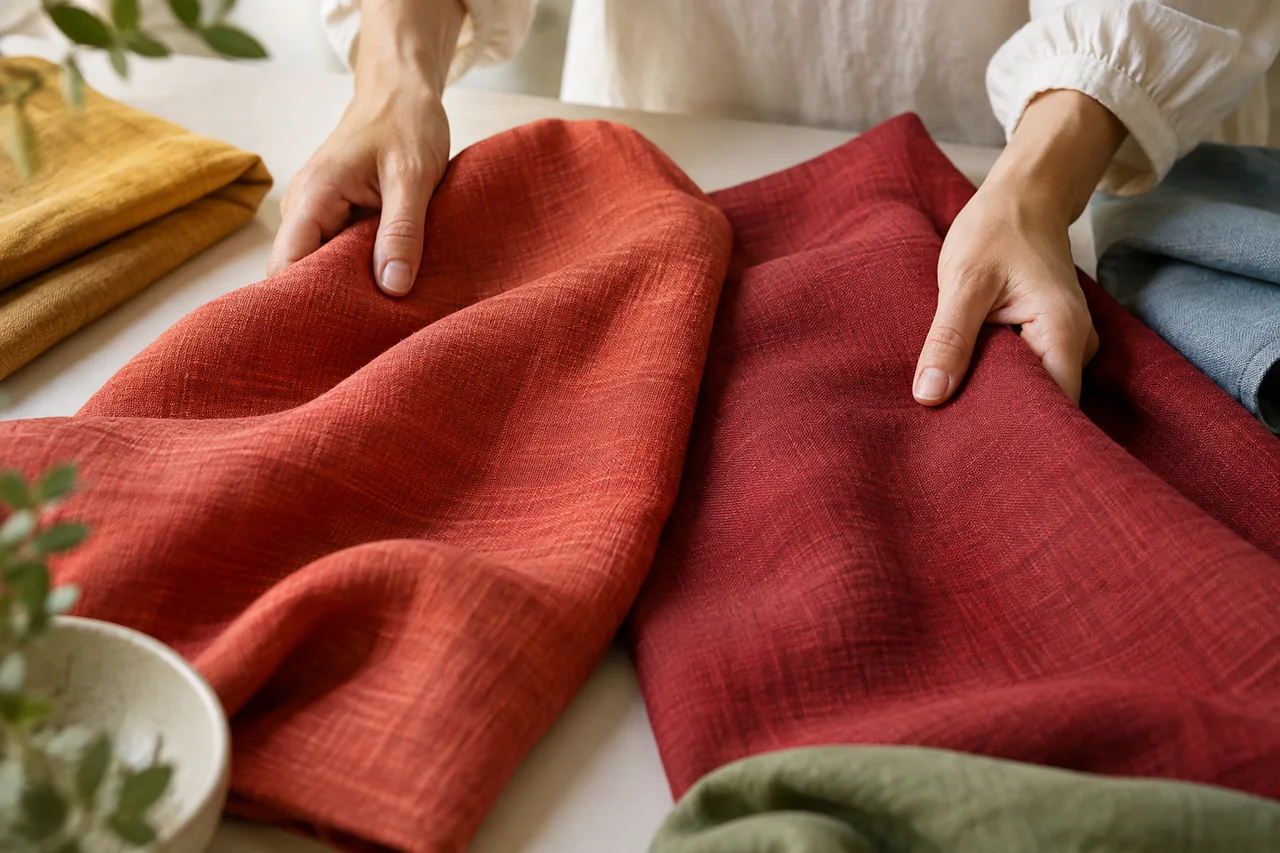
Warm and cool are useful comparisons, not rigid boxes. The question is usually warmer or cooler than which other shade? A deliberate difference can be as interesting as a quiet match.
Compare two reds rather than red and blue
Tomato red may look warmer than raspberry; turquoise-leaning blue differs from violet-leaning blue. Place two similar reds together and describe the orange or violet direction before deciding which you prefer. Description and preference are separate steps.
Keep other properties similar
Pale peach and vivid fuchsia differ in several ways, so preferring one does not isolate warmth. Seek pairs of medium reds, muted greens or pale beiges. If your wardrobe offers no close pair, record the uncertainty instead of creating a fixed rule.
Inspect neutrals closely
Beige may look yellow, pink or grey; grey changes beside other colours. Sand, stone and taupe are not standardised shades. Take an existing garment shopping and compare the actual pieces. An unfamiliar transition may be an interesting contrast rather than a mistake.
Use warmth purposefully
Orange-red with cream and brown creates one direction; blue-red with grey or cool navy another. Camel with clear blue can be lively because of its difference. Give one colour more space and repeat a smaller accent if you want a clearer connection.
Separate styling from technical colour temperature
Lighting uses colour temperature as a different technical concept; it supplies no numerical clothing rule. Veins, one jewellery test or a quick photograph cannot diagnose a personal palette. If warm and cool both work, build around lightness, intensity and favourites.
Frequently asked questions
Can blue be warm?
In relative styling language, one blue may appear warmer than another. This describes a shade relationship, not physical heat.
Can I mix warm and cool colours?
Yes. Begin with a dominant base and a smaller contrasting accent, such as camel and blue. A combination that works for your life needs no seasonal justification.



Questions and experiences
Share a question or a useful experience about this topic. Every contribution is checked before publication. Comments may be written in different languages.
Loading reader contributions…
Opening the form sets a necessary session cookie. No email address is required. Publication is subject to moderation and is not guaranteed. For deletion requests: Contact