
A plant-focused diet can still work when appetite changes. However, a lower overall food intake deserves extra attention. Vegetarian and vegan eating are not identical: avoiding all animal foods means certain nutrients need particularly reliable planning. Your choices and values should remain part of that discussion.
Review what you actually eat
Record the foods you eat on a few typical days. A balanced menu on paper is of little use if nausea leaves you eating mainly toast. Check whether pulses, tofu or other protein foods appear, and whether vegetables, fruit, grains and suitable fats have a place. Eggs or dairy may contribute to a vegetarian diet, but do not automatically close every gap. The name of your eating pattern does not prove either adequate or inadequate nutrition; the actual meals matter.
Secure vitamin B12 deliberately
The German Nutrition Society explicitly includes vitamin B12 supplementation in its requirements for a health-promoting vegan diet. Do not depend on uncertain claims about algae, fermented foods or an occasional fortified product. Discuss a suitable product and how to use it with a qualified professional. Other potentially limited nutrients include iodine, calcium, iron, zinc and vitamin D. That does not mean taking high doses of everything as a precaution. Needs, choices and any monitoring should be planned individually.
Compare products by their contents
Plant drinks and yoghurt alternatives differ substantially. Check protein, added calcium and other relevant nutrients in the amount you actually use. A coconut-based product is not automatically nutritionally equivalent to a protein-rich soya product. Meat alternatives vary too. Labels help you choose, but cannot replace looking at the whole day. Fortification is neither inherently undesirable nor a guarantee that every nutritional need is met. Find products that are useful in your meals rather than choosing by a single marketing claim.
Keep variety within manageable portions
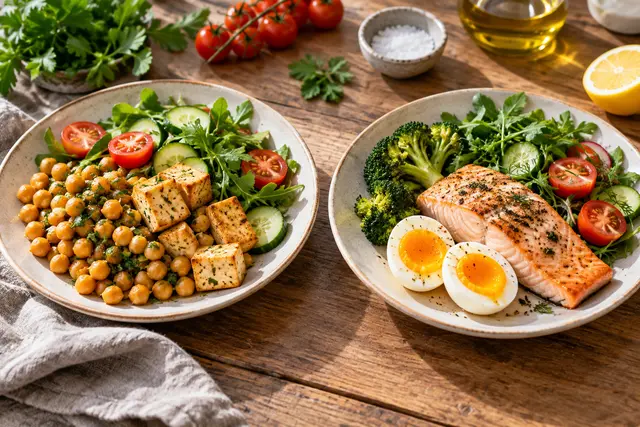
A small tofu-and-rice dish, lentil spread on bread or oats with a suitable plant alternative can be practical choices. Large bowls of raw vegetables are not compulsory. Cooked vegetables, smooth pulse spreads and prepared small portions may fit a sensitive appetite better. Introduce unfamiliar foods one at a time if you want to understand tolerance. Allergies and prescribed medical diets require adaptations. These are meal ideas, not calculated nutrient plans or instructions to ignore an established dietary restriction.
Know when additional support helps
Very limited food choices, persistent digestive symptoms, tiredness or declining strength justify a qualified nutrition review coordinated with medical care. Symptoms alone do not identify a missing nutrient; other explanations are possible. Pregnancy, breastfeeding, older age and kidney disease call for particularly individual planning. This article does not decide whether weight-management medication is appropriate in those situations. Review existing supplements and dietary instructions together rather than adding several new products on your own.
Common questions
Is a vegetarian diet automatically sufficient?
No. Actual foods, quantities and personal needs determine adequacy. Even with eggs or dairy, very small or repetitive meals may leave gaps.
Must I switch to animal foods because of GLP-1 treatment?
There is no blanket requirement. If your current pattern no longer meets your needs, seek workable options with a qualified professional who respects your values and preferences.


Questions and experiences
Share a question or a useful experience about this topic. Every contribution is checked before publication. Comments may be written in different languages.
Loading reader contributions…
Opening the form sets a necessary session cookie. No email address is required. Publication is subject to moderation and is not guaranteed. For deletion requests: Contact