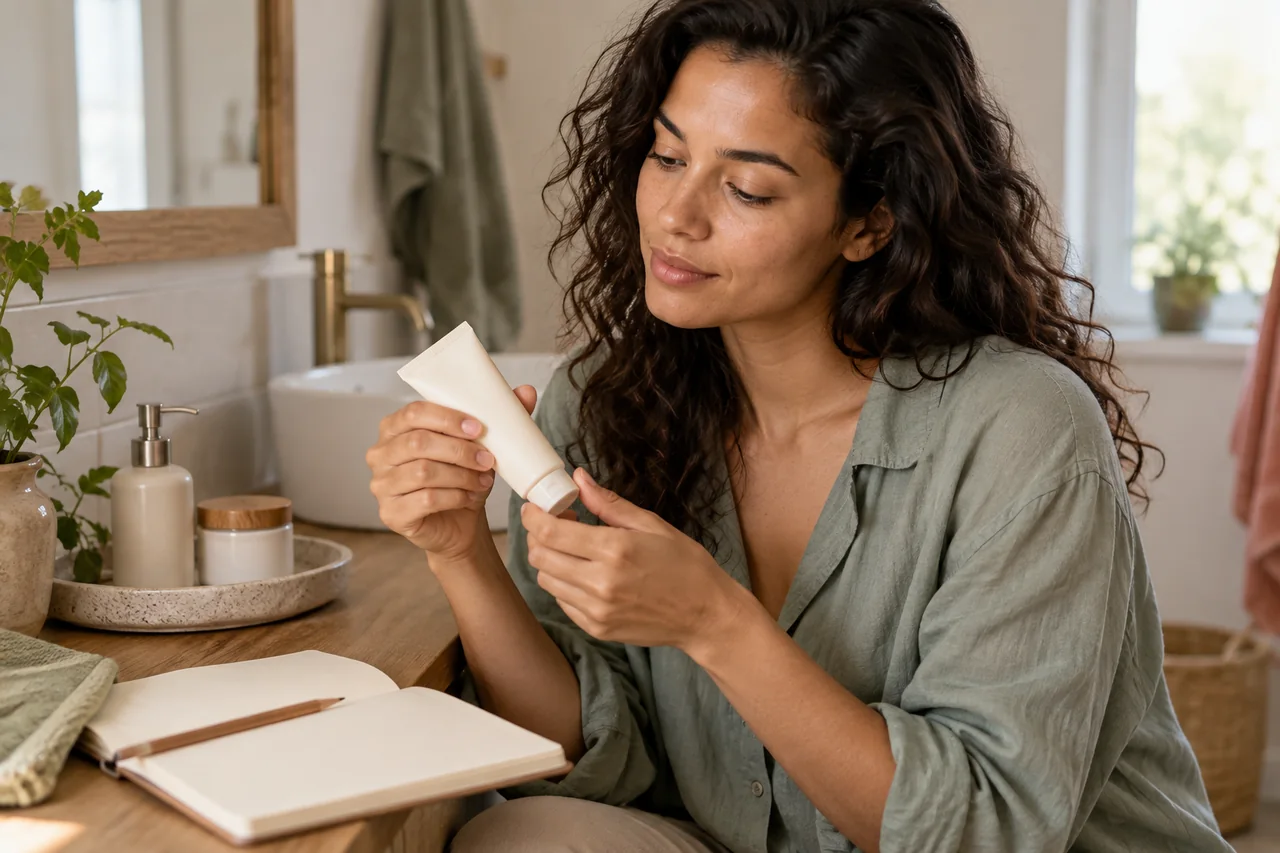
Buying a new product is quick; finding out whether it fits your routine takes more than a pleasing first impression. Keep the comparison clear by changing one thing and deciding what you want to observe. This is a personal experience of using a product, not a medical allergy test or scientific proof of effectiveness.
Define the purpose before opening
Write one sentence explaining the trial: a lighter texture, easier packaging or a cleanser for particular make-up. This stops your expectations changing halfway through. Check the pack, shelf-life information and directions. If a diagnosed allergy means avoiding an ingredient, check before use. A bargain is not a reason to ignore a known exclusion.
Keep the rest of the routine stable
Changing cleanser, cream and make-up together makes observations difficult to interpret. Choose one step, use it as directed and keep the others reasonably stable. Do not impose a fixed success deadline unsupported by the instructions. Some practical features, such as the lid and spreadability, are obvious quickly; others emerge in use. None of this means enduring an unpleasant reaction to complete a supposed test.
Understand what a small trial can show
An initial use may show how a product feels. It does not replace professional allergy testing or guarantee future tolerance. Never use products on unsuitable areas or against warnings. Hair dyes and other products with specific instructions need their own precautions; general beauty advice does not override the label. Trying many new products on already irritated or diseased skin is not a useful comparison.
Record a few concrete criteria
Consider dispensing, texture under other products, scent and visible residue rather than only liking or disliking it. Keep the exact variant and dates with your notes. This helps distinguish practical value from attractive packaging. Notes can remain private and make future purchases more informed.
- Choose the single feature you want to improve before starting.
- Record the date and exact product variant.
- Separate dispensing, spreading, scent and compatibility with other steps.
- Record symptoms separately and stop the trial if a reaction occurs.
Respond to symptoms
A reaction does not prove that a product is working intensely. Stop the trial and follow its safety instructions. Seek medical help for stronger, persistent or recurring symptoms. Contact allergies may appear after a delay, so an initially uneventful application does not exclude them. Keep the packaging and batch information: these are more useful than an online photograph of a similar version.
Frequently asked questions
Should I allergy-test every product myself?
A household trial is not a reliable allergy diagnosis. Follow product-specific instructions. If you have reacted before or suspect an allergy, discuss appropriate assessment with a clinician.
How many new products should I introduce together?
For a comparison you can understand, preferably one. This is an organisational aid, not an inflexible medical rule. It helps identify whether that particular change improves your routine and what you may want to reverse.


Questions and experiences
Share a question or a useful experience about this topic. Every contribution is checked before publication. Comments may be written in different languages.
Loading reader contributions…
Opening the form sets a necessary session cookie. No email address is required. Publication is subject to moderation and is not guaranteed. For deletion requests: Contact