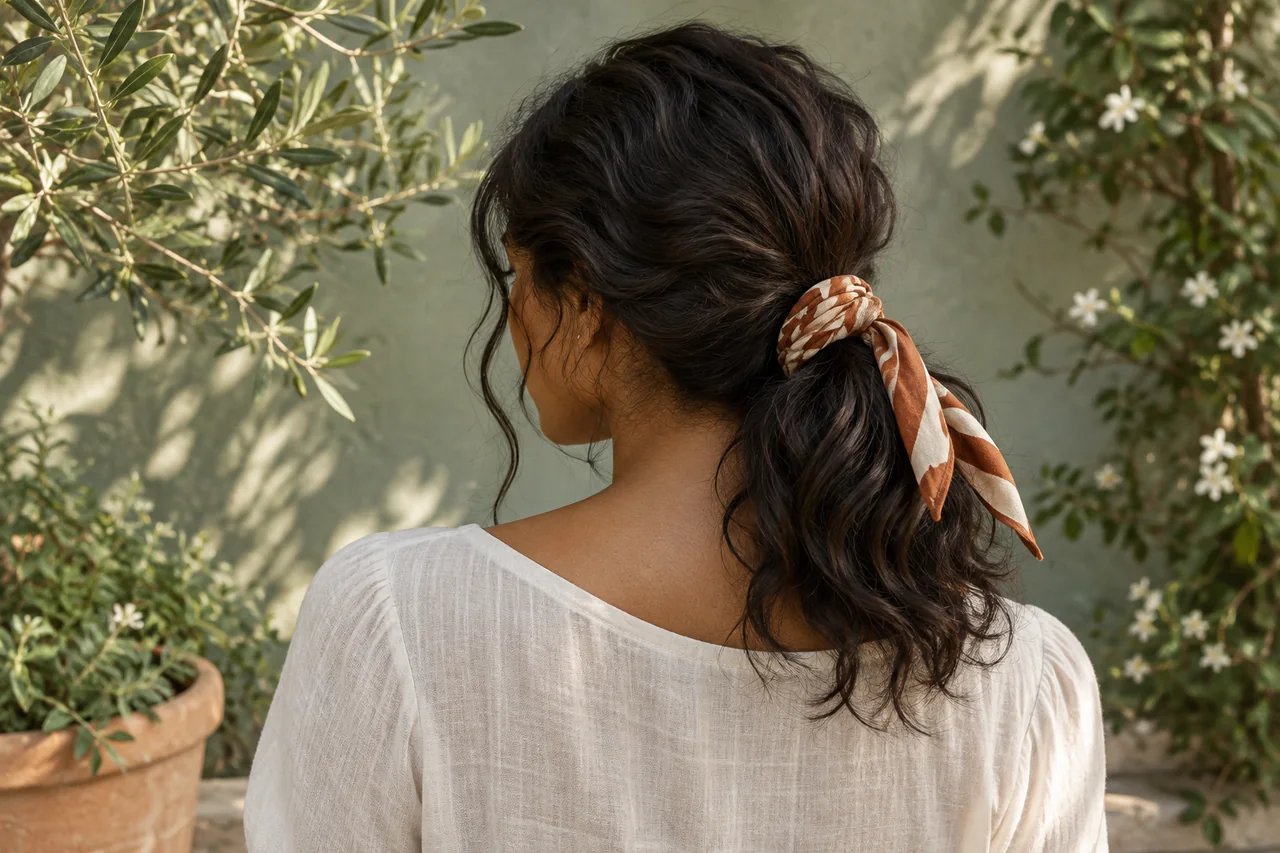
A scarf should fit the task, not a compulsory fold width. Start with one you own and test its surface, shape and length. Knots and loose ends need to remain comfortable and clear of sight or equipment.
Check shape and surface
A square can fold diagonally into a triangle and then a band; a long narrow scarf is already closer to a band. Inspect seams and knotting feel. Smooth and grippy surfaces behave differently regardless of the material name. Keep ends away from machinery or activities where they could catch.
Start as a narrow headband
Fold evenly, place the centre on the head and take the ends behind the ears to a comfortable nape knot. A top knot is an alternative if preferred. Keep hair underneath loose and check with glasses. If it slips, adjust position or width instead of tightening excessively.
Add it to a secured ponytail
First use a trusted hair tie, then knot the folded scarf over it so the scarf need not support all the hair. Choose short hanging ends or a small bow and check the back. If the knot opens, simplify or choose another scarf; extra wrapping does not automatically make slippery fabric reliable.
Try a loose covering
Fold a square into a triangle, place the long edge and bring side ends back without tightly pulling the hair beneath. The rear point may remain loose or tuck comfortably under the knot. The AAD advises avoiding tightly pulled hair under coverings. A decorative scarf is not automatically verified sun protection; use suitable protective clothing when that is the aim.
Test clothes and movement
Compare a plain and patterned top, then sit, bend and turn. Ends may catch collars, bags or jewellery. Change folding or use a smaller knot rather than accepting a style that works only while still. Check pressure, vision and freedom to move.
Record the repeatable version
Photograph the folded scarf and the finished back view and note knot, bow or tucked ends. Store clean and dry according to its care instructions. Keep the ordinary tie available so the accent can come off without rebuilding the whole hairstyle.
Match an existing scarf to another role
A long rectangular scarf may overwhelm a short ponytail. Try a compact bow; if still too large, use a shorter scarf or turn the long one into a headband. Do not cut it hastily to copy one shape. For active work, manage loose ends as part of the decision.
Frequently asked questions
Must it be silk?
No. Choose a scarf whose surface, size and care fit the use. Comfortable placement and reliable tying are the practical checks.
Why does it keep slipping?
Review position, fold width, surface and the hair beneath. If several comfortable arrangements fail, another scarf or a clip may be simpler.


Questions and experiences
Share a question or a useful experience about this topic. Every contribution is checked before publication. Comments may be written in different languages.
Loading reader contributions…
Opening the form sets a necessary session cookie. No email address is required. Publication is subject to moderation and is not guaranteed. For deletion requests: Contact