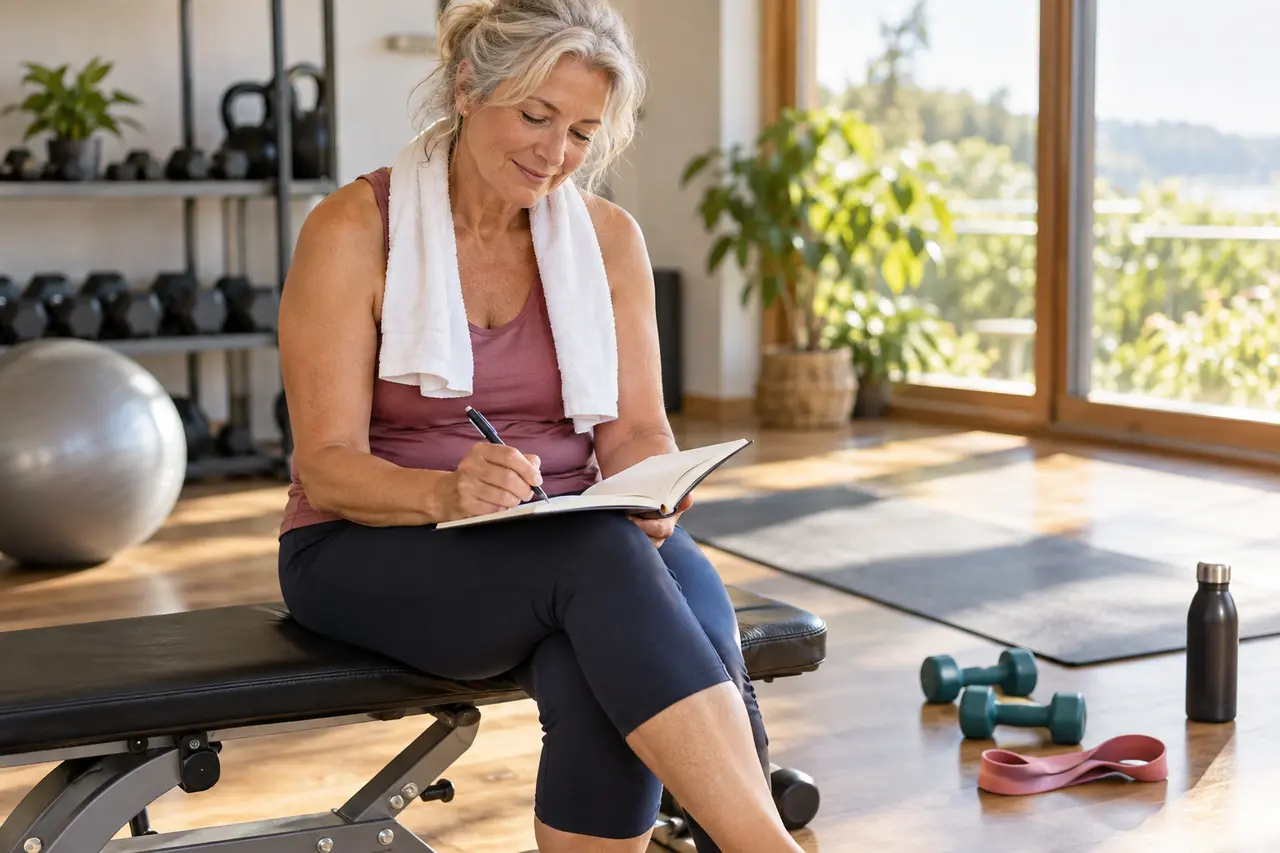
A number on the scales does not describe how everyday life feels. This log makes room for movement, exercises agreed with a professional and your observations afterwards. It does not increase workouts automatically, prescribe a programme or assess your physical capacity.
Your tool
This tool does not send your entries. They remain in this open page.
Choose a manageable observation goal
Think about what you want to understand: whether you walk regularly, carry out an agreed exercise or need more recovery afterwards. Begin with one focus. A short record you actually use is more helpful than an elaborate list that feels like another obligation. You do not need to document every movement throughout the day.
Name activities clearly
Write something specific, such as walking to the bus stop or the name of an exercise already explained to you. Duration is optional. Notes can record an agreed approach, but the tool will not turn it into a harder workout. It cannot check technique or establish whether an activity is suitable for your health situation.
Notice what happens afterwards
Describe how you felt during the activity and later. Differences between days may relate to sleep, work, symptoms or other circumstances. One entry does not establish a cause. Write tired in the evening instead of assigning a suspected diagnosis. That observation may help your next conversation with a suitable professional.
Compare progress fairly
Compare similar situations with your own previous experience rather than somebody else’s ranking. More minutes do not automatically mean more benefit. Rest can be part of a sensible response to your circumstances. The tool deliberately calculates neither calories burned nor a required number of training days. It lets you print the experiences you have recorded.
Respect the limits of a log
New severe symptoms are not a reason to finish another entry first. Stop a troubling activity and seek appropriate medical help when needed. Existing conditions, pain or returning after a long break may require professional help to select and adapt exercise. The list remains in the open page only and is not saved automatically when you leave.
Common questions
Can the log detect muscle loss?
No. An activity diary does not measure muscle mass or diagnose a condition. It can collect concrete observations for a professional discussion.
Can I record an activity without minutes?
Yes. Duration is optional. A clear activity description and a note about how you felt can already be useful.
Sources & further reading
Sources checked:

Questions and experiences
Share a question or a useful experience about this topic. Every contribution is checked before publication. Comments may be written in different languages.
Loading reader contributions…
Opening the form sets a necessary session cookie. No email address is required. Publication is subject to moderation and is not guaranteed. For deletion requests: Contact