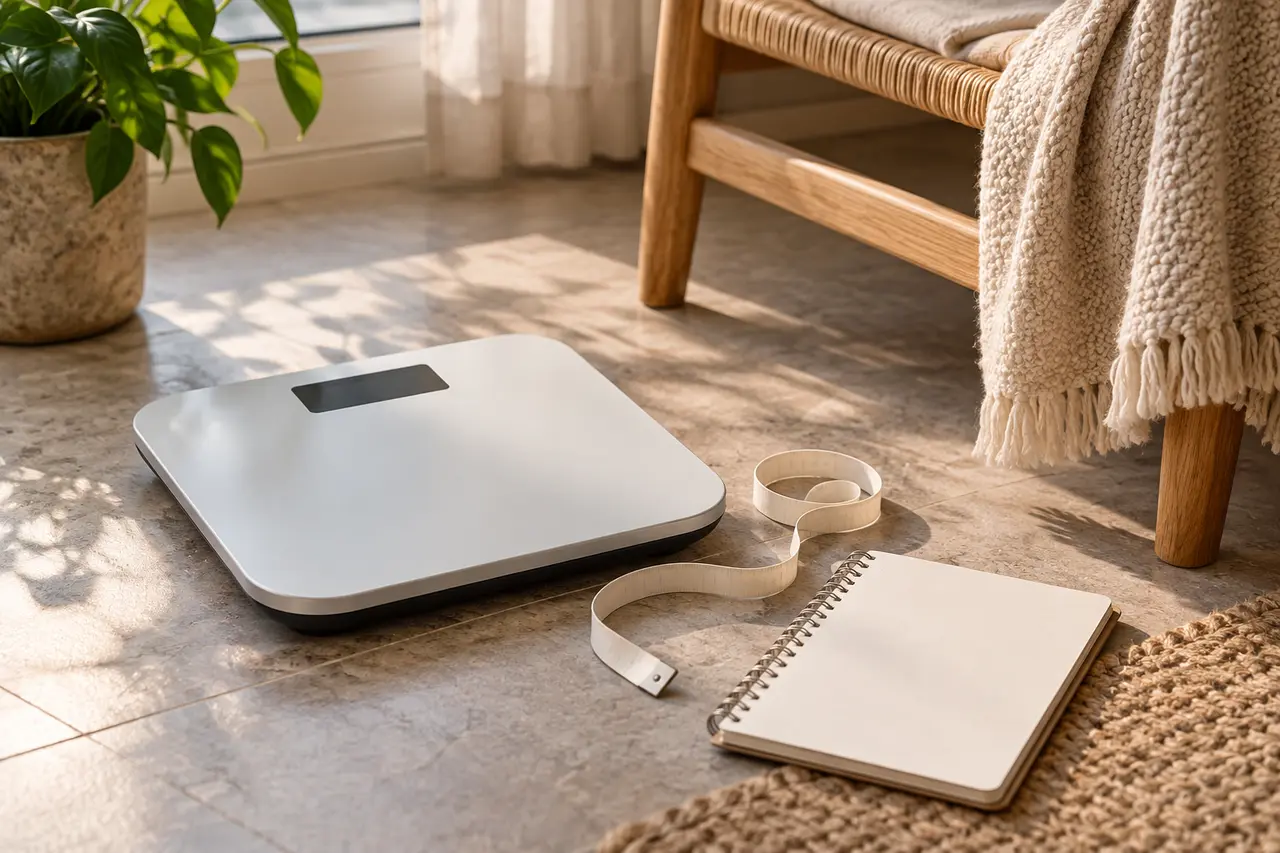
Measurements can reveal a pattern, but they can also confuse when weight, body-fat percentage and waist size seem to disagree. No single number describes your health completely. A useful routine starts by asking which information you and your care team actually need.
What an ordinary scale measures
A scale measures total mass without separating fat, muscle and water. Time of day, clothing, eating, drinking and bowel movements affect comparisons. A day-to-day change is therefore not automatically an equal change in body fat. If weighing supports your plan, use reasonably similar conditions and an appropriate agreed frequency. More measurements do not necessarily lead to better decisions. Unusual rapid changes, swelling or associated symptoms warrant medical interpretation. Do not assume that every fluctuation calls for a stricter diet or different treatment.
What body-fat scales estimate
Many devices use bioelectrical impedance and estimate composition through assumptions in a calculation model. Hydration, skin contact, timing and the model itself can alter results. A “muscle mass” display is not a direct measure of strength. Readings from different devices should not be compared as though they were identical laboratory tests. Follow the manufacturer’s instructions and relevant restrictions. An attractive app graph does not turn an estimate into a diagnosis. Isolated percentage changes should not trigger medication adjustments or major dietary changes on your own.
Measure waist size consistently
Waist circumference can add information about the distribution of body fat. It does not directly measure the amount of visceral fat or explain abdominal symptoms. If needed, ask someone to demonstrate a consistent measurement site and technique. Use the same method, a relaxed posture and a tape that does not compress the skin for comparisons. Different positions or deliberately pulling the abdomen in can distort the pattern. A single threshold cannot replace assessment of age, medical conditions and the wider clinical picture.
Look at patterns rather than daily verdicts
Decide beforehand what you will record and when it will be reviewed. Add brief context for unusual circumstances, such as illness, travel or marked constipation. This can make an unexpected reading easier to interpret without requiring an instant explanation. If measuring causes fear, constant checking or skipped meals, discuss that openly. Care can be organised with less self-measurement. Your progress does not need daily confirmation from a display, and a device should not become the judge of whether a day was successful.
Include other forms of progress
How are sleep, walking a familiar distance, getting up and specific symptoms? These observations do not replace clinical tests either, but they offer useful perspectives. Some health goals require blood pressure, laboratory results or other professional checks. Ask which are relevant for you. A small, understandable set of information may be more useful than many unexplained readings. Numbers should support your care rather than determine how you feel about your body on a particular morning.
Common questions
Can a body-fat scale reliably detect muscle loss?
No. It estimates composition and does not measure strength. Marked weakness or concern about muscle loss needs appropriate assessment rather than simply more weighing.
Should waist size always fall alongside weight?
Not at every measurement. Technique, tissue distribution and timing differ. Review the pattern together rather than treating individual numbers as a competition.
Sources & further reading
- Nutritional priorities to support GLP-1 therapy for obesity: joint advisory
- NICE: Assessing overweight, obesity and central adiposity
Sources checked:



Questions and experiences
Share a question or a useful experience about this topic. Every contribution is checked before publication. Comments may be written in different languages.
Loading reader contributions…
Opening the form sets a necessary session cookie. No email address is required. Publication is subject to moderation and is not guaranteed. For deletion requests: Contact