
Refreshing does not have to mean wetting and restyling your whole head. Identify the sections you want to change and leave the ones you already like alone.
Look before reaching for the spray
Check the front, sides, back and ends from an ordinary mirror distance. A flat patch needs a different approach from a tangle. Choose one or two goals, such as arranging the right front section while leaving the back alone. Check your available time too: anything you dampen needs time to dry again.
Test one small section
If needed, distribute a little water with your hands over one strand or curl group instead of soaking everything. Guide it gently into the direction you want, release it and wait until you can assess the result. Different areas can need different treatment; a short front section need not follow the routine for long lengths. If gentle arranging is enough, that area does not need extra product.
Account for the previous styling
Recall what you applied last time. More gel over an already coated section is not automatically useful. First try water or the refresh method recommended for your product, checking both feel and visible residue. If you add product, use a small amount only where needed. Do not prepare stored mixtures of water and cosmetics in a spray bottle. Use products as intended and keep containers clean.
Treat a knot as a separate task
Do not twist a tangled area into a neater-looking curl. Detangle it gently first, using a method suited to your texture. The American Academy of Dermatology describes options for curly hair including water, a suitable leave-in product and fingers or a wide-toothed comb. This does not mean every refresh requires complete detangling. Stop rather than pulling through resistance; seek salon help for substantial matting.
Have a comfortable backup
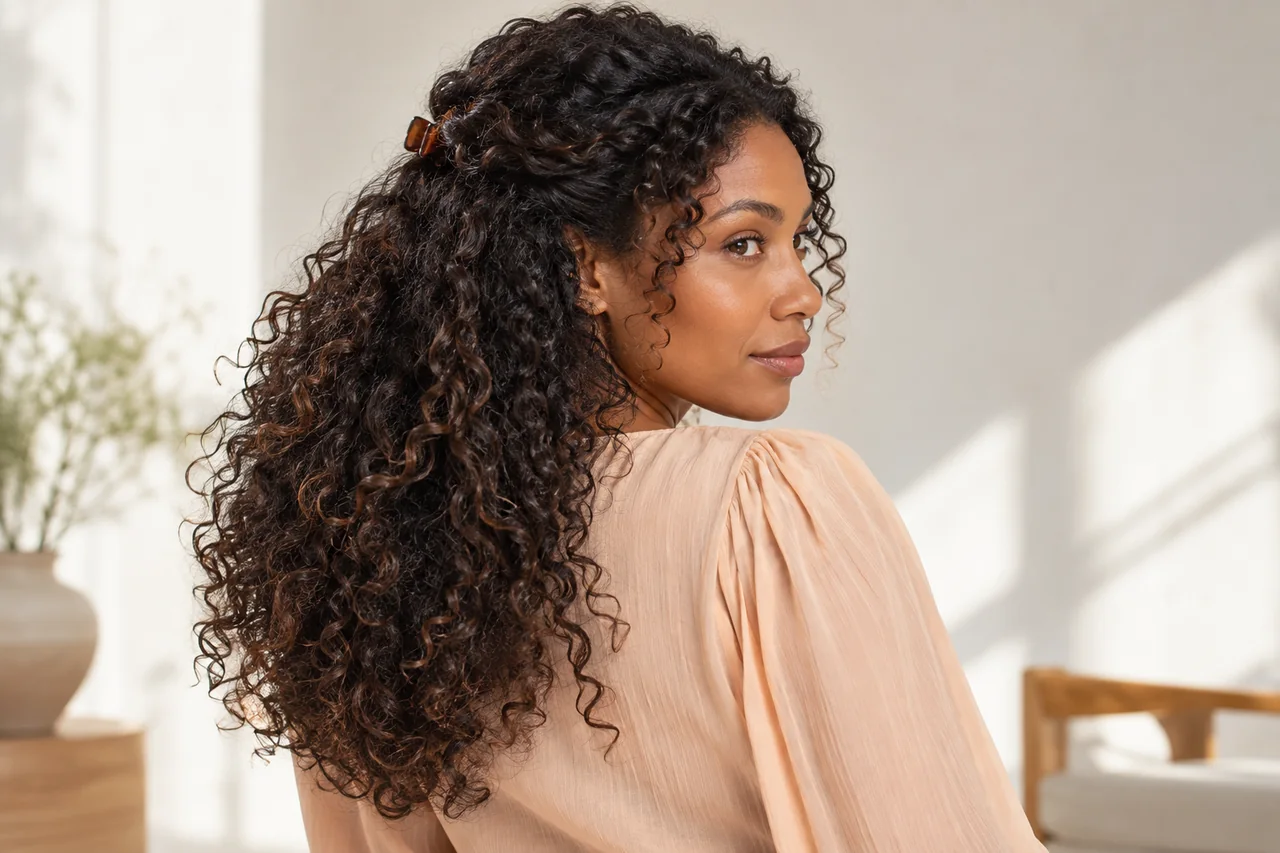
If front sections still do not settle after a few calm attempts, clip them loosely back and leave the remaining curls alone. A loose low ponytail is another option when you want the lengths out of the way. Decide in advance when you will switch approaches. A small correction need not become a lengthy daily project.
- One loose front section: dampen locally, arrange and check when dry.
- A flat patch: gently change its shape, or use a partial hairstyle.
- A tangle: detangle carefully rather than hiding it.
- Heavy residue: consider cleansing when needed instead of adding layers.
Turn your observations into a shortcut
Write a small decision card after a few attempts: one front section unsettled, dampen that section; back flattened, arrange gently; several areas uncomfortable, choose a simple style or normal cleansing. Keep only steps with an observed benefit. A photograph and a later check can show whether the change lasts long enough for you, but very different days cannot prove a product claim.
On a busy morning, for example, lightly dampen just one troublesome side section, arrange it and let it dry while you get ready. Check once, then clip it back if necessary. Your goal is to leave comfortably with a hairstyle you like, not to make every curl identical.
Frequently asked questions
Do curls need refreshing every day?
No. If you like the shape and your hair feels comfortable, another styling session is unnecessary. Follow your actual needs.
Can I just keep spraying more water?
More water also means more drying time. Try one small area first. Completely wetting the hair is a different task from a quick refresh.


Questions and experiences
Share a question or a useful experience about this topic. Every contribution is checked before publication. Comments may be written in different languages.
Loading reader contributions…
Opening the form sets a necessary session cookie. No email address is required. Publication is subject to moderation and is not guaranteed. For deletion requests: Contact