
Beautiful images and precise percentages can make cosmetic claims persuasive. A few questions help distinguish a specific product property from a broad impression without requiring you to reanalyse a study.
Translate the promise into plain language
What does radiant perfection mean: a less dry appearance, more even make-up or a measured change? If the claim cannot be explained clearly, its value for choosing is limited. Decide which real property you want rather than allowing emotional advertising to define your goal.
Ask about evidence and comparison
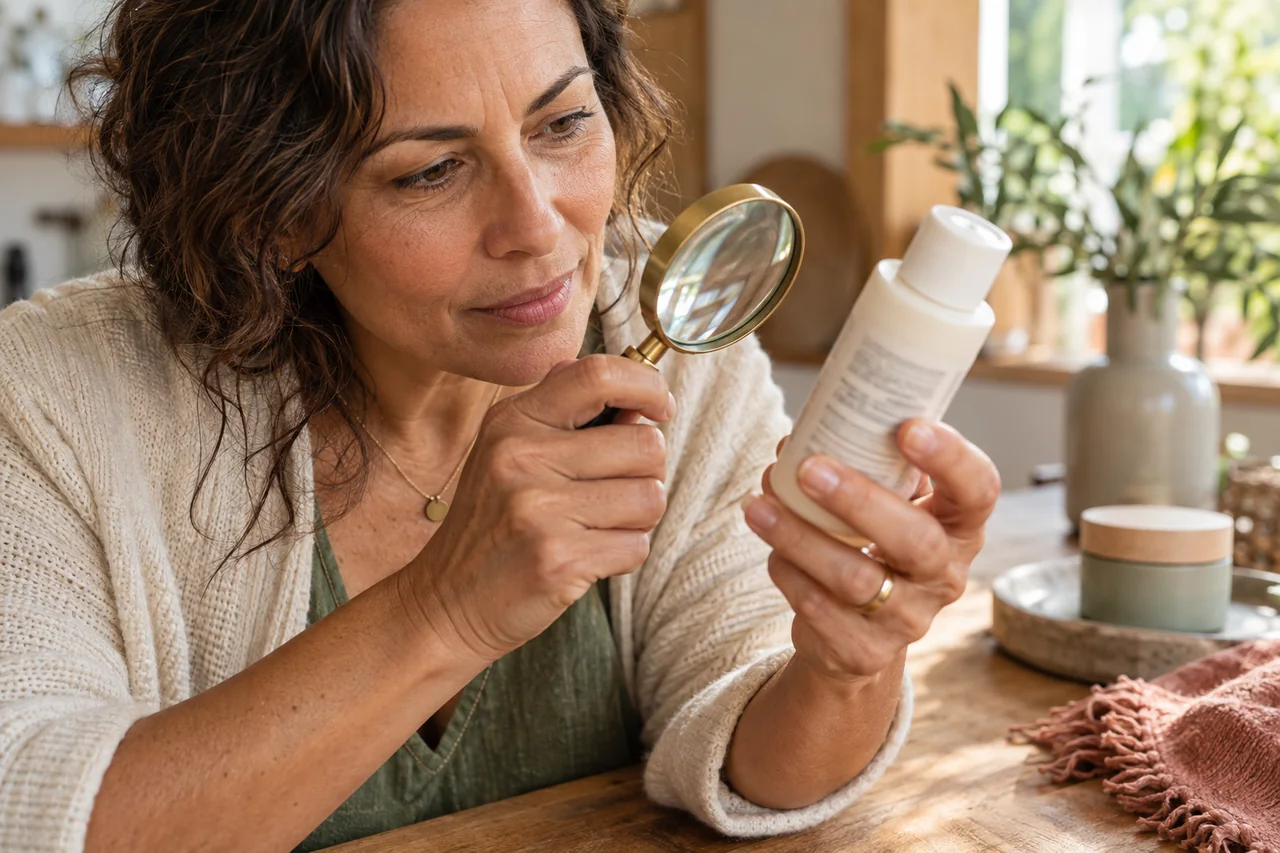
For a percentage, ask about the denominator and method: an instrument, participants’ answers or comparison with untreated skin? Was the finished product studied? For 90 per cent agree, ask how many people answered what question after which use. Clinically tested requires details of the test and result. Before-and-after appearance needs comparable lighting and timing.
Compare the tested use with yours
A result under certain conditions does not automatically apply to all use. Check the effort, duration and application described. If several products were used together, the combined result does not reveal each product’s contribution. Even a substantiated claim may be less relevant if the routine does not suit you.
Understand the rules
EU Regulation 655/2013 includes truthfulness, evidential support and informed decision-making among criteria for cosmetic claims. This does not make every pack statement a personal guarantee. Claims should fit the product and evidence. Unclear presentation should not imply a treatment for every possible disease.
Finish with your priorities
Rank tolerance, intended use, packaging, price and the feature you actually want. An impressive promise need not come first. If no real gap is filled, you need not buy. Save the description if helpful for later comparison rather than reacting to a sudden feeling that your existing routine is inadequate.
Frequently asked questions
Does dermatologically tested guarantee suitability?
The words alone do not explain the method or findings and cannot guarantee tolerance for everyone. With a known allergy, the current ingredient list still matters.
Are before-and-after photographs reliable evidence?
They can show a change but require context about light, angle, time and other products used. They do not automatically prove the result you personally will achieve.

Questions and experiences
Share a question or a useful experience about this topic. Every contribution is checked before publication. Comments may be written in different languages.
Loading reader contributions…
Opening the form sets a necessary session cookie. No email address is required. Publication is subject to moderation and is not guaranteed. For deletion requests: Contact