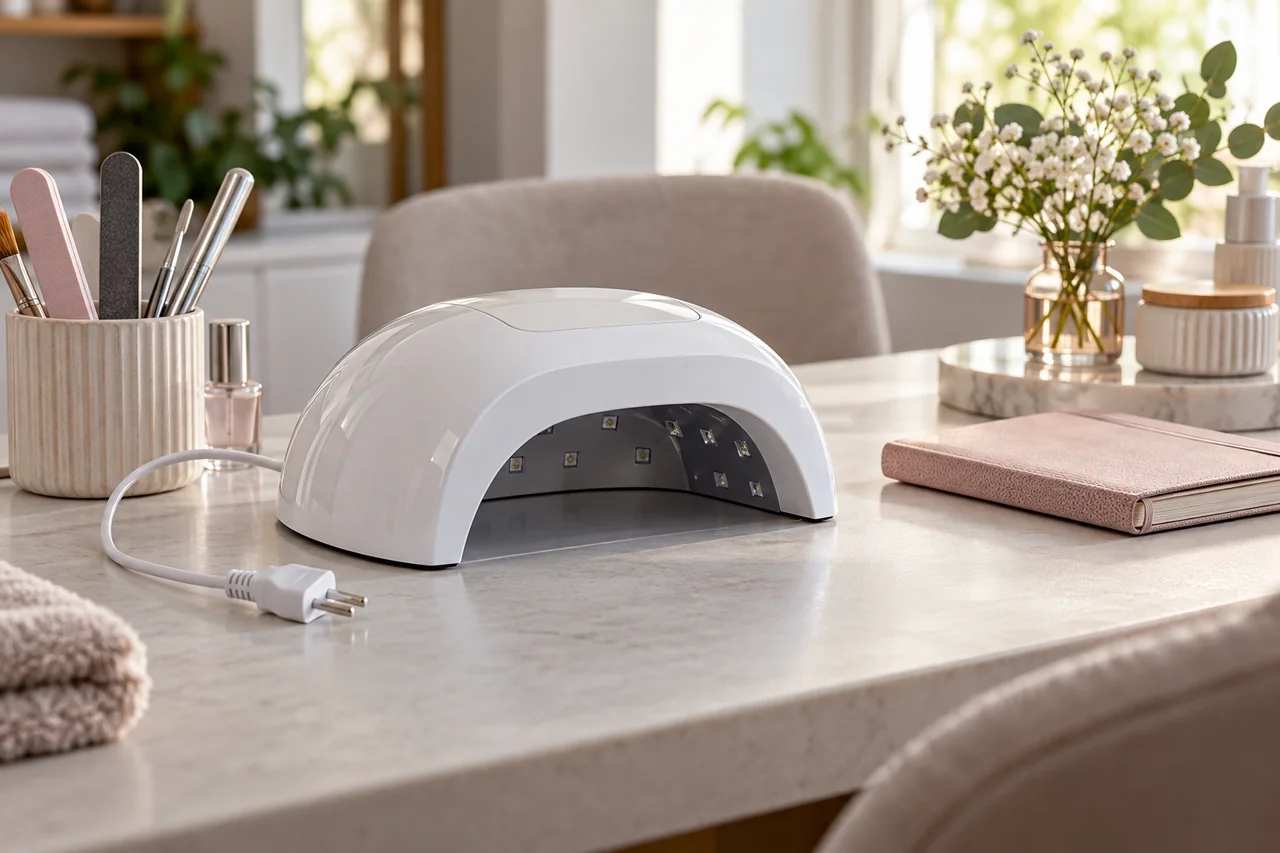
A nail lamp is not a universal accessory for every shiny polish. This question guide supports an informed decision about light-cured systems; it does not provide curing times, device settings or a home-gel tutorial, or calculate personal cancer risk from appointment counts.
Separate the look from the technique
Ordinary polish can be glossy too. Ask whether your desired appearance actually requires light curing. A colour or soft shimmer may be achievable through a simpler process. A useful consultation explains both the visible result and the technique rather than choosing the most elaborate treatment from a reference photograph.
Understand what the terms mean
LED describes the light source, not necessarily an absence of ultraviolet radiation. The American Academy of Dermatology discusses UV exposure in gel manicures. Devices and systems vary; this does not allow a personal risk calculation without more information. Avoid both “completely harmless” assurances and dramatic predictions from one appointment. A name or wattage does not fully explain the intended exposure.
Check product and lamp together
The British Association of Dermatologists emphasises using the recommended device for the product. Inadequate curing and uncured acrylate contact can be problematic. A stronger unrelated lamp or longer exposure is not an established shortcut. Ask for the product line and matched system. You do not need to calculate the technical details yourself, but the explanation should be traceable rather than a collection of internet timings.
Discuss protection beforehand
The AAD describes broad-spectrum, water-resistant sunscreen of at least SPF 30 or dark opaque gloves with exposed fingertips as hand-protection options before gel manicures. These do not make the process risk-free. Discuss them before treatment so they fit the intended routine. Known light sensitivity, particular skin problems or medical concerns need medical advice; a salon cannot provide individual medical clearance.
Take four clear questions
Ask which product is used, which device belongs with it, what hand-protection options are planned and how removal works, including responsibility and cost. State limits such as no extra length or no home device. A complete product name is more useful than “latest technology”. You may postpone a decision if answers remain unclear; an available appointment is not a reason to accept an unexplained process.
Choose alternatives by your real goal
If colour is the main aim, consider air-drying polish. If a special surface appeals, ask whether a similar effect is available through a simpler method. It need not duplicate a heavily edited reference exactly. Compare application, appointments and removal; choosing no coating for now is also valid.
Interrupt the process for burning or pain, and seek assessment for later unusual reactions. Do not invent longer lamp exposure as a repair. Record products and symptoms. Already owning a home lamp does not establish that continued use is appropriate; check whether you actually know the complete intended system.
Frequently asked questions
Is an LED nail lamp always UV-free?
No. LED nail devices may emit UV light for curing. The specific technology and intended application matter more than the shortened advertising term.
Can I calculate the correct curing time myself?
This guide provides no formula. Product, device and application must match. Do not transfer a universal time from another system or respond to uncertainty by extending exposure yourself.
Questions and experiences
Share a question or a useful experience about this topic. Every contribution is checked before publication. Comments may be written in different languages.
Loading reader contributions…
Opening the form sets a necessary session cookie. No email address is required. Publication is subject to moderation and is not guaranteed. For deletion requests: Contact