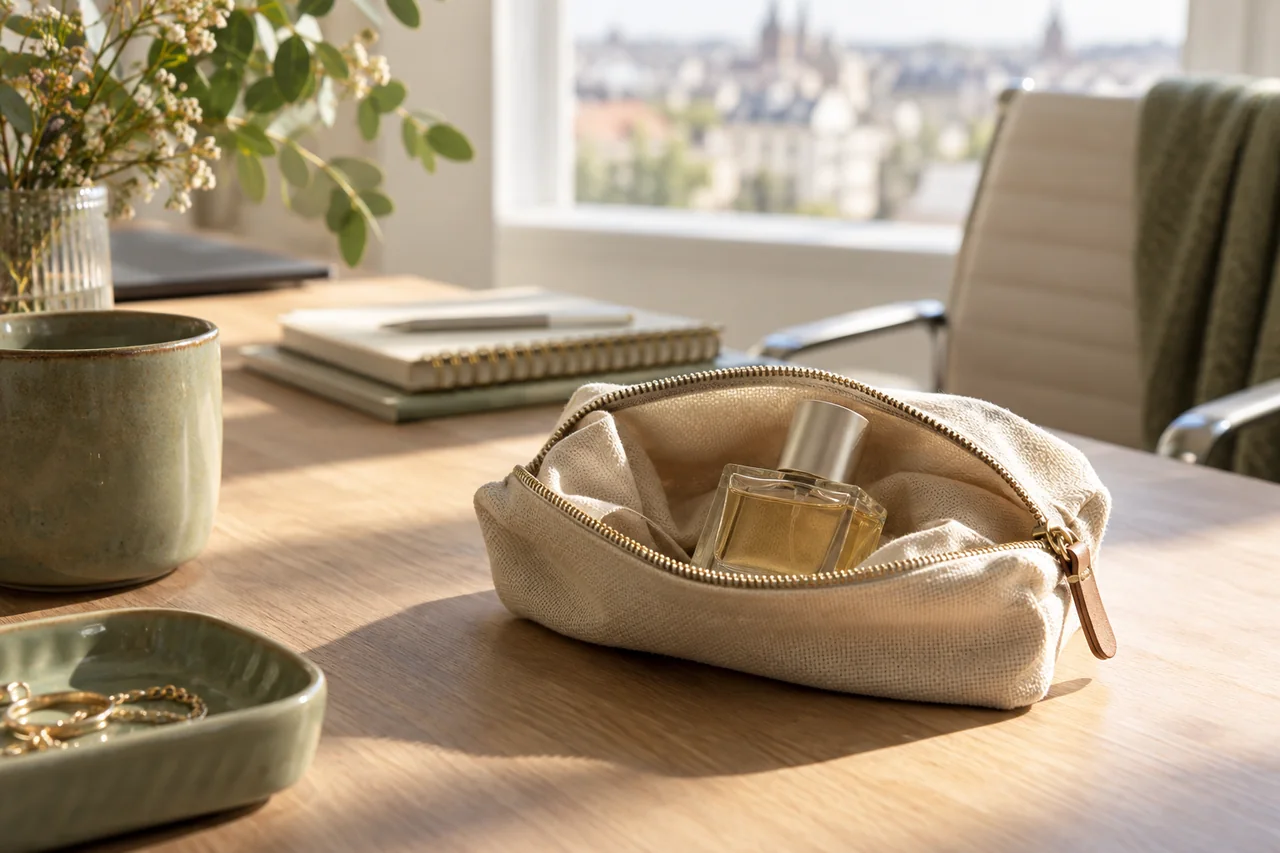
Perfume in an office affects people sharing the space, who may have little opportunity to move away. Start with workplace conditions and agreements, not supposedly professional notes. Less fragrance, another time or no fragrance can each be the appropriate solution.
Understand the setting
Check fragrance, hygiene and protection rules relevant to the role. No explicit rule does not mean any intensity is acceptable. Include small meeting rooms, lifts and shared vehicles. Ask about arrangements without requiring colleagues to disclose or justify health information.
Reject guaranteed office-safe families
Fresh, clean and citrus describe smell, not low intensity or universal tolerance. A discreet marketing label may still mean an unpleasant experience for someone nearby. Warm or sweet need not mean loud either. Judge actual product, application and context. Fragrance does not create professional competence or guaranteed success.
Keep application outside shared workspaces
Where perfume use is appropriate, apply according to directions before commuting and with restraint. Do not spray at a desk, meeting room or communal washroom; the mist also reaches others. Carrying an atomiser creates no obligation to refresh. Plan any after-work preparation outside shared office areas rather than buying a separate office perfume automatically.
Respond without a taste debate
A useful reply is “Thanks for telling me; I will leave fragrance off here.” Personal enjoyment does not resolve someone else’s difficulty. Do not require a medically proven allergy before showing consideration. You can also ask clearly for a fragrance-free shared space. Repeated issues may need a team agreement and manager’s help; room fragrance is part of that discussion too.
Plan exceptions and visits
A team in a confined project room may agree on fragrance-free project days without judging anyone’s style elsewhere. Even mostly solitary work can involve a small client meeting or long shared drive. Plan these in the morning without asking personal medical questions. Behavioural rules such as no respraying are clearer than lists of supposedly acceptable scent notes.
Frequently asked questions
Is one spray always acceptable?
No. Products and atomisers differ. A fragrance-free agreement also excludes one spray.
Is room spray a better alternative?
It does not solve the shared-choice problem. Avoid it without explicit agreement from those using the space.
Must I evaluate a colleague’s symptoms medically?
No. Respect a practical request without knowing a diagnosis. Medical assessment belongs with professionals, and private health details need not be discussed at work.


Questions and experiences
Share a question or a useful experience about this topic. Every contribution is checked before publication. Comments may be written in different languages.
Loading reader contributions…
Opening the form sets a necessary session cookie. No email address is required. Publication is subject to moderation and is not guaranteed. For deletion requests: Contact