Oats, beans and protein-containing breakfasts are sometimes promoted as natural GLP-1. There is a real biological connection behind the phrase: eating affects gut hormones. That observation does not establish that a particular meal works like an authorised medicine. A more useful everyday question is whether your meals nourish you and fit your circumstances.
Distinguish a hormone from what stimulates it
The body releases GLP-1 in response to eating. The hormone helps regulate appetite and blood glucose. When an article mentions GLP-1 foods, it often means foods that may influence the body's hormone release, not foods containing a pharmaceutical ingredient.
GLP-1 receptor agonists act through a related signalling pathway, but they are specifically developed medicines with evaluated uses. A rise in a hormone after eating cannot be converted into an equivalent medicine effect or dose. The word natural does not establish either an offer's strength or its safety.
What a small nutrition experiment can show
In a small randomised study involving eight healthy adults, a high-protein meal increased certain gut hormones more than comparison meals. However, the study did not establish a reduction in the food participants subsequently chose to eat. It illustrates the gap between a laboratory measurement and a practical outcome.
This was not a months-long trial of obesity treatment. Turning it into a promise of a guaranteed weight-loss breakfast goes beyond the findings. Ask what was actually measured: a blood marker, short-term hunger or body weight followed over a meaningful period?
Build meals without competing over hormones
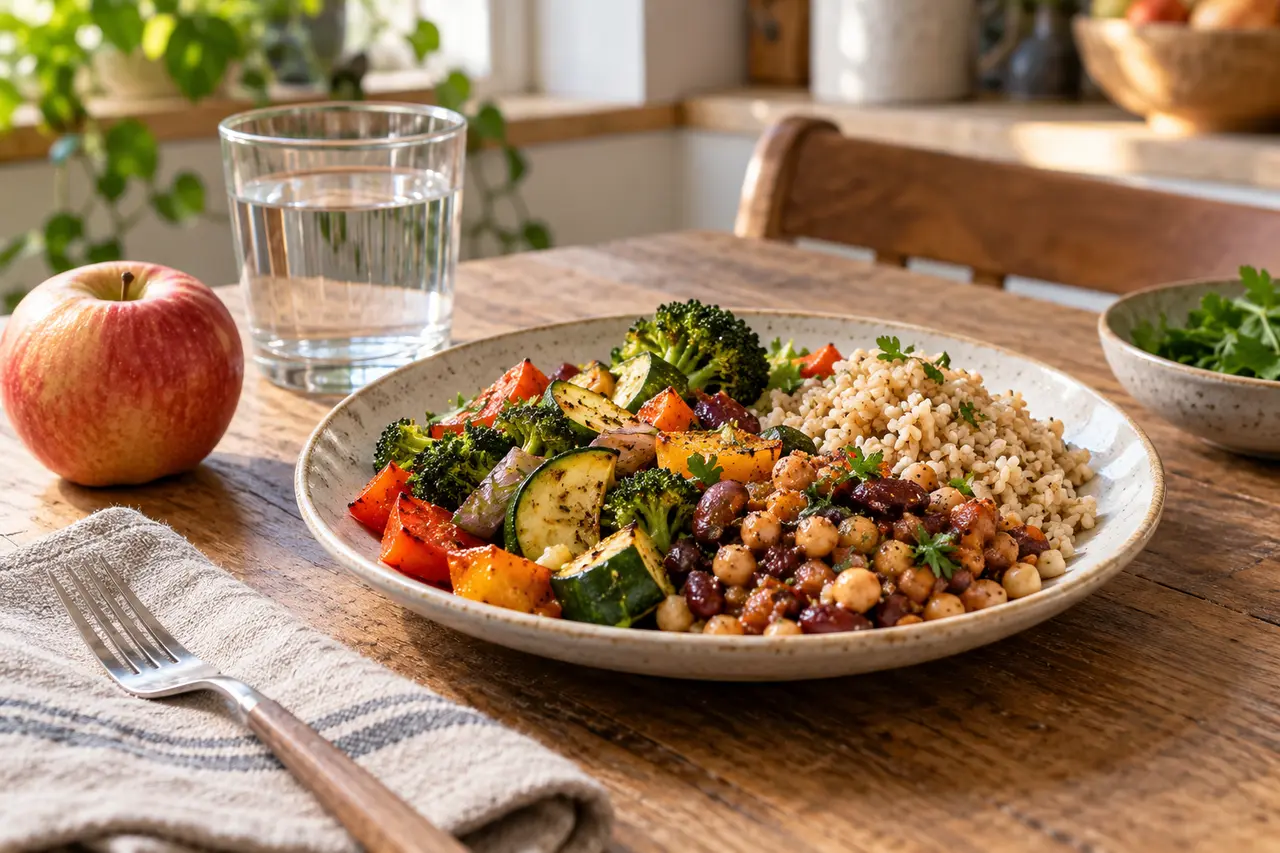
Ordinary foods can be chosen for taste, tolerability, nutritional value and price. For example, oats can be combined with a suitable dairy food or alternative and fruit. Beans with vegetables and a filling accompaniment offer another possibility. These are meal ideas, not formulas for copying a medicine.
There is no need to maximise one ingredient. When medical conditions or very limited food intake are involved, nutritional advice may be more helpful than a growing list of supposed boosters. If fibre-rich foods are unfamiliar, every meal does not have to change completely overnight.
Translate the advertising into a precise question
Supports GLP-1 is much less specific than improves this measured health outcome in this group of people. Look for the amount, the actual product and the comparison studied. An impressive graph or a research link does not answer those questions on its own.
Also notice whether a discussion of ordinary foods quietly leads to a subscription for powder. Scientific language can accompany either offer. You do not need continual hormone tracking or a self-purchased laboratory test to decide whether an everyday meal is practical and nourishing.
Make room for both nutrition and clinical care
A sound eating pattern has value in its own right, regardless of a GLP-1 headline. Nutrition can be part of care with or without medicines. Equally, discovering a new recipe does not provide a reason to replace or reduce prescribed treatment yourself.
Needing medical support is not evidence that you ate the wrong foods. Discuss goals and barriers without blame. One practical step might be preparing a meal for a frequently hectic workday: something you tolerate, enjoy and can realistically obtain, rather than an attempt to achieve an invisible hormonal target.
Common questions
Do oats contain semaglutide?
No. Semaglutide is a pharmaceutical ingredient. A possible influence on the body's gut hormones does not turn a food into that medicine.
Should I switch to a very high-protein diet?
A hormone experiment does not establish that recommendation. Appropriate nutrition depends on health, requirements and tolerability; maximising one nutrient does not replace balanced planning.



Questions and experiences
Share a question or a useful experience about this topic. Every contribution is checked before publication. Comments may be written in different languages.
Loading reader contributions…
Opening the form sets a necessary session cookie. No email address is required. Publication is subject to moderation and is not guaranteed. For deletion requests: Contact