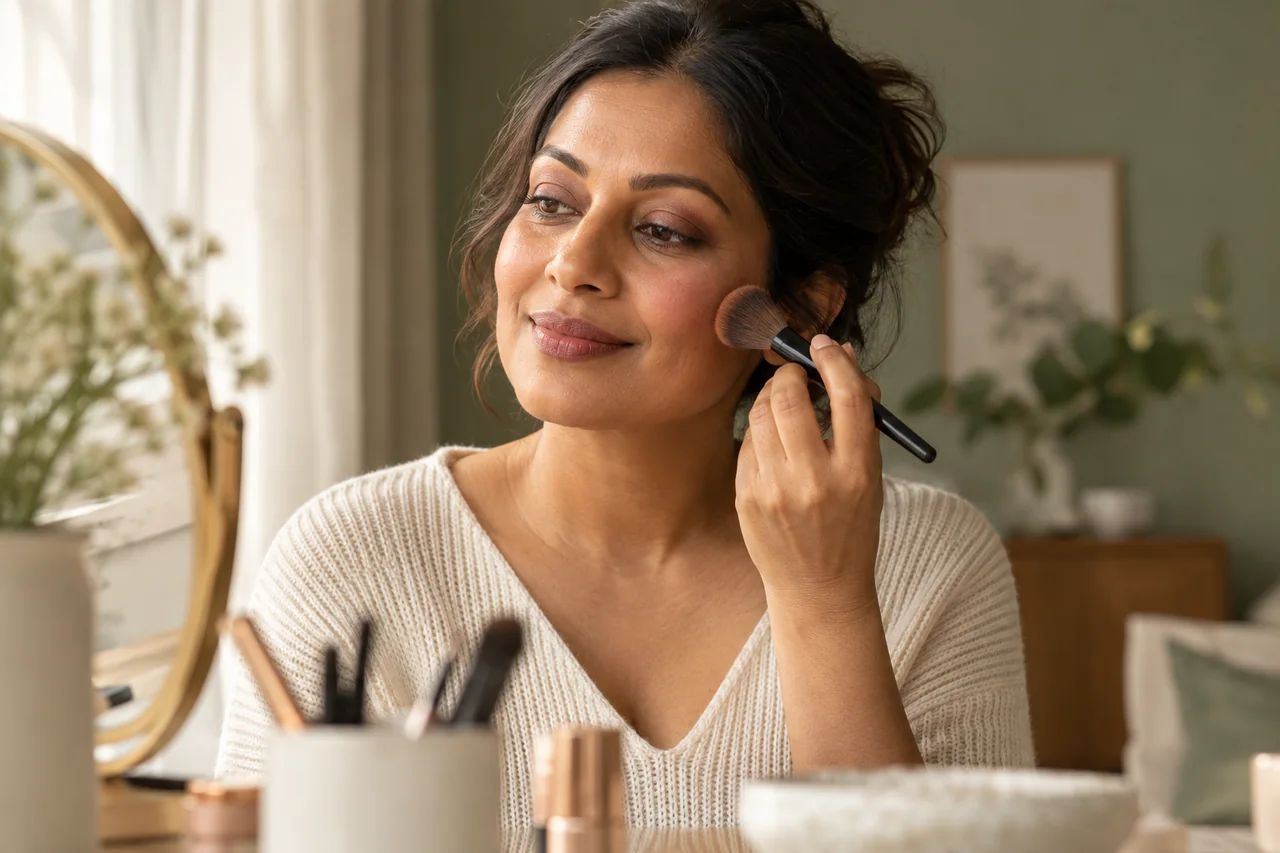
Monochromatic make-up repeats a colour direction, such as rose-brown, across several areas. Products need not match exactly or come from one range. Differences in depth and finish can give each area a clear role without improvised multipurpose use.
Choose an anchor
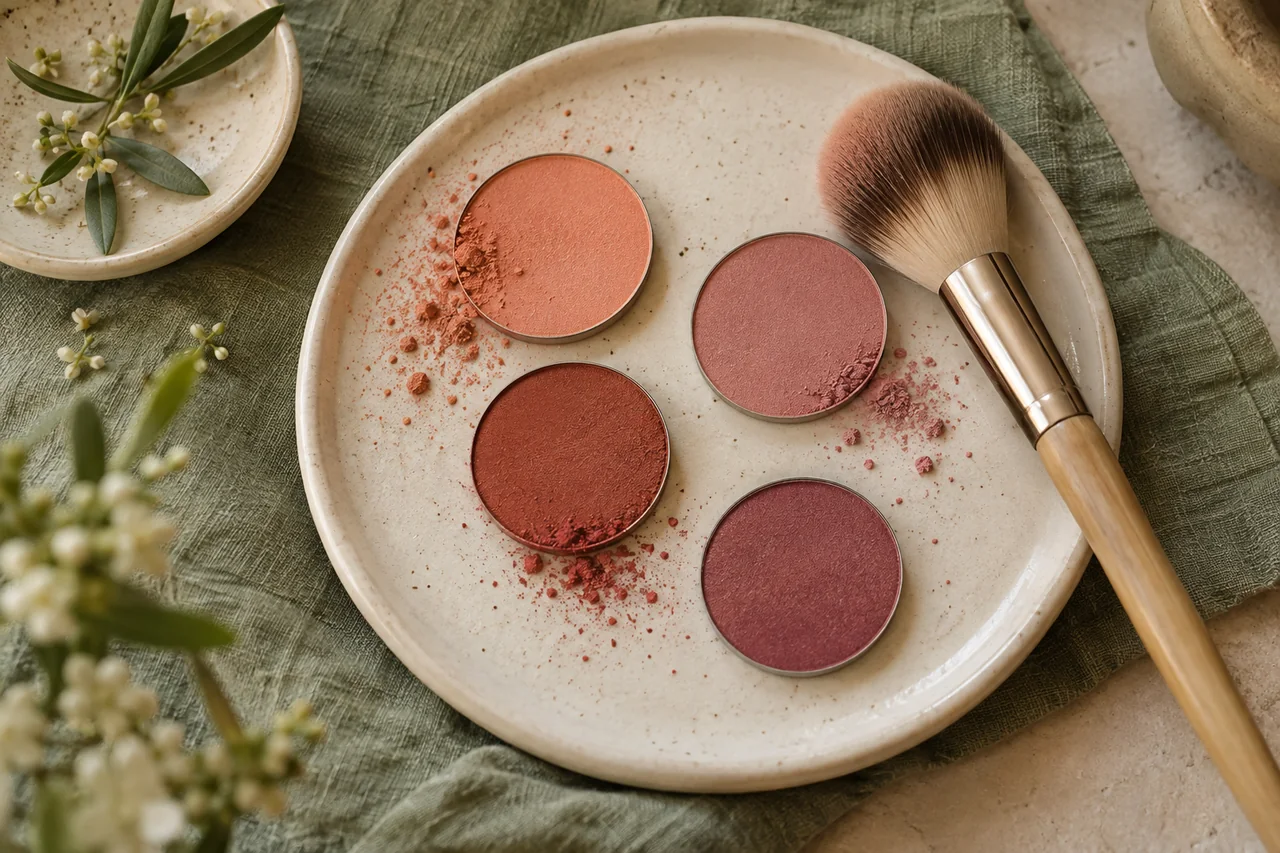
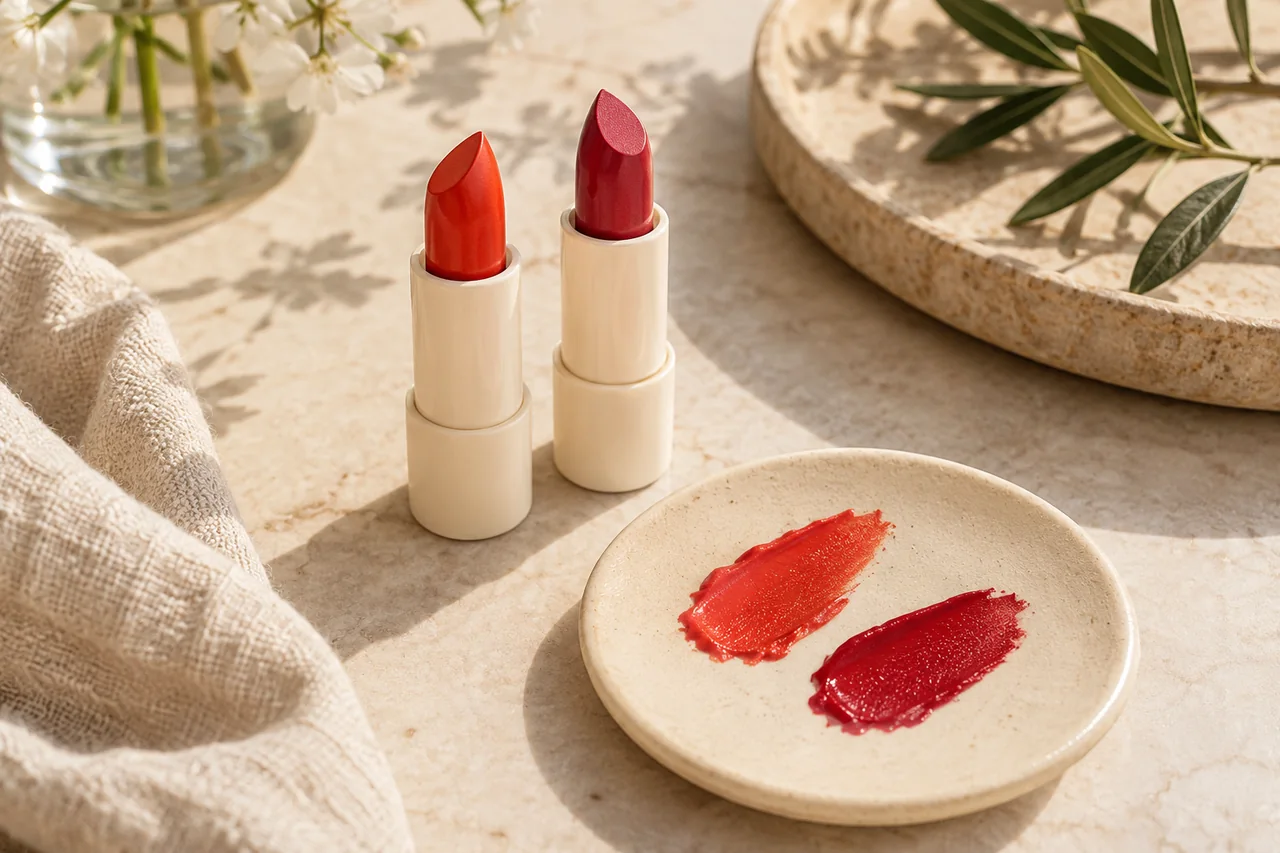
Start with rosewood lipstick, peach blush or taupe eyeshadow. Describe its direction: rosy, brown, warm, cool or orange-leaning. Find a related product for just one other area. Repeating colour on lips and cheeks while leaving eyes familiar is already a complete idea; a third connection can wait.
Give areas different intensity
For a rose-brown theme, try clear lips, light cheeks and deeper lids, or let the eyes lead. Check from normal distance. If everything feels equally strong, reduce one area instead of discarding the concept. Less product or a smaller patch may be enough.
Use finish as another choice
Matte eyes, slightly glossy lips and restrained cheeks can remain connected. Decide where reflection belongs. Keeping one glossy area makes a first comparison easier, but does not prohibit several. Try both variants in your usual lighting; camera-adjusted colours are not the final judge.
Respect product boundaries
A lipstick that looks right for the lids is not automatically eye-safe. The FDA advises using only cosmetics intended for the eye area there. Check multipurpose labels explicitly. Separate products can create related colours without decanting or mixing. If a third suitable shade is missing, keep the two-area version.
Complete the look with clothing
Cream can offer a quiet setting for rose-brown, navy a clearer difference, and a rosy top another repetition. Try the combination rather than assuming a guaranteed effect. Note products, quantities and clothes so it is repeatable. You may later add a contrasting lipstick; a style label describes an experiment, not a permanent obligation.
Frequently asked questions
Must every product be exactly the same colour?
No. Related shades at different depths are enough. Lips, lids and cheeks have different backgrounds and textures, so exact sameness is unnecessary.
Can a red monochromatic look be everyday make-up?
Yes, if you enjoy it. Begin with varied strengths and a clear focus, using each product only in its approved areas.

Questions and experiences
Share a question or a useful experience about this topic. Every contribution is checked before publication. Comments may be written in different languages.
Loading reader contributions…
Opening the form sets a necessary session cookie. No email address is required. Publication is subject to moderation and is not guaranteed. For deletion requests: Contact