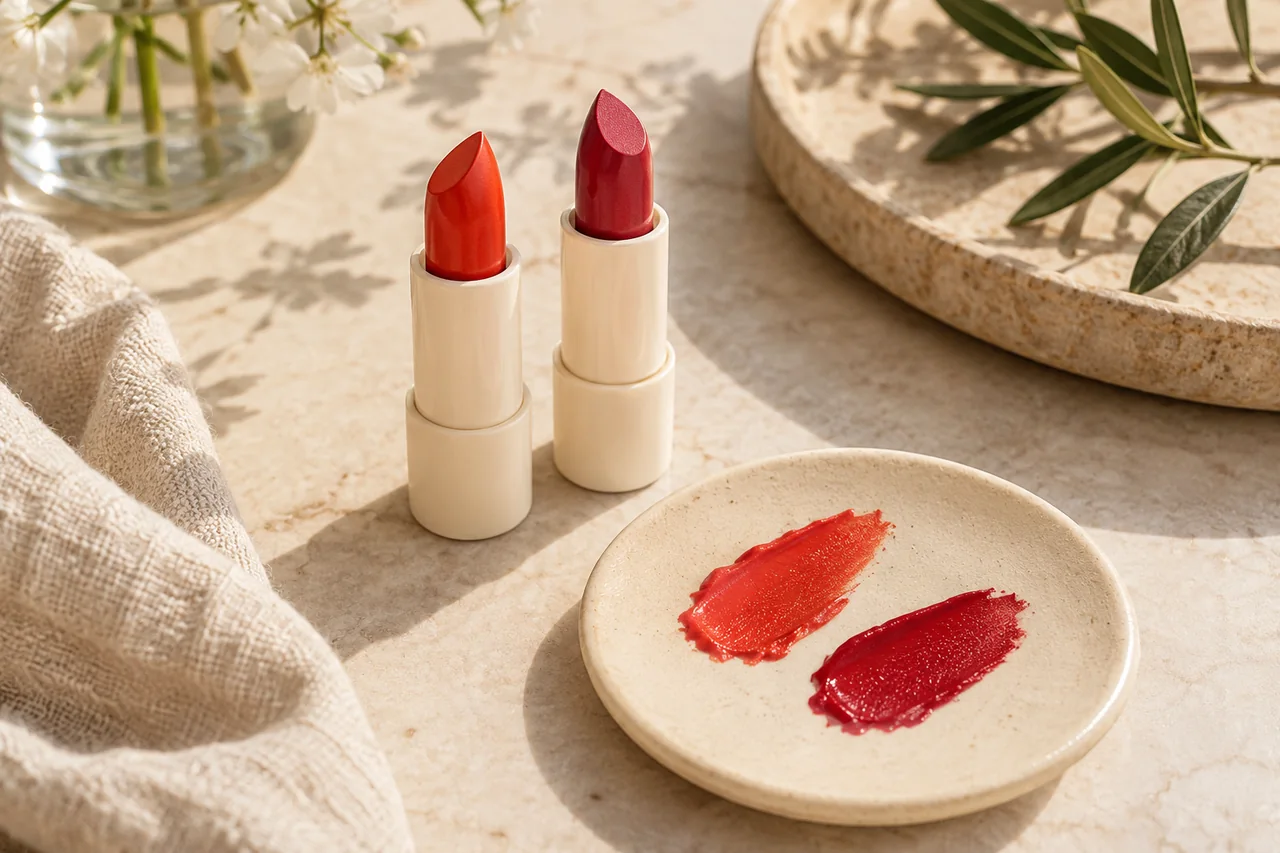
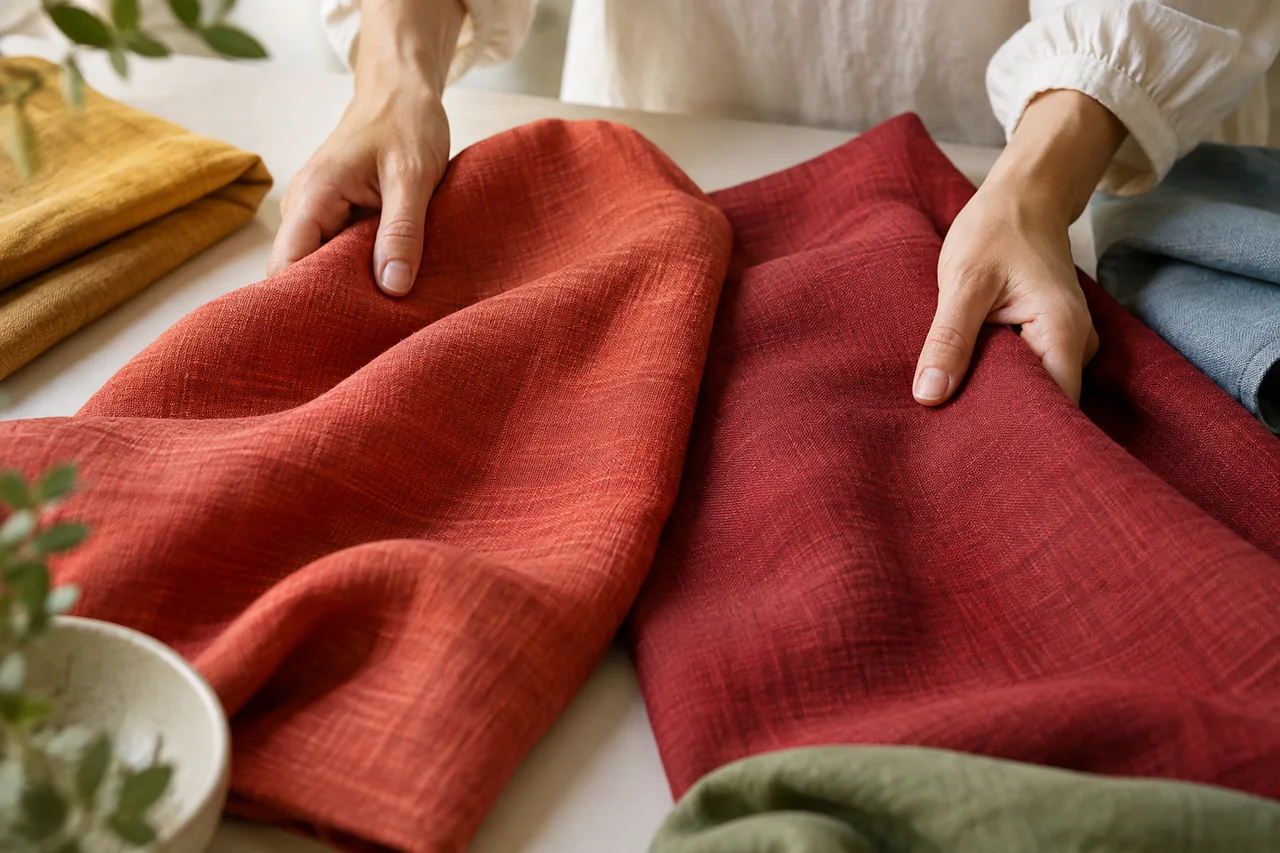
Warm and cool describe colour directions, not fixed labels for people. Orange-leaning red is often called warm, berry-leaning red cool. A useful comparison avoids changing shine, depth and colour all at once.
Find a fair pair
A pale peach balm and dark matte berry differ in nearly everything. Instead compare two similarly deep reds or mid-depth roses with similar shine and coverage. If your collection has no fair counterpart, note the gap for a later planned purchase; do not buy several products just to perform a test.
Include natural lip colour
Sheer coverage leaves your own pigment visible, sometimes differently on upper and lower lips. Decide whether you like that variation or want a more uniform surface. Paper and hand swatches can shortlist a product but cannot reproduce the finished lip result. Where hygienic personal sampling is possible, use the actual application.
Keep the first setting stable
Compare on separate occasions in similar daylight with a familiar top. A regular window spot is sufficient; coloured surroundings and changing camera settings make interpretation harder. First assess the mirror and normal distance, then add a second garment. Record whether the colour is too pale, too clear, too muted or simply the effect you wanted.
Allow more than one useful answer
You may prefer a warmer red beside cream and a cooler one beside navy. Neither is thereby wrong. If both suit you but one texture is easier to wear, prioritise handling. The comparison describes a combination under particular conditions, not a permanent property of your face.
Give each favourite a role
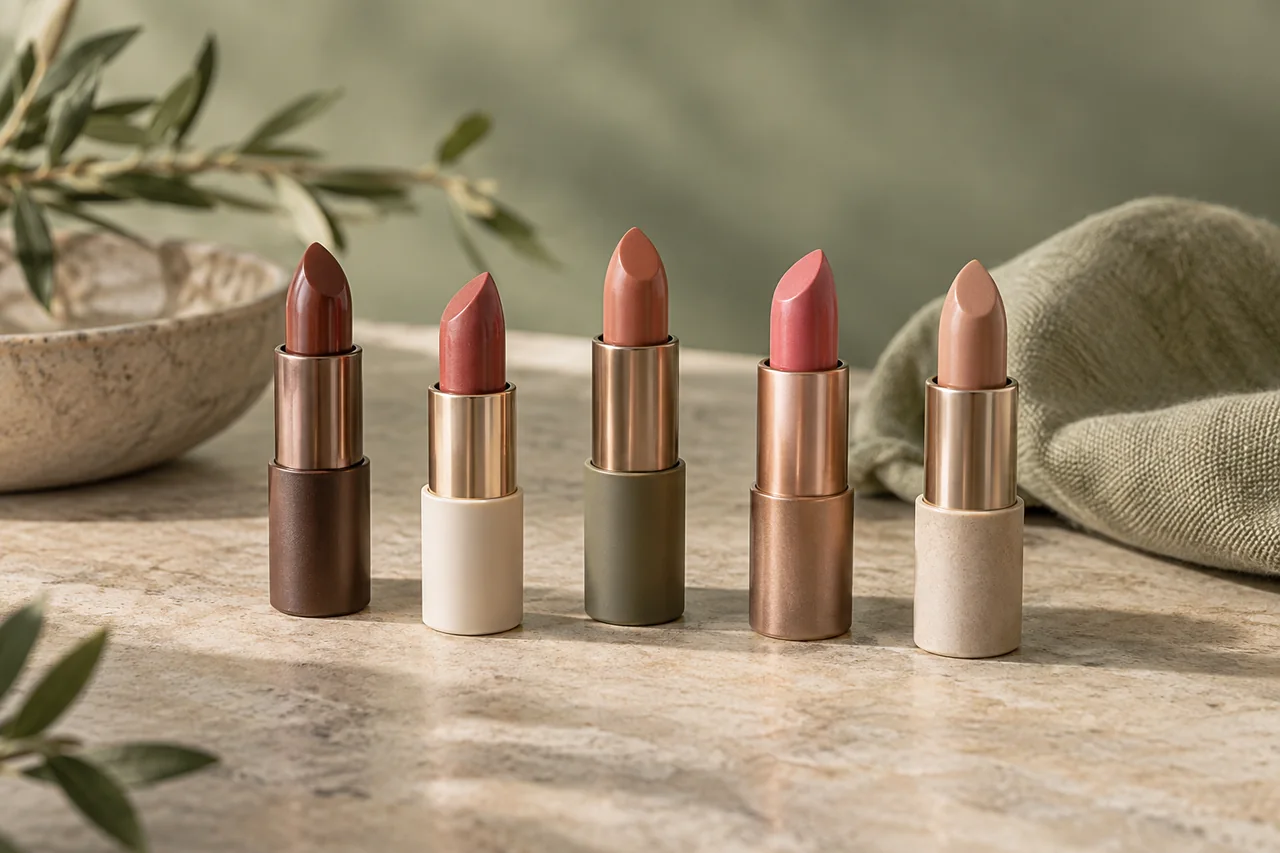
Assign daily ease, deliberate strength or occasional playfulness. Two shades filling the same role may be unnecessary; complementary uses may justify both. Check whether you actually reach for them again after the trial. A useful lipstick is one you choose for its appearance and handling, not its model label.
Frequently asked questions
Do blue-looking veins mean I can wear only cool lipstick?
No. A single skin observation cannot establish a reliable style rule. Direct comparison is more informative.
Must blush and lipstick have the same temperature?
No. Similar directions can simplify a quiet starting look; an intentional difference can also work. Try the pair before replacing either.

Questions and experiences
Share a question or a useful experience about this topic. Every contribution is checked before publication. Comments may be written in different languages.
Loading reader contributions…
Opening the form sets a necessary session cookie. No email address is required. Publication is subject to moderation and is not guaranteed. For deletion requests: Contact