
A garment is not a measure of discipline, body shape or success. It may simply belong to a different stage of life. Decide according to current comfort, real uses and whether a practical next step is something you actually want to take.
Use today’s life as the reference
Ask when you would comfortably wear it now and whether a full combination exists. Rare occasion wear can have a real role; several unworn versions for one hypothetical event deserve closer review. Earlier choices need not remain useful forever.
Check one meaningful solution
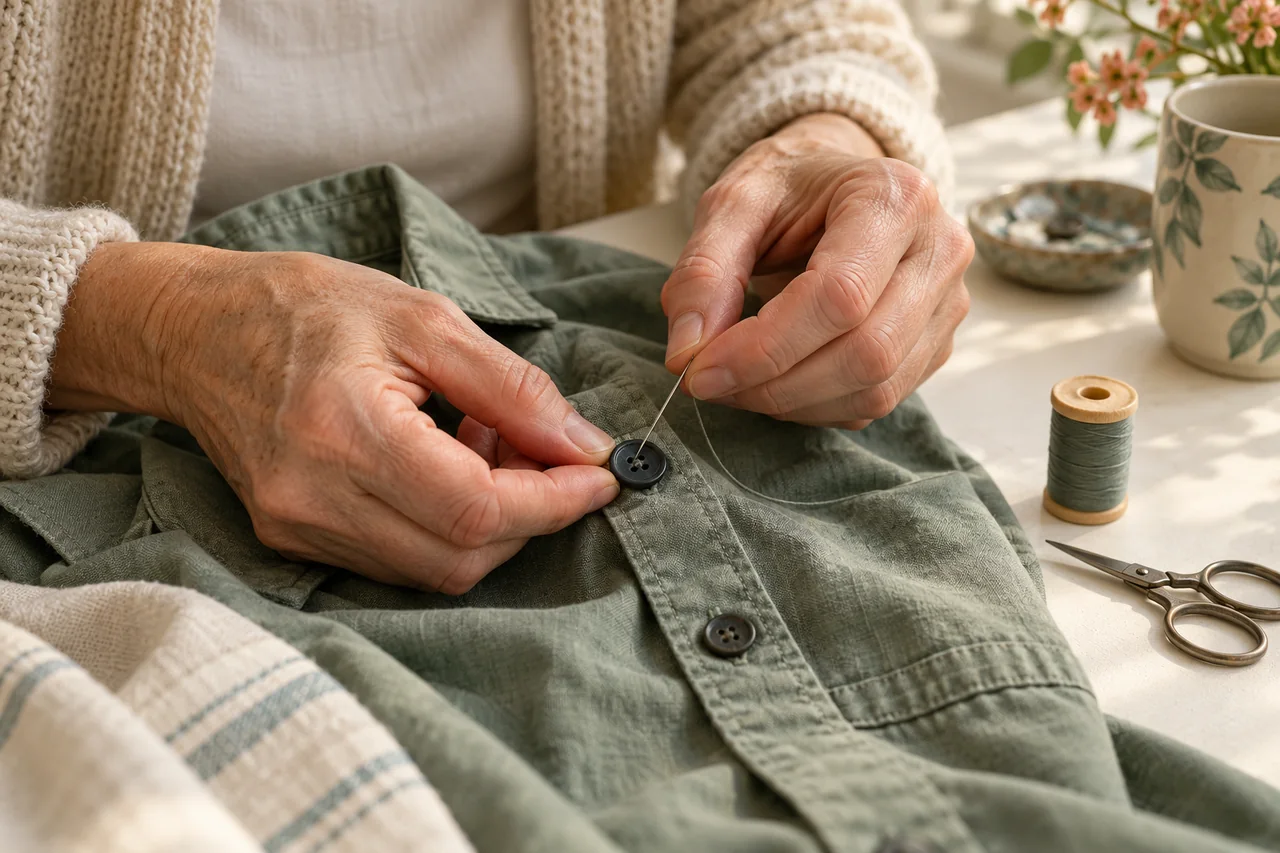
Name the obstacle: button, length or untried pairing. Try two tops with a skirt or request an alteration estimate, with a realistic date. A theoretically repairable item remains unavailable if the repair never happens. This is a clarification exercise, not an endless duty to rescue everything.
Separate memory from money
Keep meaningful clothes in a bounded memory space if wanted. For other pieces, ask whether storing them restores any lost usefulness merely because they once cost money. Photos and notes can preserve some memories but need not replace an original you value.
Complete the onward step
Check cleanliness and condition, disclose faults and confirm what the recipient currently accepts. Damaged or dirty textiles do not belong in every collection. Use appropriate local routes and never leave bags beside full collection points. Set a delivery date and note recurring reasons for letting clothes go.
Frequently asked questions
Should everything unworn for a year go?
No. Occasion wear, changing circumstances or unusual weather may explain a pause. Assess a realistic future use and whether the piece remains suitable.
What about uncertain items?
Use a small separate box with a review date and a clear question. Complete any useful fitting or repair estimate before that review.


Questions and experiences
Share a question or a useful experience about this topic. Every contribution is checked before publication. Comments may be written in different languages.
Loading reader contributions…
Opening the form sets a necessary session cookie. No email address is required. Publication is subject to moderation and is not guaranteed. For deletion requests: Contact