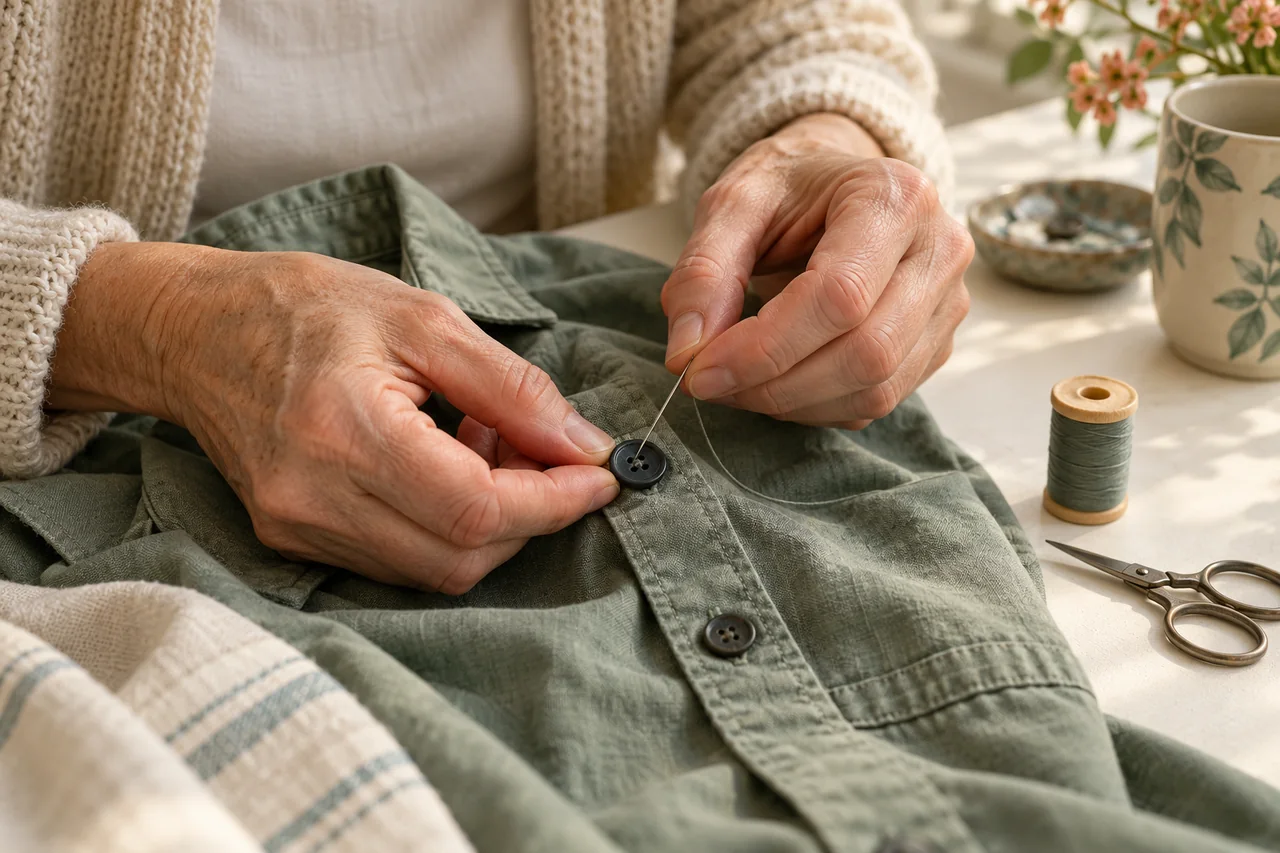
A useful repair returns a garment to a real role. Begin by distinguishing a failed seam from damaged fabric and assessing the whole piece, including fit, before choosing a method.
Inspect the actual damage
Lay the garment flat in good light and inspect both sides. A loose seam, missing button, stretched buttonhole and torn surrounding cloth require different responses. Photograph the area for advice and review other damage or discomfort that may change the overall decision.
Choose a manageable hand repair
An accessible loose button can be a starting point. Compare neighbouring buttons and practise unfamiliar stitches on scrap fabric. Follow the original path of a simple open seam without catching unnecessary layers. Stressed areas, stretch fabrics and complex construction may need more skill; pause before a major intervention.
Ask a clear professional question
Take the complete garment and explain intended use and whether visible repair is acceptable. Request a cost, scope and likely appearance. Torn areas may need reinforcement and zip replacement depends on construction. An estimate supports a decision without assuming a simple technical solution.
Return the piece to use
Keep the repair queue manageable, with a next action and realistic date. After repair, try on and care for it appropriately, then return it to its combinations. Longer use and repair can support a more considered approach to clothing; the practical result is a trusted outfit available again.
Frequently asked questions
Is inexpensive clothing worth repairing?
Original price is only one factor. Fit, use, personal value and repair cost matter. Get a quote for substantial work.
Must a repair be invisible?
No. A visible patch or contrasting thread can be deliberate, provided it suits the fabric, stress and use. Try the visual idea before permanent work.



Questions and experiences
Share a question or a useful experience about this topic. Every contribution is checked before publication. Comments may be written in different languages.
Loading reader contributions…
Opening the form sets a necessary session cookie. No email address is required. Publication is subject to moderation and is not guaranteed. For deletion requests: Contact