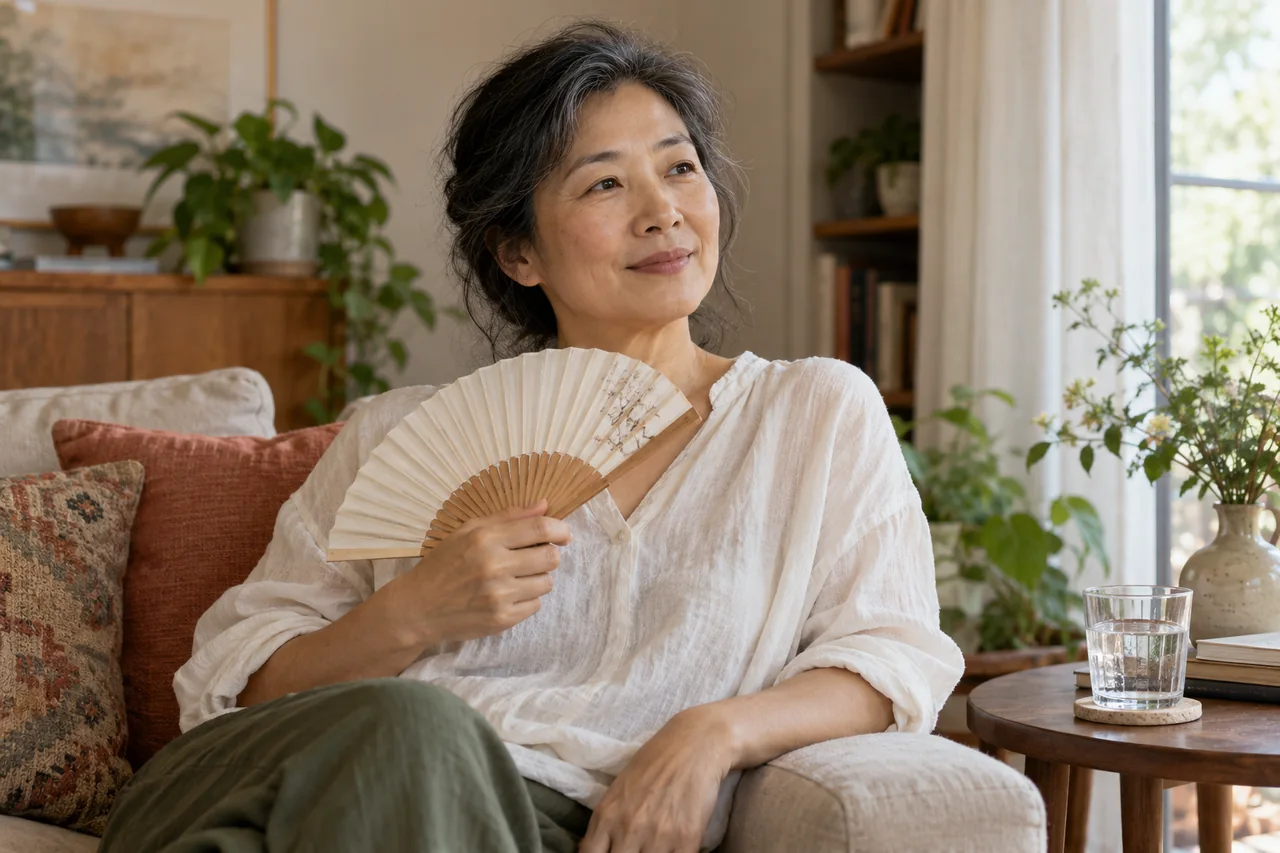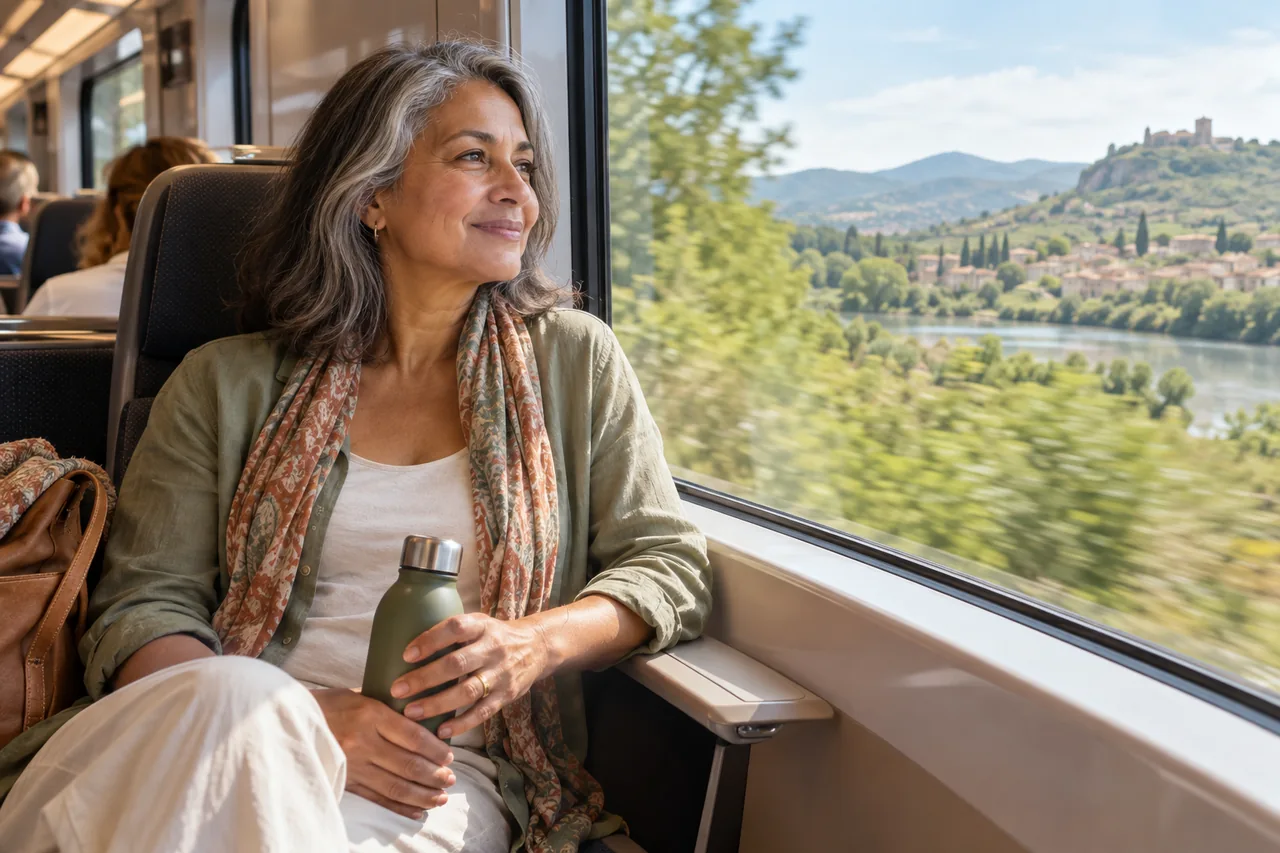
You cannot always prevent a hot flush on a journey or at an event. Small preparations can nevertheless give you more options. The aim is a more comfortable experience, not perfect control of your body. Adapt this plan to work, public transport, holidays and special occasions.
General information, not a diagnosis or an individual treatment recommendation. Discuss persistent or concerning symptoms and treatment choices with a qualified healthcare professional.
Start with the hardest situation
Perhaps a crowded train, a conversation without pauses or inflexible clothing is the main problem. Choose one situation and identify what can change. An aisle or edge seat may help more than an expensive cooling product when leaving briefly is difficult. If visible sweat worries you, a spare top or cloth may help. These are personal comfort choices, not treatments of the underlying cause.
Carry a small usable kit
Pack only items you can reach easily: water, a light cloth, spare clothing or a small fan. Check whether an electric fan is permitted and practical at the destination. Existing items may work without specialist purchases. Try clothing before a long event. Several light layers can be adjusted more easily than one warm garment. Comfort, movement and removability matter; no fabric prevents every hot flush for everyone.
Leave small margins in the schedule
Allow time between arrival and an important appointment where possible. Then an episode need not coincide with luggage, navigation and urgency. Agree a brief break before a long meeting if helpful. You do not need to explain private health details to the whole group. “I need some air and will be back shortly” may suffice. Whether to mention menopause is your decision; discreet support from one person may suit better.
Include your treatment plan when travelling
Carry prescribed medicines in line with travel and import rules and follow storage instructions. Ask a pharmacist or clinician in advance about longer journeys or complex time-zone changes. This guide does not provide an individual dosing schedule. If night sweats severely disrupt sleep, make the next day realistic rather than filling every holiday hour. On long drives, alertness takes priority over completing the route; stop if dangerously sleepy.
Observe triggers without expanding restrictions
Very hot drinks, alcohol or spicy food may feel uncomfortable in certain settings. You can compare individual habits, but evidence for universal trigger avoidance is limited and responses vary. Do not progressively exclude food or social activities because of an internet list. A change that does not help or unnecessarily limits enjoyment is useful information. The goal is participation, not an increasingly restricted life.
When preparation is insufficient
Frequent flushes can significantly affect life. Discuss the burden instead of treating it as poor organisation. Medical and non-drug options can be assessed individually. Travel planning complements rather than replaces help. Persistent unusual sweating with fever, unexplained weight loss or other new symptoms needs assessment. Chest pain or severe breathlessness requires urgent medical help. Not every sensation of heat away from home is a menopausal flush.
Frequently asked questions
Do I need special menopause clothing?
No. Start with comfortable existing items you can combine flexibly. Buying something makes sense only if it solves a specific practical problem.
Can a fan treat hot flushes?
It may improve environmental comfort. That does not establish reliable reduction of the underlying symptoms.