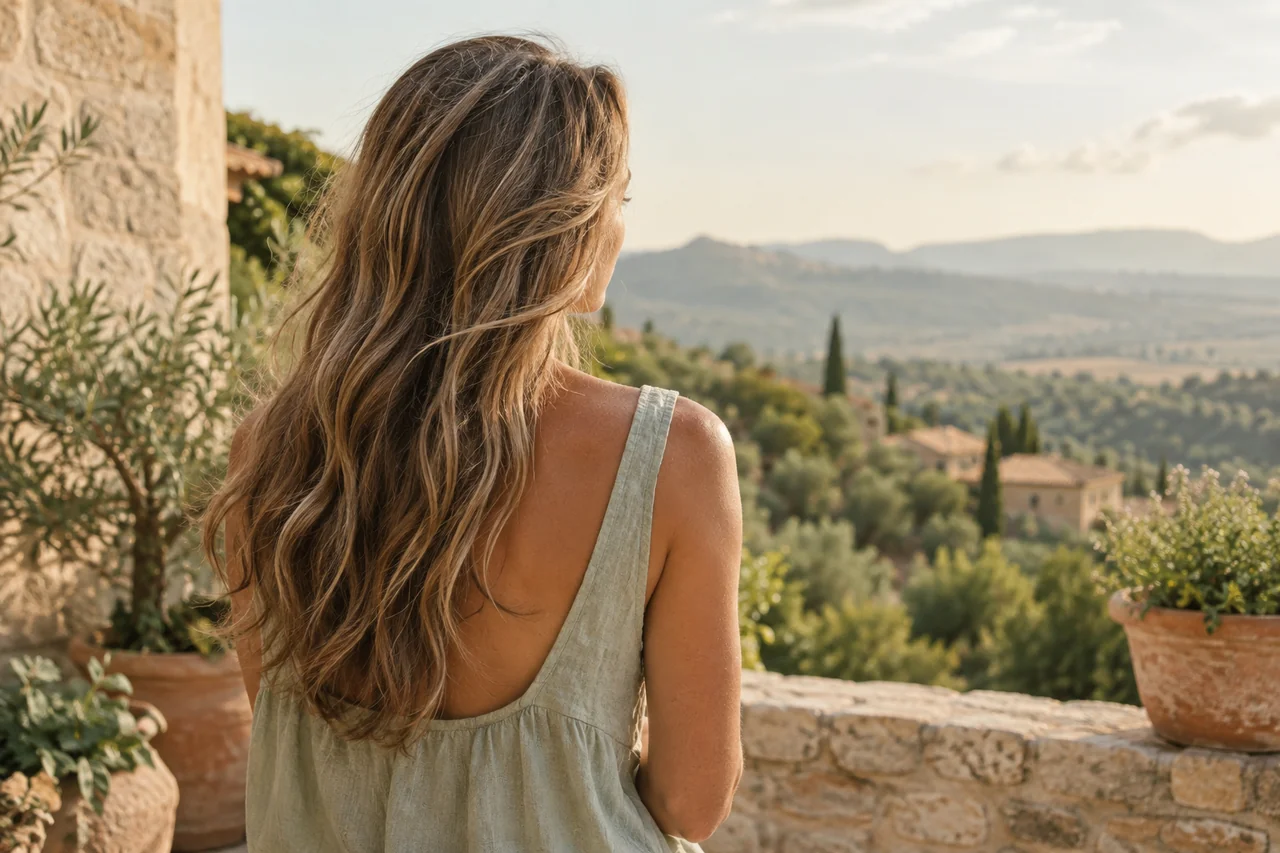
Bronde describes a colour impression between brown and blonde rather than one fixed technique. Two images using the name can suggest very different changes. Decide which colour should lead before choosing where and how strongly to lighten.
Choose the dominant impression
View a reference small enough that individual strands stop dominating. Does it read more brown or blonde? Remaining brunette with light movement differs from mostly light hair with deeper areas. State the priority; an approximately equal balance still needs concrete examples.
Place lighter areas deliberately
Choose whether the front, upper lengths or ends should be brighter. Review usual hairstyles from several angles. A ponytail, loose waves and a straight bob reveal placement differently. Bright face-framing is an option, not an automatic component of every bronde request.
Separate warmth from contrast
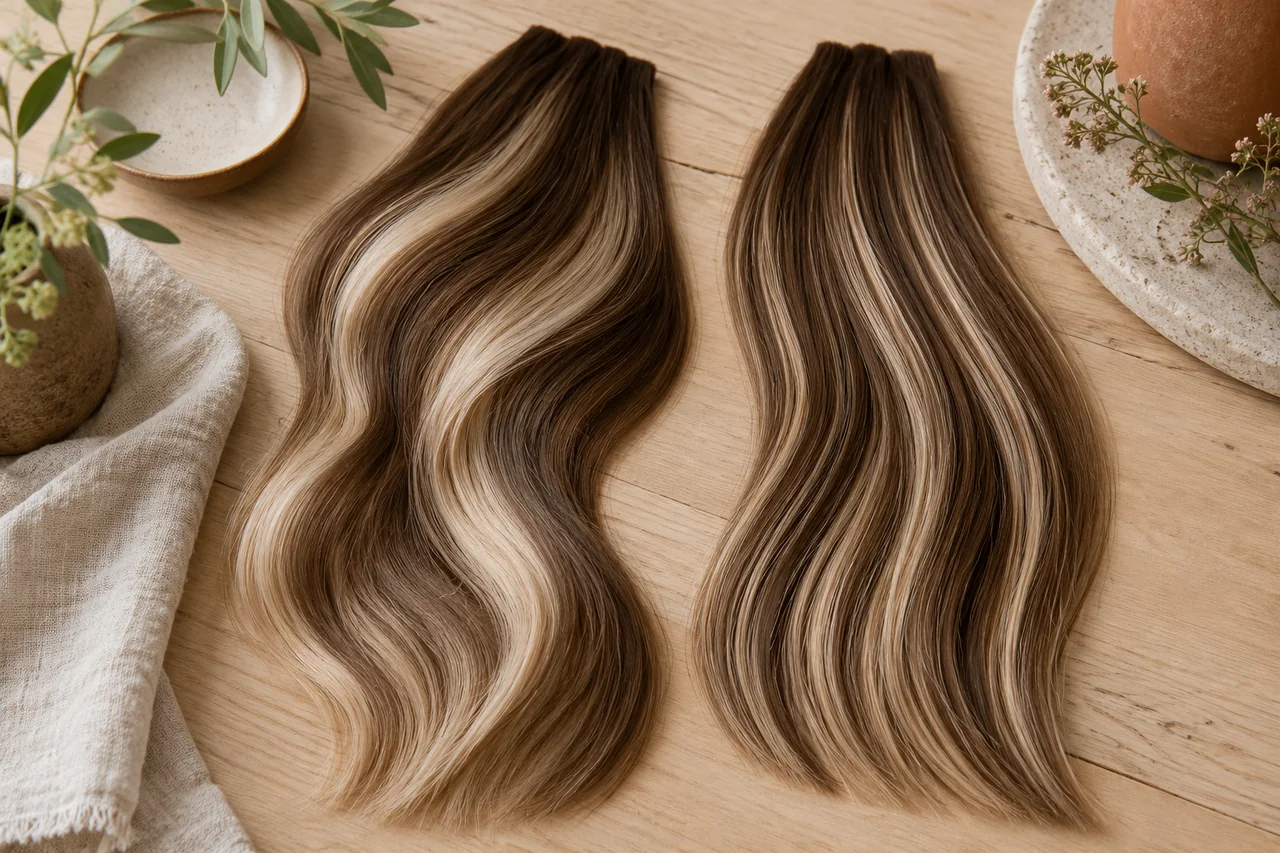
After understanding placement, compare warm, neutral and cool directions using real swatches in similar conditions. Decide whether lighter sections should read as individual bands or blend into the whole. Attractive photo lighting should not lead you accidentally to accept a much stronger light-dark contrast.
Ask for a realistic route
Show current colour and disclose previous applications. Ask which parts of the reference are reasonably achievable and whether the first visit delivers a wearable goal or only an intermediate step. Leave the method open while requiring a clear explanation of result and cost.
Make a smaller change when it answers the aim
Hypothetically, someone wants to retain medium brown but finds it visually uniform. An initially blonde-looking wave reference gives way to a subtler example with a few lighter zones, also assessed straight. The aim is more visible movement, not maximum lightening or a guaranteed procedure.
Include regrowth and refreshes
Ask how placement relates to natural roots, what later treatment may be needed and what is optional. A soft transition is not unlimited freedom from maintenance. Lower contrast or less lightened area can fit a lower-effort preference; bronde need not be as blonde as possible.
Frequently asked questions
Is bronde a distinct colouring technique?
Usually it names an effect between brown and blonde. Different methods may create it, so ask about the proposed process and placement.
Does it require long waves?
No. Discuss shorter or straight versions using references of similar structure and length. Placement appears differently with each cut.
Is it a necessary stage towards full blonde?
No. It can be a chosen intermediate goal, but is not automatically required. Mention any lighter long-term aim so assessment includes current colour and the condition of treated lengths.


Questions and experiences
Share a question or a useful experience about this topic. Every contribution is checked before publication. Comments may be written in different languages.
Loading reader contributions…
Opening the form sets a necessary session cookie. No email address is required. Publication is subject to moderation and is not guaranteed. For deletion requests: Contact