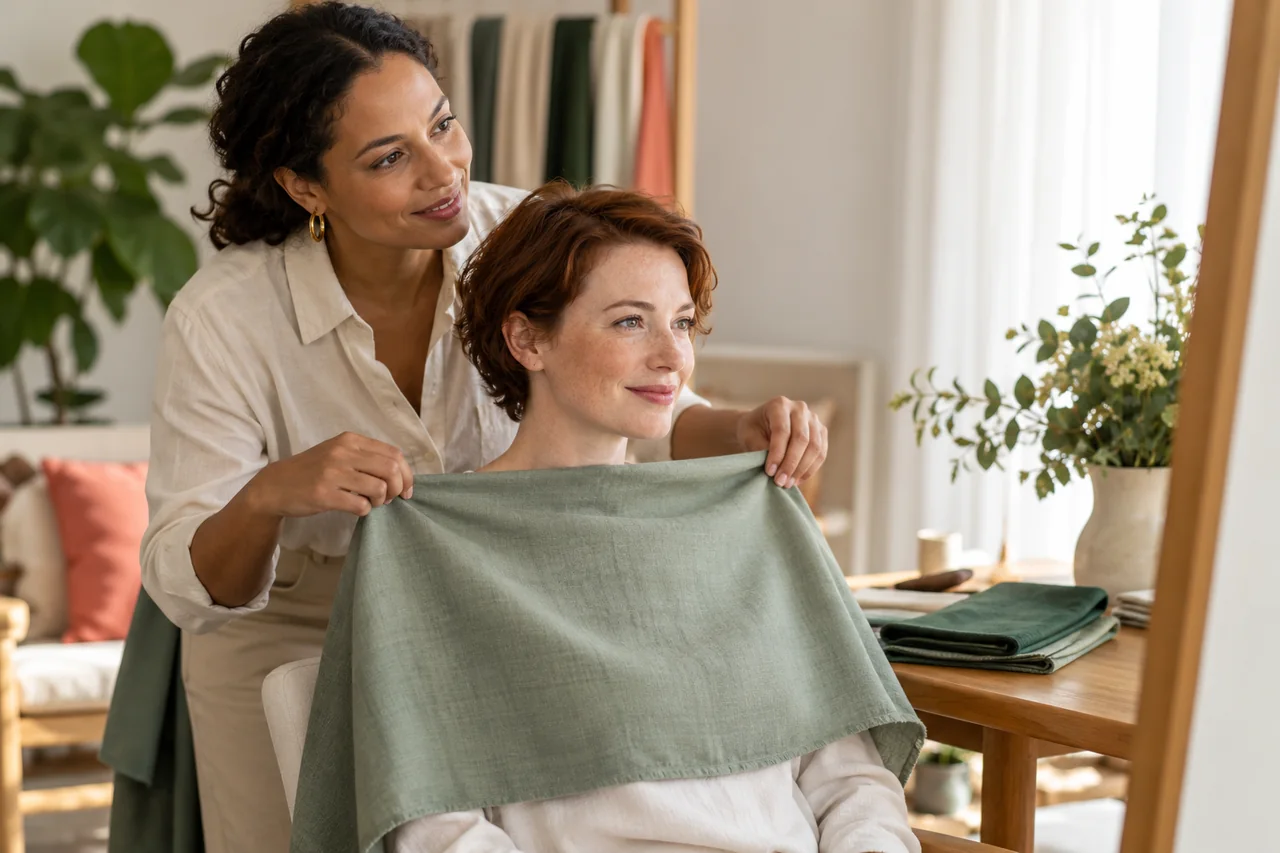
Real fabrics show colour alongside surface, scale and the face. A useful comparison asks a clear question and keeps conditions steady. It can reveal preferences without turning ordinary features into flaws or assigning a scientific colour season.
Create a calm starting point
Use even indirect daylight and turn off other lamps for the first round. Avoid strong nearby coloured reflections and sharp facial shadows. Choose a plain top and remove large jewellery. If helpful, compare with coloured hair pulled back, then repeat with your usual hair and make-up.
Choose pairs with one question
Rosewood and clear pink can explore intensity; grey and charcoal explore depth; cream and cool white explore lighter framing. Similar-sized matte fabrics simplify comparison. Satin against wool changes surface as well as colour, so acknowledge that uncertainty.
Describe before deciding
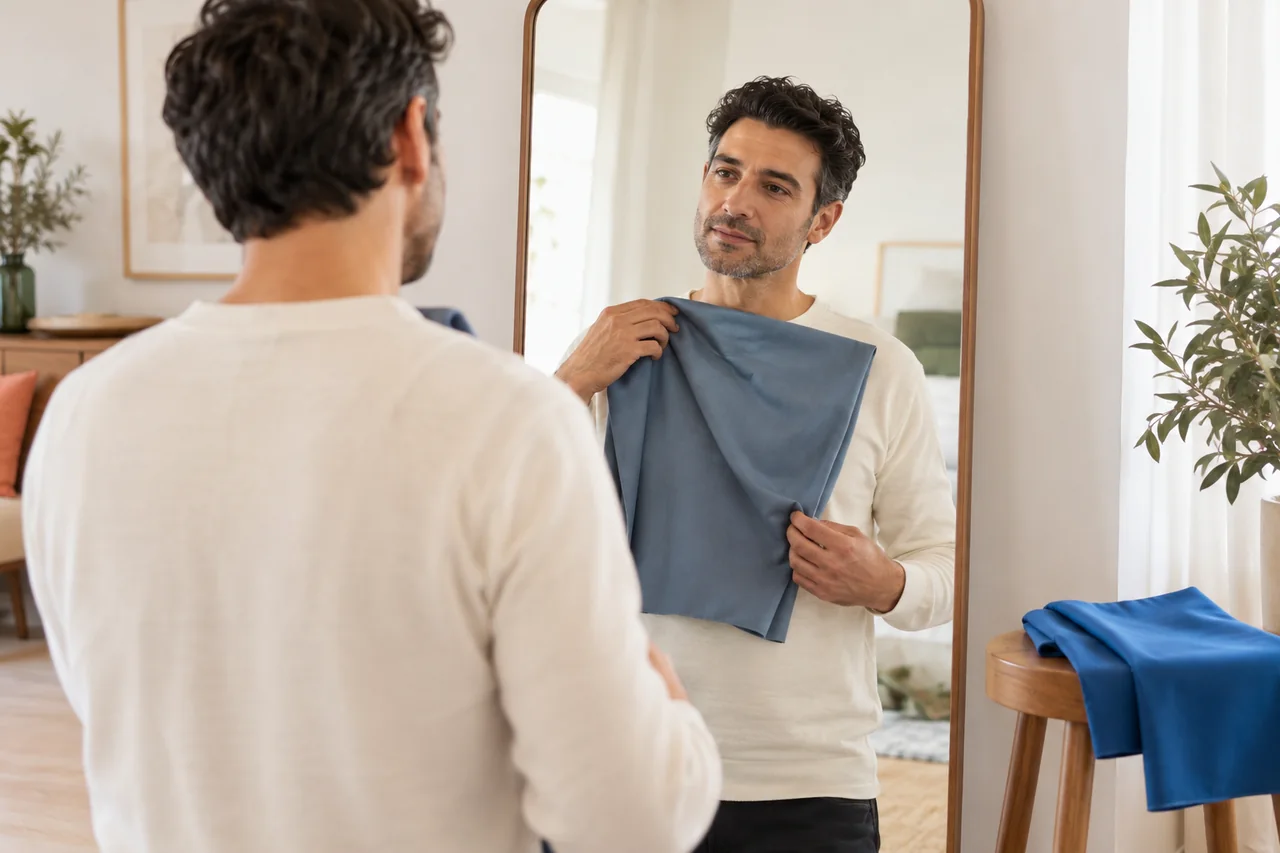
Alternate fabrics below the chin. Note whether the face is more clearly framed, shadows appear different or the fabric attracts most attention. Then name a preference and purpose, such as quiet office wear or a stronger presentation outfit. Colour does not measure health or attractiveness.
Use uncertain results
A tie may mean both colours work or the difference is unimportant. Repeat another day and pause if extended testing becomes confusing. Lighting matters in visual colour assessment, but consistent conditions do not turn seasonal styling into a scientific diagnosis.
Move from swatches to clothes
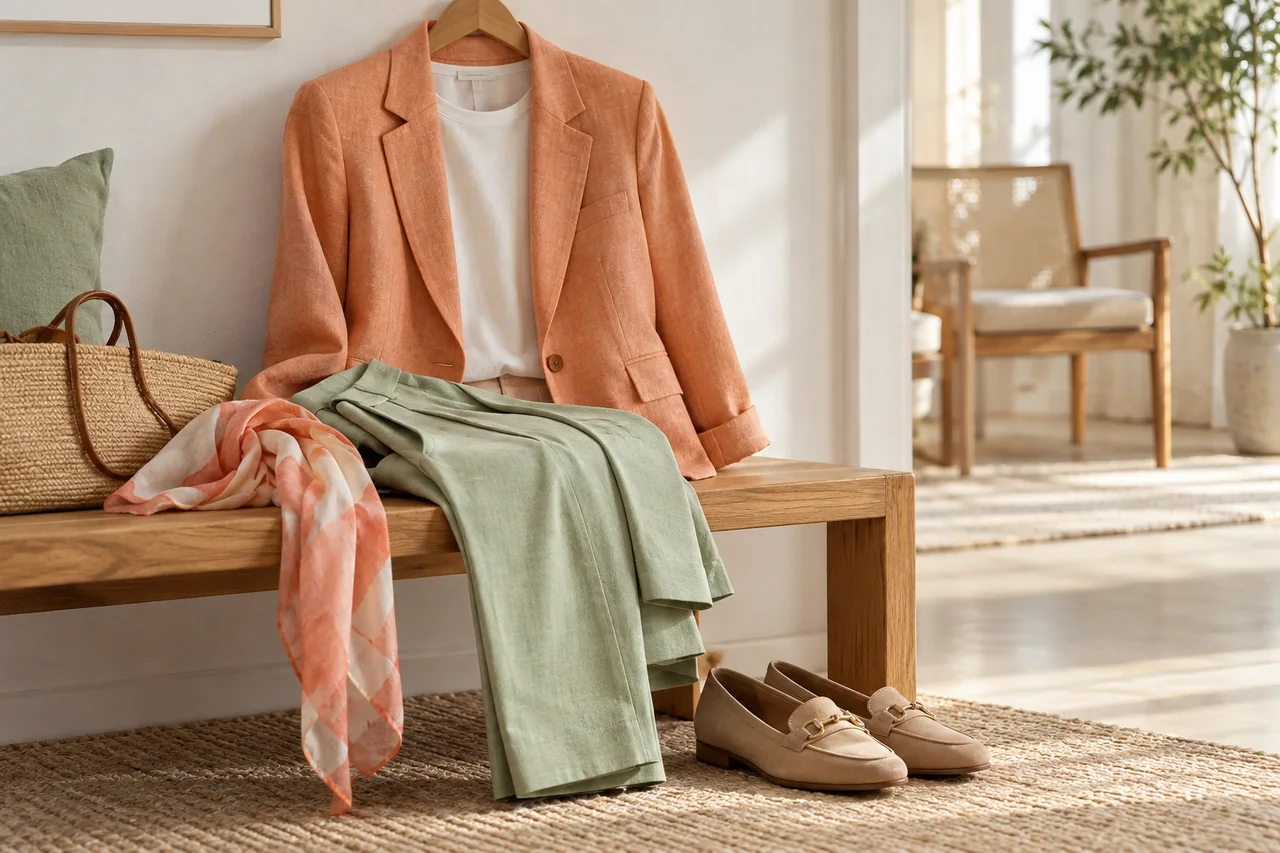
A teal scarf differs from a whole teal coat. Try preferred shades at different scales and record material, neckline and combinations. Group colours as immediately useful, needing a partner or currently less appealing. None becomes forbidden; a less-favoured face colour may work in trousers or accessories.
Frequently asked questions
Do I need professional drapes?
Existing garments or sufficiently large fabric scraps can start the process. Professional sets may make systematic comparisons easier, but clear explanations and acknowledged uncertainty remain essential.
Should I compare without make-up?
A round without strongly coloured make-up reduces one influence. Also compare with your usual styling, because the result should fit how you actually dress.
Questions and experiences
Share a question or a useful experience about this topic. Every contribution is checked before publication. Comments may be written in different languages.
Loading reader contributions…
Opening the form sets a necessary session cookie. No email address is required. Publication is subject to moderation and is not guaranteed. For deletion requests: Contact