
A colour combination becomes easier to assess when you know which garment leads and what mood you want. Change one thing at a time, using clothes you own, rather than searching for a rule that approves every possible outfit.
Choose an anchor
Start with the green jumper, patterned skirt or light jacket you want to wear. Decide whether the result should feel quiet, fresh, graphic or playful. Keep most pieces constant while changing one top or accessory, then check the whole outfit.
Compare lightness and intensity
Sage and washed rose may feel quiet despite different hues; navy and icy blue can create strong light-dark contrast within one family. Bright orange with dusty blue differs from rust with smoky blue. Adjust one shade before abandoning the idea.
Use a colour wheel for ideas
Neighbouring blue and blue-green offer one direction; blue and an orange accent another. A wheel sketches relationships but cannot judge fabric, fit or occasion. Digital pairs and seasonal palettes remain prompts for experiments, not automatic ratings.
Control area and repetition
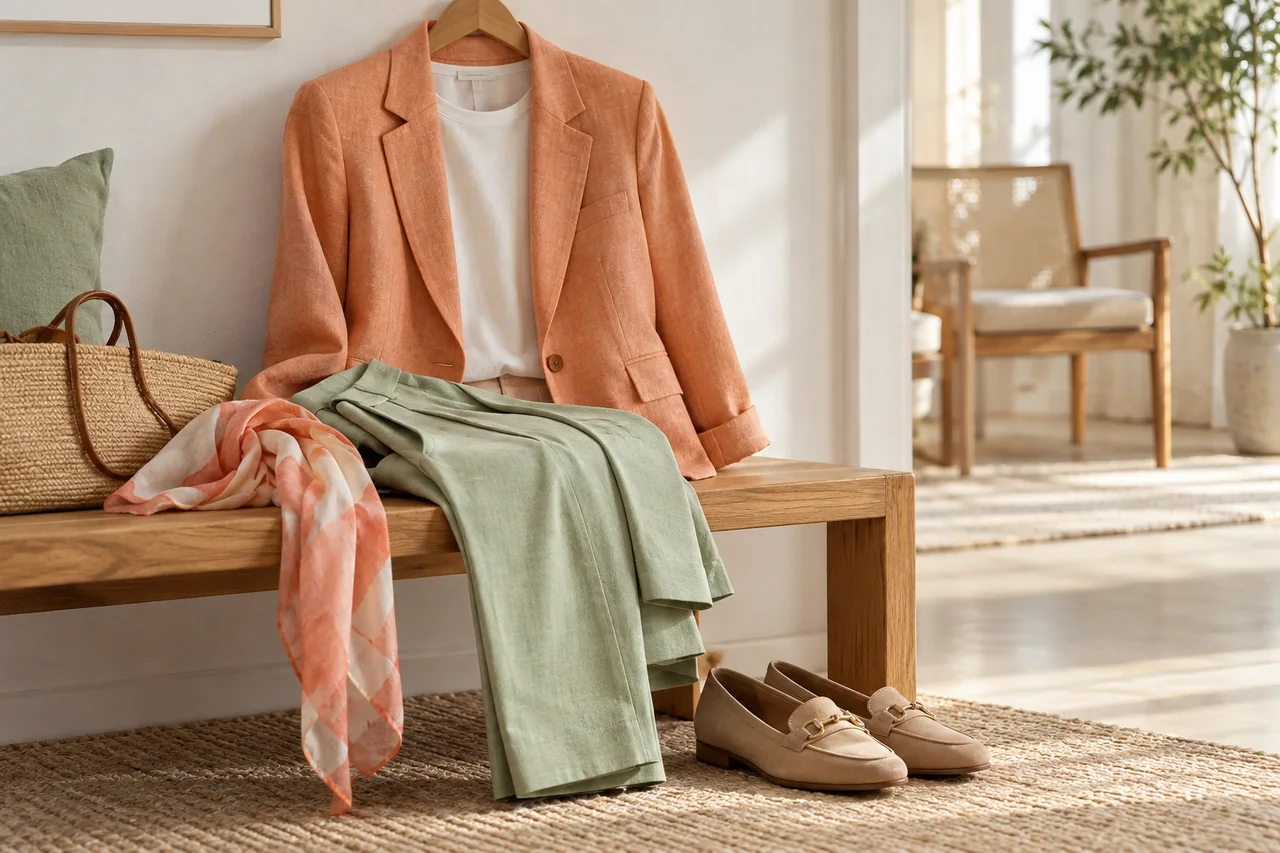
An orange bag is a small accent; an orange coat leads the outfit. Start small with unfamiliar combinations. A berry scarf can repeat a skirt detail without matching exactly. Check related shades from normal viewing distance rather than only close up.
Finish with material and context
Green velvet differs from green linen, just as a white T-shirt differs from a shiny blouse. If colours work but the outfit does not, review shape and surfaces. Record three complete combinations for a difficult piece, including shoes and outerwear.
Frequently asked questions
How many colours can an outfit contain?
There is no fixed maximum. Fewer colours simplify an initial attempt; patterns, similar lightness and repeated accents can connect a larger range.
Must warm and cool colours stay separate?
No. Camel with cool blue is one deliberate contrast. Adjust shade or area if the difference feels stronger than you want.


Questions and experiences
Share a question or a useful experience about this topic. Every contribution is checked before publication. Comments may be written in different languages.
Loading reader contributions…
Opening the form sets a necessary session cookie. No email address is required. Publication is subject to moderation and is not guaranteed. For deletion requests: Contact