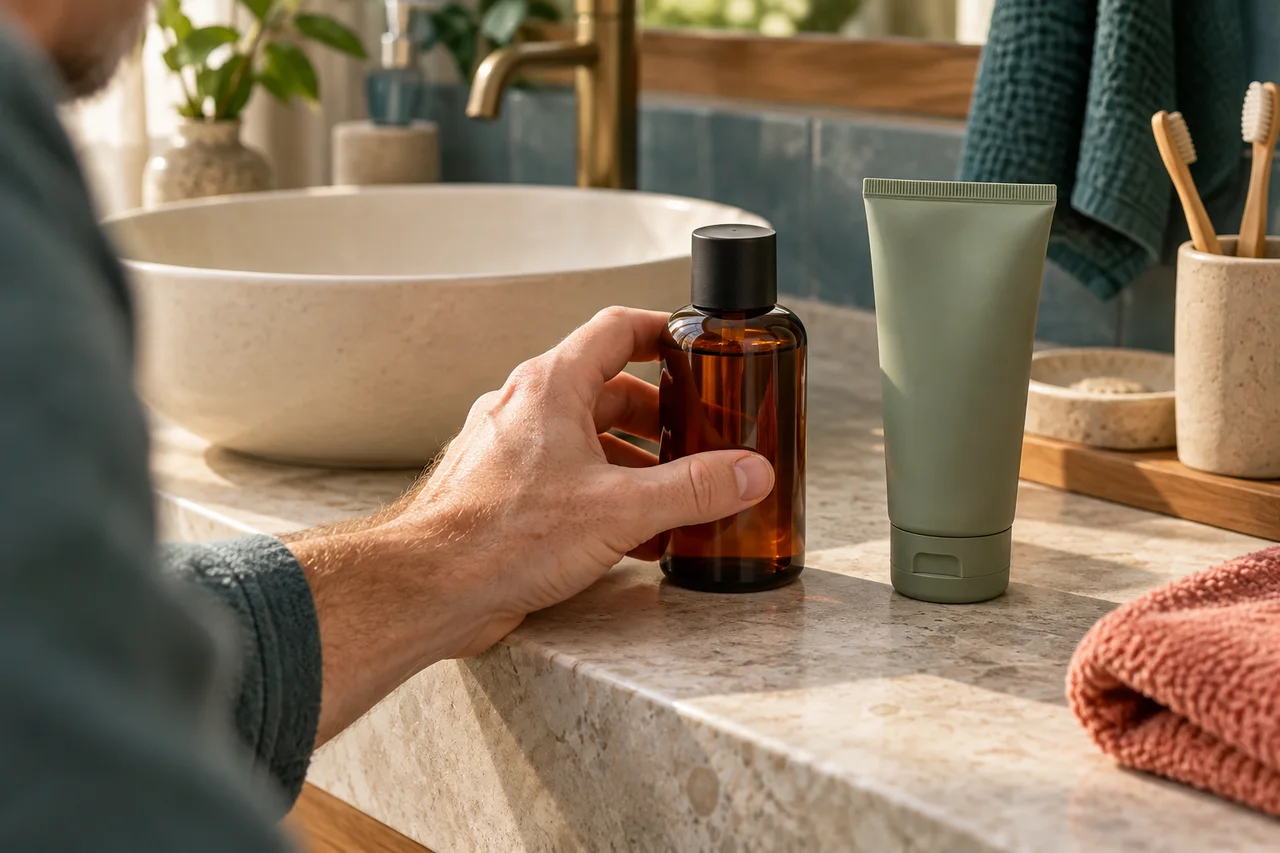
Cosmetic marketing often creates opposing camps: natural or artificial, clean or contaminated, modern or outdated. A useful purchase instead meets a clear purpose, suits your application and is tolerated by you.
Ask what the words mean
What verifiable property does clean, pure or conscious describe here? Such language may mainly communicate a brand image. You can enjoy that image without treating it as a complete safety assessment. Clear product and application information should carry more weight than an unexplained slogan.
Put natural ingredients in context
Natural and synthetic substances have varied properties. The BfR notes that natural fragrances can also cause contact allergies. This supports neither rejecting every plant ingredient nor favouring every synthetic one. With known sensitivities, check exact names rather than flower illustrations. Origin can be a preference without predicting tolerance.
Do not stretch free-from claims
Absence of one substance does not show that other products are worse or this one suits you better. EU technical guidance addresses these claims. Ask whether avoiding the named ingredient is personally relevant. For a confirmed allergy it may be; otherwise a long exclusion list may mainly attract attention.
Read alarming headlines in context
A report may involve a particular concentration, exposure route or non-cosmetic use. Check what it actually concerns and use official risk assessments for context. A name alone does not establish risk in the intended use of a finished product. Understand the subject before sharing a warning.
Use a short buying sequence
Start with purpose, instructions and known exclusions, then packaging, quantity and price. Consider additional advertising afterwards. A working product needs no replacement solely because a trend changes. If one does not suit you, your experience remains useful without becoming a universal warning.
Frequently asked questions
Can cosmetics be chemical-free?
Not literally: water, plants and cosmetics all consist of chemical substances. Ask which concrete feature is meant and whether it makes a relevant difference.
Are long ingredient lists worse?
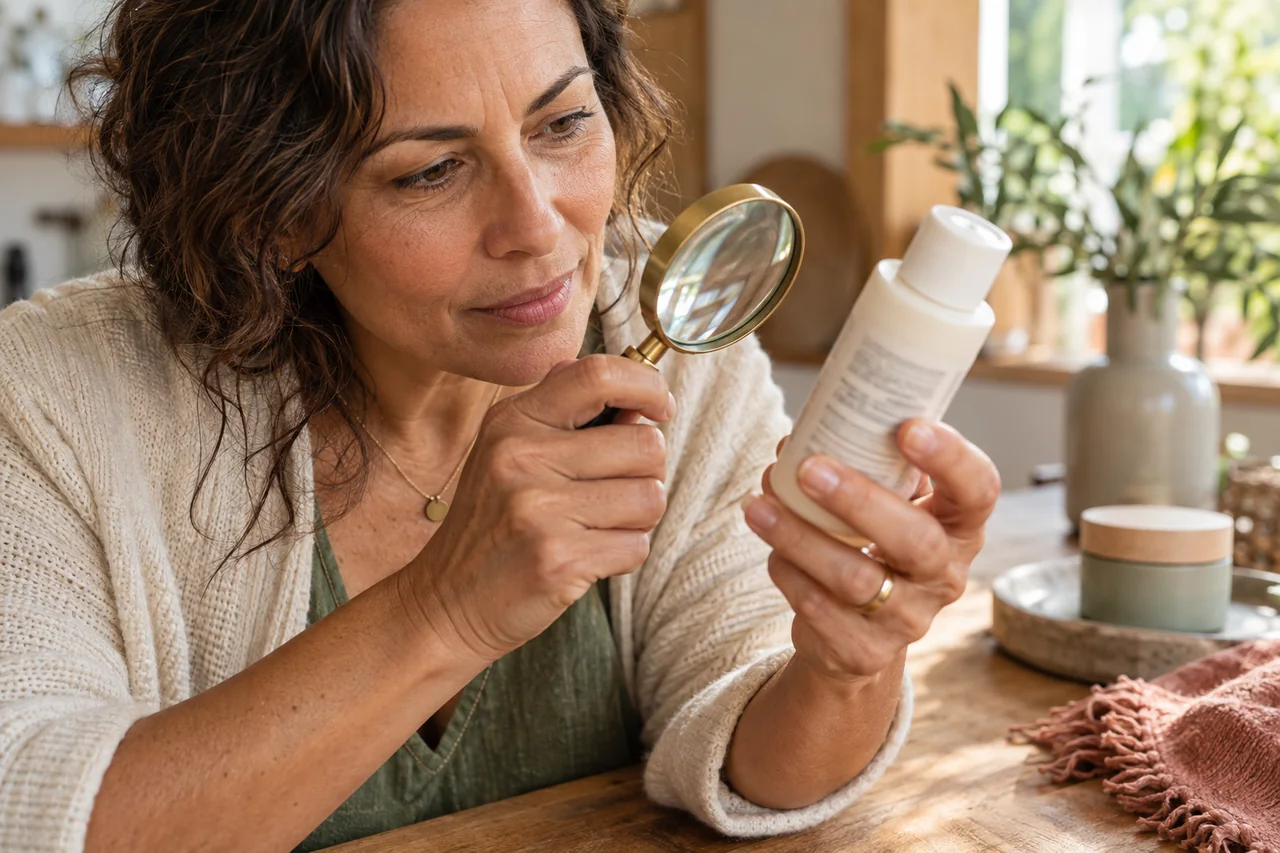
No. The number of entries alone does not describe suitability or tolerance. Use the list for specific questions such as known allergens, alongside intended use and the finished formula.


Questions and experiences
Share a question or a useful experience about this topic. Every contribution is checked before publication. Comments may be written in different languages.
Loading reader contributions…
Opening the form sets a necessary session cookie. No email address is required. Publication is subject to moderation and is not guaranteed. For deletion requests: Contact