
Intensity is separate from lightness: pink can be light and clear, while wine red can be dark and muted. Comparing related fabrics helps you identify the kind of colour presence you enjoy without ruling out whole palettes.
Describe brightness accurately
Clear does not simply mean light, and muted does not mean dark. Technical models separate hue, lightness and chroma. In everyday terms, ask which similar shade seems more colourful and which seems more mixed with grey or a neutral.
Choose a fair comparison
Royal blue against a similar grey-blue reveals more about intensity than blue against beige. Hold equal areas at the same distance near your face, then review the full outfit. A quieter large top and a clear jacket over visible neutrals may both appeal.
Assign the clear colour a role
A vivid bag or top can be the focus in grey, soft blue and taupe. Decide which piece leads before adding more accents. If the result feels busy, simplify pattern, scarf, shoes or jewellery before blaming the bright colour itself.
Connect muted shades deliberately
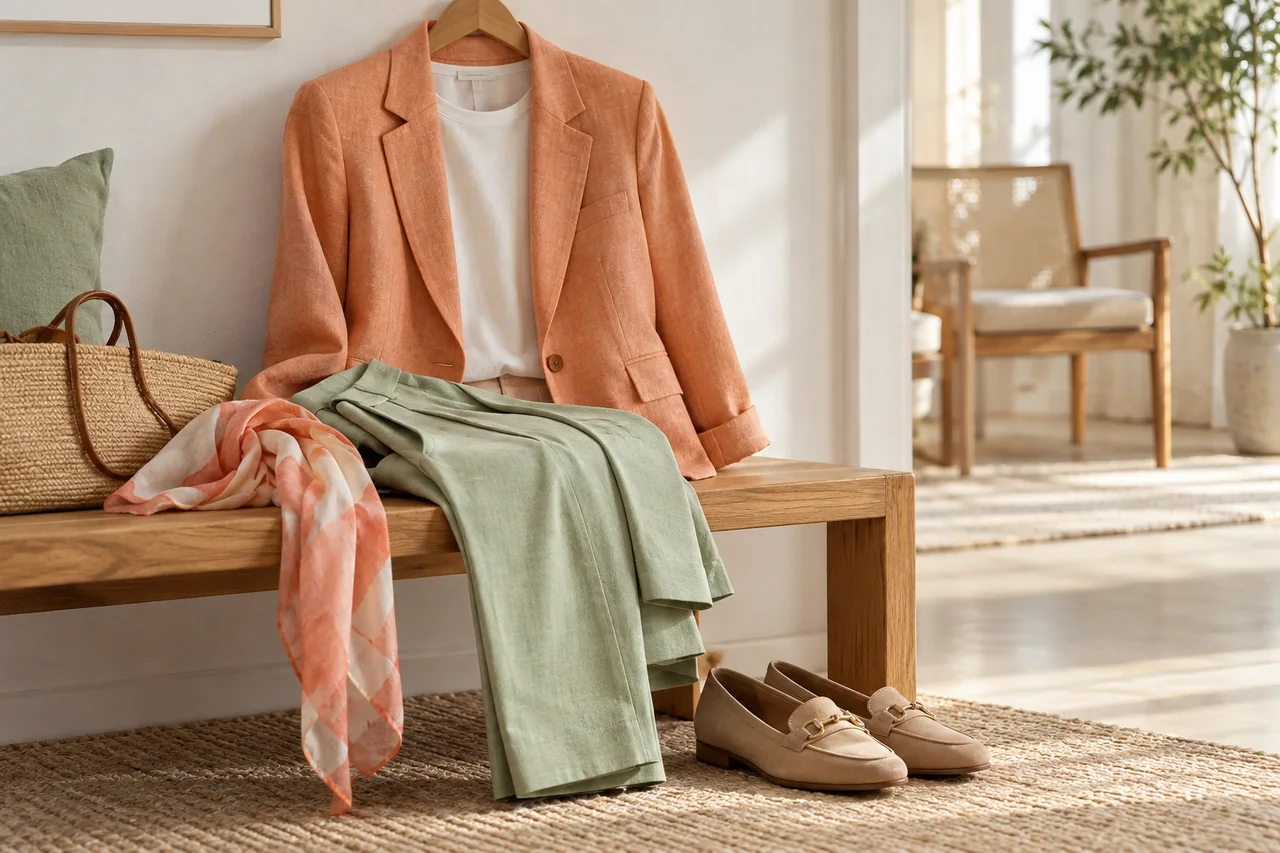
Sage, rosewood and smoky blue can share softness. Give them different roles rather than equal competing blocks. A darker trouser, a light top or reducing the choice to two families may clarify a vague-looking combination.
Check surfaces in motion
Velvet, satin, wool and washed cotton reflect and scatter light differently. Flecked yarn also changes the impression. Review clothing from a distance and while moving. Your palette may include material preferences, such as clear blue in matte cotton or muted green in knitwear.
Frequently asked questions
Can clear and muted colours mix?
Yes. Use mostly quiet shades with a clear accent, or one clear main colour with neutral companions. The result need not belong entirely to one season.
Does muted mean unflattering?
No. It describes a colour property. Lightness, fabric or cut may explain why a particular garment does not work; assess them separately.


Questions and experiences
Share a question or a useful experience about this topic. Every contribution is checked before publication. Comments may be written in different languages.
Loading reader contributions…
Opening the form sets a necessary session cookie. No email address is required. Publication is subject to moderation and is not guaranteed. For deletion requests: Contact