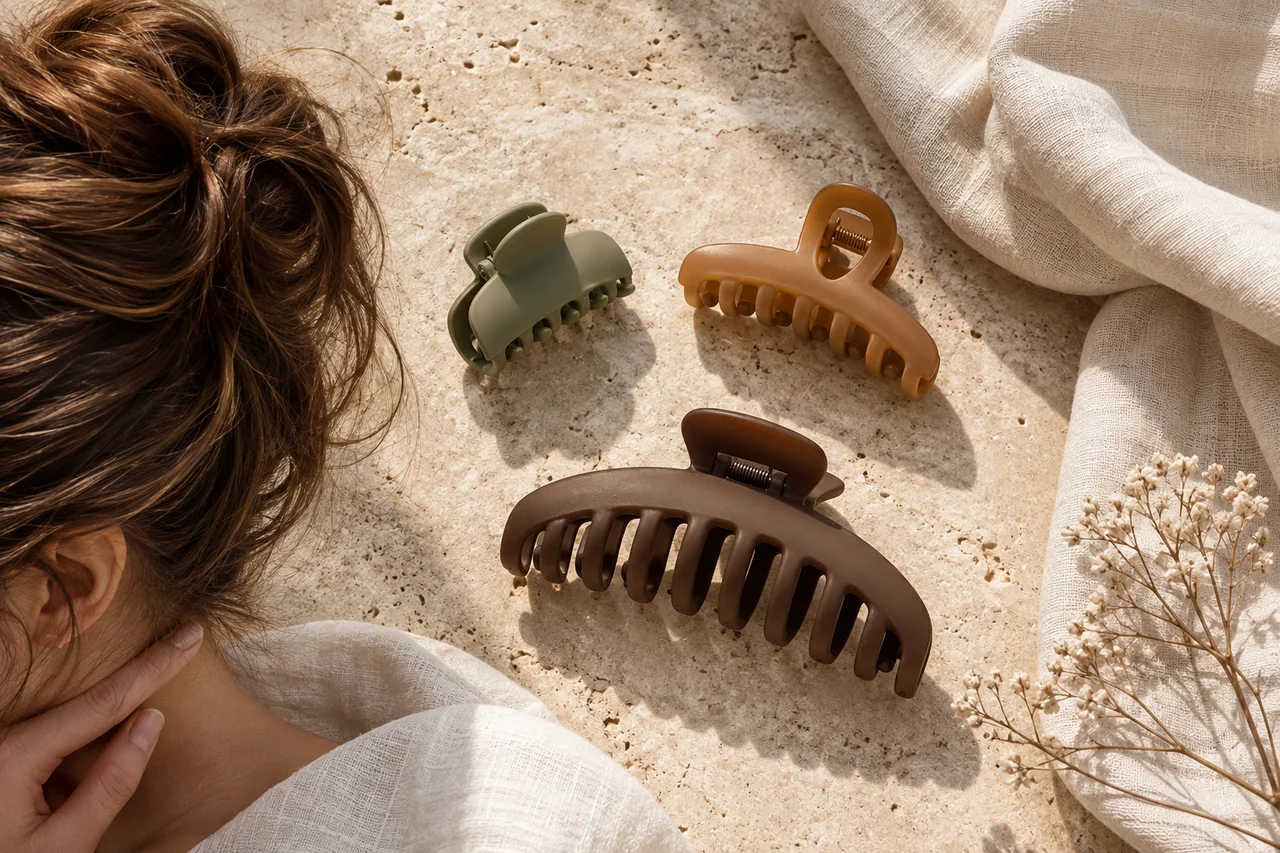
A claw clip’s length alone does not tell you how much hair it can hold. Its opening, inner depth and shape matter too. A useful style should let you work and travel without adjusting your head position around uncomfortable hardware.
Compare four physical features
Check opening width, inner depth, tooth length and how the back sits. Feel for rough teeth and inspect the spring; damaged clips should not be used. Side-view comparisons may explain why a flatter model holds a small amount better than a large curved one.
Start with a low fold
Gather hair loosely at the nape and twist only enough to make a connected shape. Fold upward or sideways. Open the clip fully and place it so both tooth rows catch some neighbouring hair as well as the fold. Closing only over a thick roll can make it tilt. Leave ends visible while learning.
Distribute a vertical twist
For longer hair, support the base, twist upwards and tuck excess ends back under the shape. Place the clip where it catches the twist and surrounding hair. If closing needs force, use less hair or a larger suitable model. Do not tighten the whole style merely to fit the clip.
Give a small clip a smaller task
Bring two narrow sections above the ears together and secure only their crossing, leaving lower lengths loose. Choose a central or side position and check the front view. If the hairline feels tight, remove and refasten with slack. Repeated strong pulling is a concern identified by the AAD.
Test the actual day
Sit at your desk, wear a jacket and check headrest or collar contact. A standing-comfortable clip may press when leaning back. A flatter partial style or soft low tie may suit that activity better. Carry a familiar alternative if needed.
Buy only for an identified gap
After a few attempts, describe what is missing: more inner space, a flatter back or shorter teeth. Check any return or trial conditions. Many colours of one unsuitable shape add little value. Keep a reliable model as the comparison reference.
Assign existing clips separate roles
Try a small flat and large curved clip with the same narrow half-up section. Then test the larger one with a loose fold of more hair. If each works with a different amount, both have a purpose; if neither works, review tooth position and shape before shopping.
Frequently asked questions
Must a claw clip be hidden?
No. It may be an intentional accent. Choose visual effect after checking comfortable hold.
Why might a large clip slip in a bob?
Its interior may exceed the hair amount available. A smaller clip or different sectioning may work better than tighter twisting.
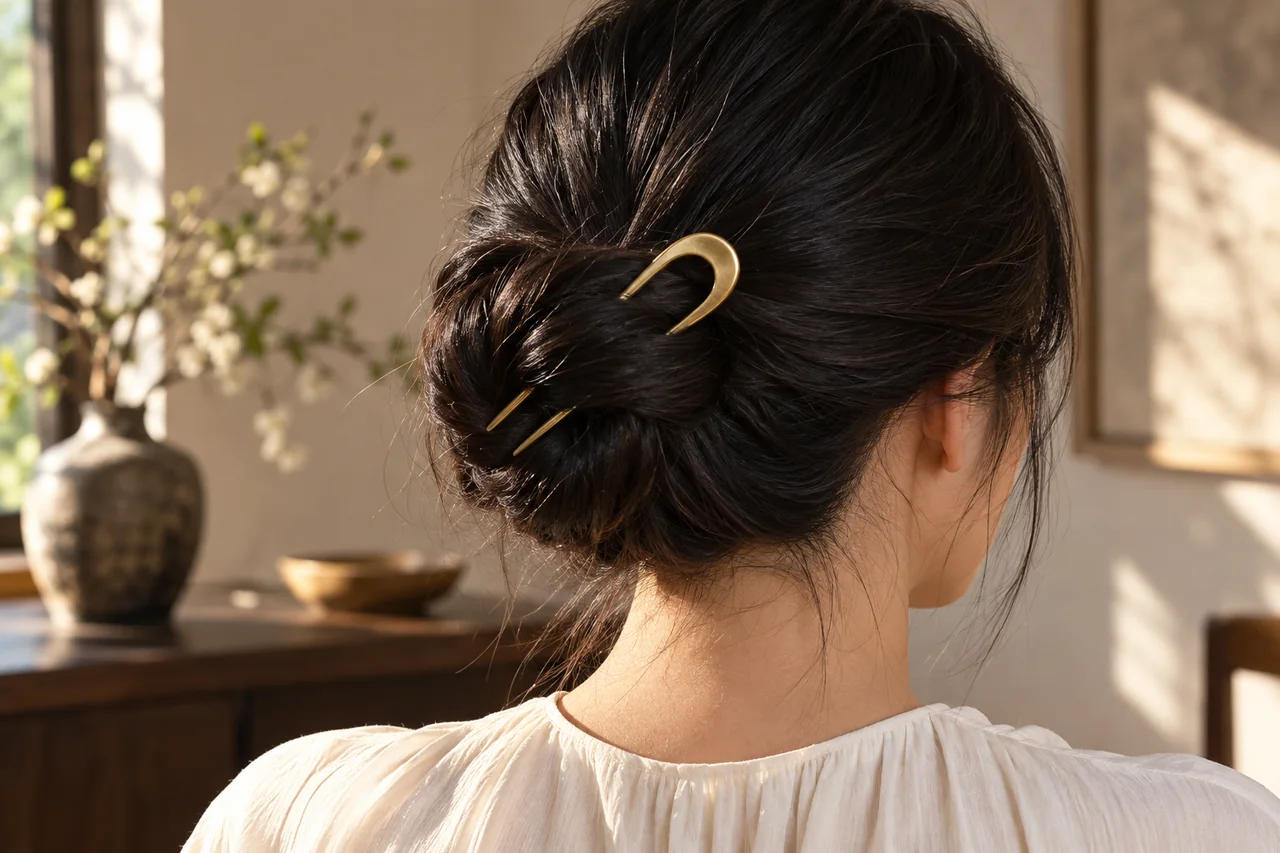


Questions and experiences
Share a question or a useful experience about this topic. Every contribution is checked before publication. Comments may be written in different languages.
Loading reader contributions…
Opening the form sets a necessary session cookie. No email address is required. Publication is subject to moderation and is not guaranteed. For deletion requests: Contact