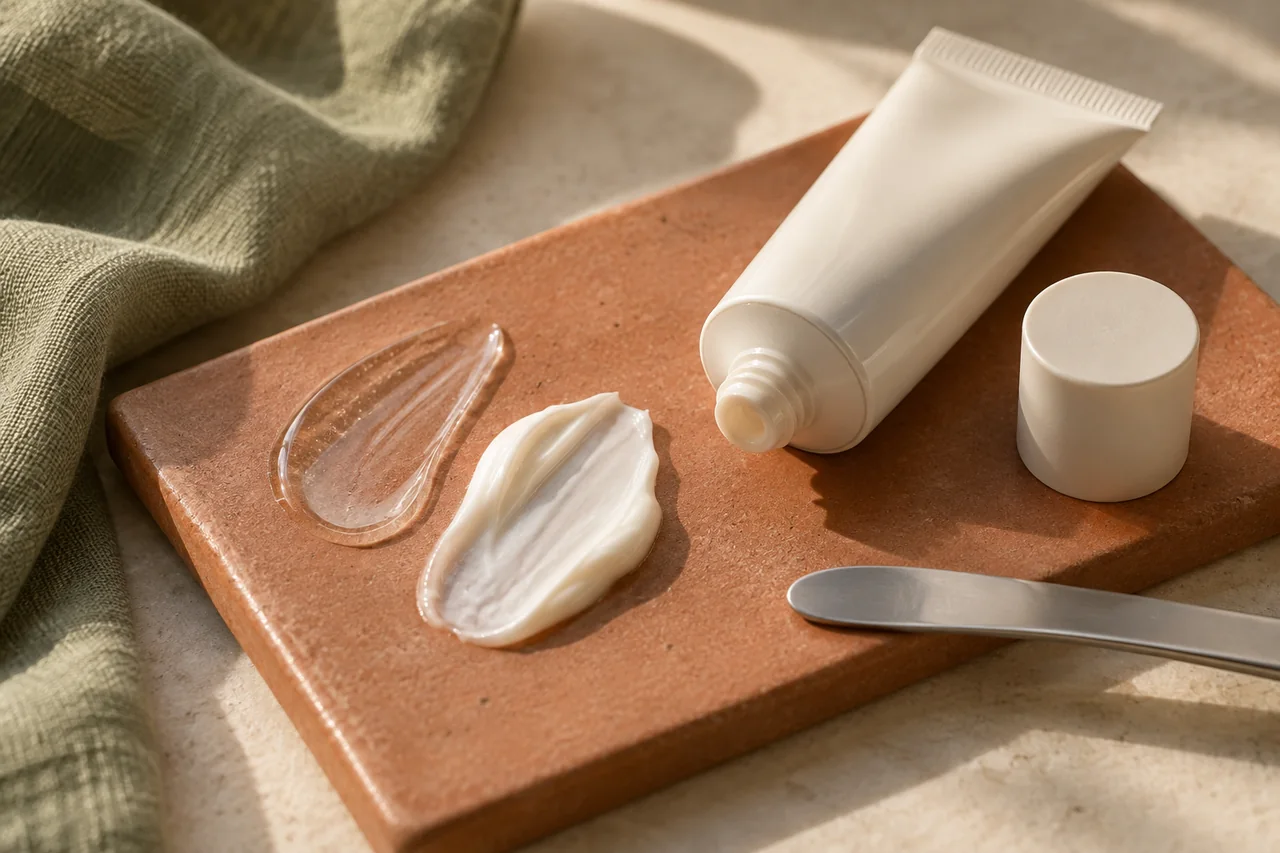
The moisturiser aisle offers many complicated promises, but your question may be simple: what feels comfortable and is easy to use regularly? A long product name cannot answer that. Separate texture, intended use and everyday practicality when comparing options. Start with what you already own and ask whether something is actually missing or whether a new container has simply caught your attention.
Decide where and when you will use it
A facial moisturiser used in the morning may need to sit comfortably under sunscreen and make-up. A body lotion should spread conveniently across larger areas. Hand cream may live beside the basin. These details matter: a product you avoid because of its packaging or feel does little practical work in your bathroom. Check whether layers spread evenly, whether dressing afterwards is comfortable and whether a travel container closes securely.
Compare textures without ranking them
Gel, lotion and cream describe product forms, not a universal order of quality. Note how easily each spreads, whether you like the way it settles and how soon you want to put clothes on afterwards. A richer feel does not automatically mean greater effectiveness. People with particular skin conditions may have different requirements; general shopping suggestions do not replace individually agreed skin care.
Read ingredients in context
Moisture-binding and lipid-replenishing ingredients are used, for example, in basic eczema care. That does not establish a ranking for every person with healthy skin. A finished formulation and how it is used affect both performance and tolerance. Consider known sensitivities, your preference about fragrance and the warnings, not just one highlighted ingredient. If you need to avoid a substance, look for its exact name in the ingredient list rather than relying on a broad claim on the front.
Find its place in your routine
Choose a realistic point in your day for applying moisturiser. A small selection within reach is often easier to manage than several similar jars. Avoid introducing it alongside several other new products. Notice whether it pills under sunscreen or make-up, is hard to spread or simply does not suit your preferences. These practical observations can guide a purchase without turning them into a medical verdict on the formulation.
Consider packaging and real consumption
Check whether a pump, tube or jar is easy for you to handle. A large pack is useful only if you will use it within the stated period. Note when you open it and keep dispensing clean. Between two suitable products, compare price for the same amount and how much you realistically use. A smaller pack can be the better financial choice even with a higher unit price if much of a larger pack would remain unused.
Frequently asked questions
Do I need a separate night cream?
Not simply because it is evening. Intended use and your needs matter. Extra night care may feel pleasant, but it is not a compulsory part of a complete routine.
Is expensive skin care automatically better?
Price alone does not establish whether a product suits you. Packaging, branding and distribution also affect it. Compare concrete features and keep well-tolerated products even if their advertising is less dramatic.



Questions and experiences
Share a question or a useful experience about this topic. Every contribution is checked before publication. Comments may be written in different languages.
Loading reader contributions…
Opening the form sets a necessary session cookie. No email address is required. Publication is subject to moderation and is not guaranteed. For deletion requests: Contact