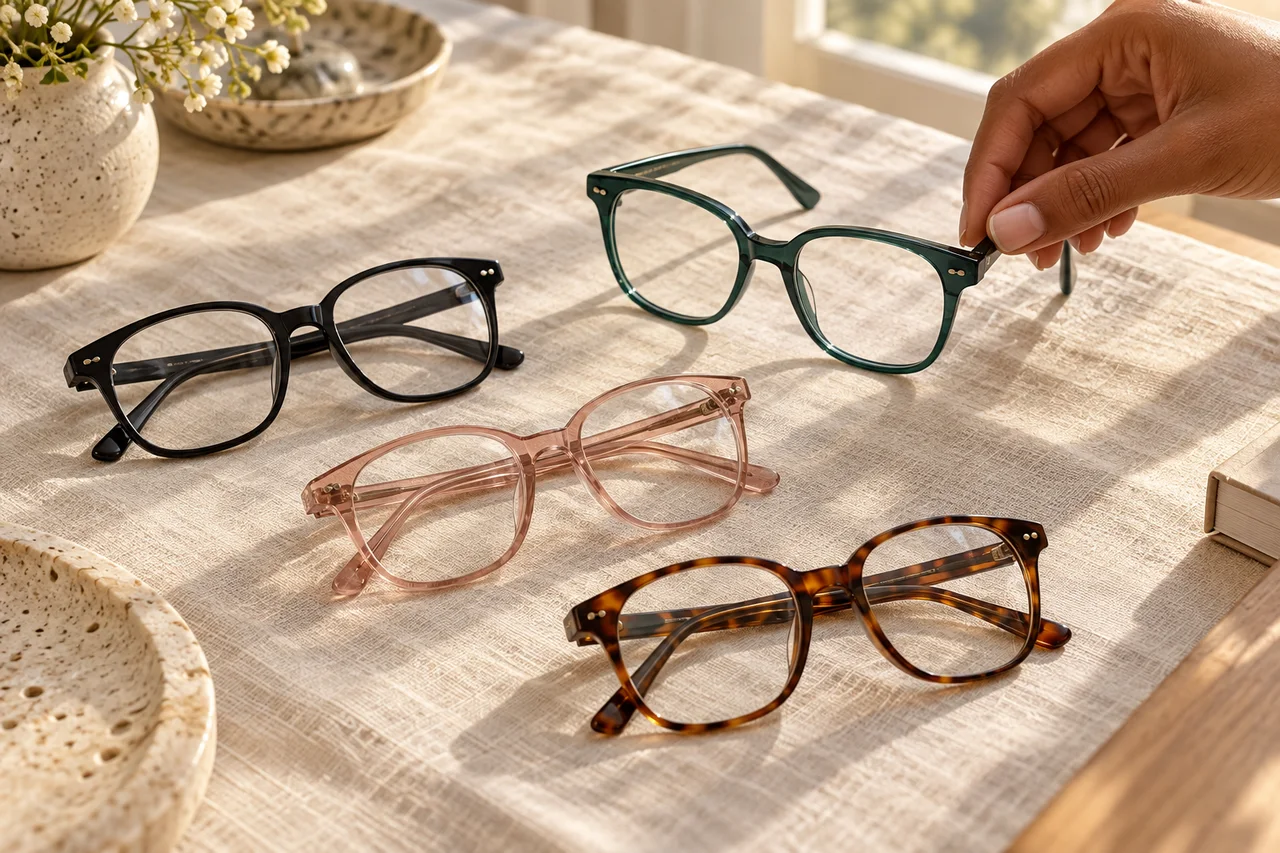
Glasses can be a strong frame or a quieter recurring detail. Colour contributes to that effect alongside thickness, shape, finish and transparency. A palette can suggest options, but the actual frame and its fit matter most.
Decide how prominent the frame should be
A wide dark frame differs from a fine transparent rim. Compare at conversational distance as well as close up. Check the side view too, including temples, differently coloured edges and visible metal.
Keep shape comparable
Ask for one model in two or three colours, or use similar proportions. Large black and small gold frames change too many variables at once. Describe whether each looks clearer, softer or more colourful before considering a warm-cool label.
Inspect transparent and patterned frames
Clear material may reflect strongly at edges, so it is not automatically invisible. Pink, grey or brown tints add another effect. Tortoiseshell ranges from quiet small patterns to strong light-dark patches; check their placement while turning your head.
Include your everyday wardrobe
Navy and grey clothing may take a related frame or a deep red accent. Brown, olive and gold are possible partners for warmer clothes, not exclusive rules. Wear a typical outfit and consider both work and private settings. A distinctive colour can still be versatile.
Combine appearance with fitting
Review a small shortlist in varied good light and, if relevant, your video-call environment. Photos offer another perspective, not a final colour measurement. Have an optical professional check fit, centration and suitability for your lenses; attractive colour cannot correct a technically unsuitable frame.
Frequently asked questions
Must frames match my hair?
No. Repeating the hair colour and deliberately contrasting with it are both options. Compare the effect with your usual clothes.
Is black the most versatile choice?
It combines with many colours but often creates a strong frame. Navy, brown, grey or transparent options may fit your preferred presence better.



Questions and experiences
Share a question or a useful experience about this topic. Every contribution is checked before publication. Comments may be written in different languages.
Loading reader contributions…
Opening the form sets a necessary session cookie. No email address is required. Publication is subject to moderation and is not guaranteed. For deletion requests: Contact