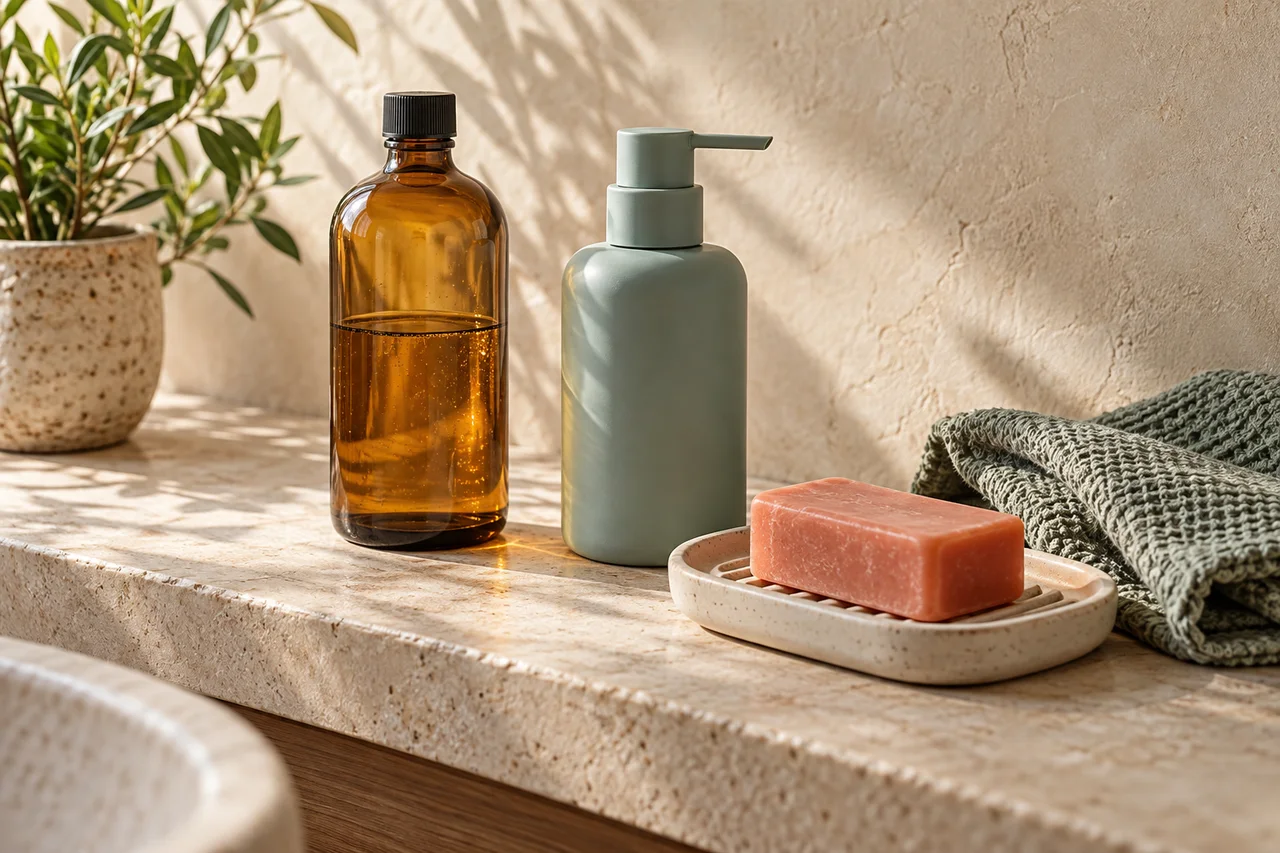
More sustainable care does not necessarily begin with a new product line. First use suitable existing items sensibly and plan replacements. You do not need perfect decisions; look for concrete changes that prevent unused stock and unnecessary packaging.
Start with your stock
Collect products from bathrooms, travel bags and handbags. Separate current use, reserves and unsuitable items. Prioritise opened, tolerated products within their usable period. Do not persist with an unsuitable product out of principle; note whether texture, packaging or an unnecessary purpose caused the problem.
Consider packaging in context
Appearance alone cannot establish overall environmental impact. Weight, transport, material, reuse and actual disposal may matter. Ask whether size matches consumption, the pack empties easily and material information is clear. Without comparative data, avoid claims such as glass always being better.
Use refills as intended
Choose refills designed for the relevant system and follow cleaning instructions. Do not mix old residue with new products. Check that you will use the refill quantity; a large container may leave substantial waste. Keep contents and labelling identifiable, even in attractive reusable bottles.
Try reusable accessories gradually
Begin with a few washable pads or cloths. Test size, material, cleaning and complete drying before buying a large set. Travel may require a different solution from home. A realistic combination is more useful than an ideal system abandoned in a drawer.
Use purchase rules rather than guilt
For example, buy replacements when stock is nearly finished and review a short wish list first. Ask what environmentally friendly or responsibly made means in concrete terms. Green packaging is not a complete assessment. Fewer unsuitable purchases can be worthwhile without an entirely empty bathroom or perfect-consumer identity.
Frequently asked questions
Should I replace all existing plastic packs?
No immediate replacement is necessary for useful products. Use what is suitable and compare size, material and refills when you next need to buy.
Is natural cosmetics automatically more sustainable?
The term does not answer every environmental question. Check specific claims, standards and actual consumption. Tolerance, usable life and practical use matter too.


Questions and experiences
Share a question or a useful experience about this topic. Every contribution is checked before publication. Comments may be written in different languages.
Loading reader contributions…
Opening the form sets a necessary session cookie. No email address is required. Publication is subject to moderation and is not guaranteed. For deletion requests: Contact