
Workwear depends on tasks, setting and explicit dress requirements. A useful palette supports those conditions without relying on claims that one colour automatically communicates competence. Begin with combinations you already trust.
Map the working week
Client visits, desk work and practical tasks may require different clothes. Note the situations you actually face and any stated rules. When new to a setting, familiar versatile combinations give you room to observe before adding more colour.
Start with trousers, jackets and shoes
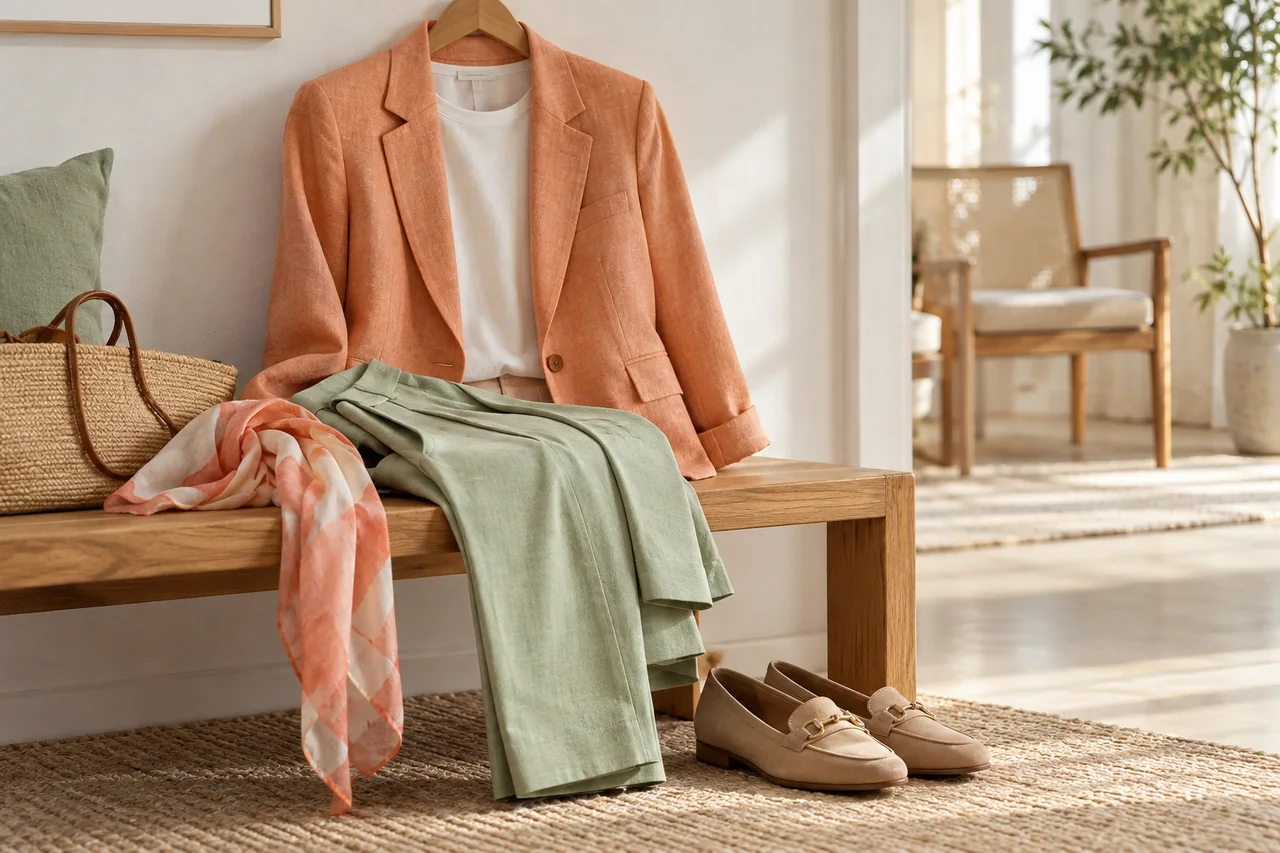
Choose two bases already present in frequently worn pieces, then two or three top colours that work with both. Check bags and shoes immediately. If every accent requires new accessories, simplify the system before buying.
Place colour where it stays visible
A top remains visible after removing a jacket; a scarf or bag may disappear on arrival. Choose where colour should appear during work. A pattern can connect several accents without requiring a separate accessory for every small motif.
Test your video environment
Compare two or three tops at the actual desk in the application you use, with stable lighting and camera position. Background blending, bright areas, small patterns, logos and reflections matter. A local test is more useful than a universal list of camera-safe colours.
Make combinations repeatable
Prepare five full outfits for a typical week and use photos as reminders. Note cleaning needs and availability. After several weeks, review what you really wear; a simple connecting layer may be more valuable than another accent colour.
Frequently asked questions
Which colour looks most professional?
There is no context-free answer. Role, setting, fit, occasion and local requirements shape the impression; one shade guarantees neither competence nor others’ reactions.
Can I wear vivid colours at work?
If the rules and setting permit, yes. Try a clear top with a quiet base and check that it works through the whole day, including outerwear and work equipment.


Questions and experiences
Share a question or a useful experience about this topic. Every contribution is checked before publication. Comments may be written in different languages.
Loading reader contributions…
Opening the form sets a necessary session cookie. No email address is required. Publication is subject to moderation and is not guaranteed. For deletion requests: Contact