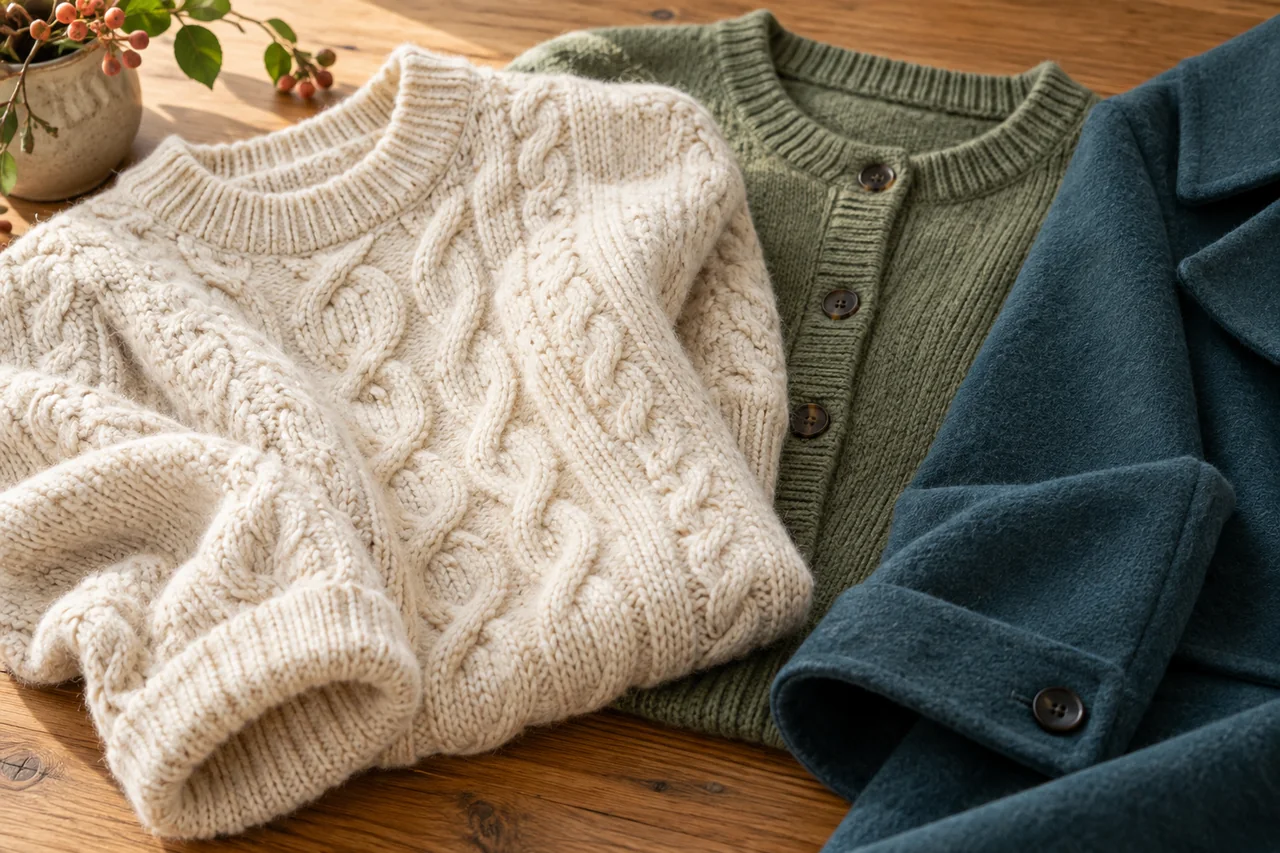
Wool describes a fibre, while knitting describes a construction of loops. A cotton jumper may be knitted and a wool coat woven. That distinction helps explain why one care routine cannot suit every soft garment.
Get to know the piece
Read its composition and look for knitted loops or a woven surface. Note weight, softness, structure and fit. Different yarns and constructions can feel very different despite similar fibre percentages, so one itchy or overly warm jumper does not describe all wool clothing.
Separate the need to wash from permission
Clean briefly worn clothing may only need airing; soiling is a different question. For washing, follow the label and use suitable wool detergent. A machine’s wool programme does not make every wool garment machine-washable. Ask for advice when instructions are missing.
Support the shape while drying
Woolmark generally advises drying washed wool knitwear flat unless the label permits another suitable method. Support wet weight when lifting, gently reshape on a clean surface and allow space and time. Direct radiator heat is not a shortcut. Woven wool may need different treatment.
Store thoughtfully and notice damage
Avoid hanging heavy knitwear from narrow shoulder points. Fold loosely without overfilled piles. Store clean and fully dry, checking cuffs, seams and small holes. Do not pull loose threads without checking whether a stitch needs securing; complex or valuable pieces may benefit from skilled repair.
Frequently asked questions
Can wool go in the washing machine?
Only when the garment’s care label allows it. Some need hand washing or professional care. Choose treatment and detergent from the actual instructions.
Why is flat support helpful for heavy knitwear?
Weight can stress narrow hanging points, particularly when wet. Support is useful for many knits, while the finished garment’s particular instructions still govern.



Questions and experiences
Share a question or a useful experience about this topic. Every contribution is checked before publication. Comments may be written in different languages.
Loading reader contributions…
Opening the form sets a necessary session cookie. No email address is required. Publication is subject to moderation and is not guaranteed. For deletion requests: Contact