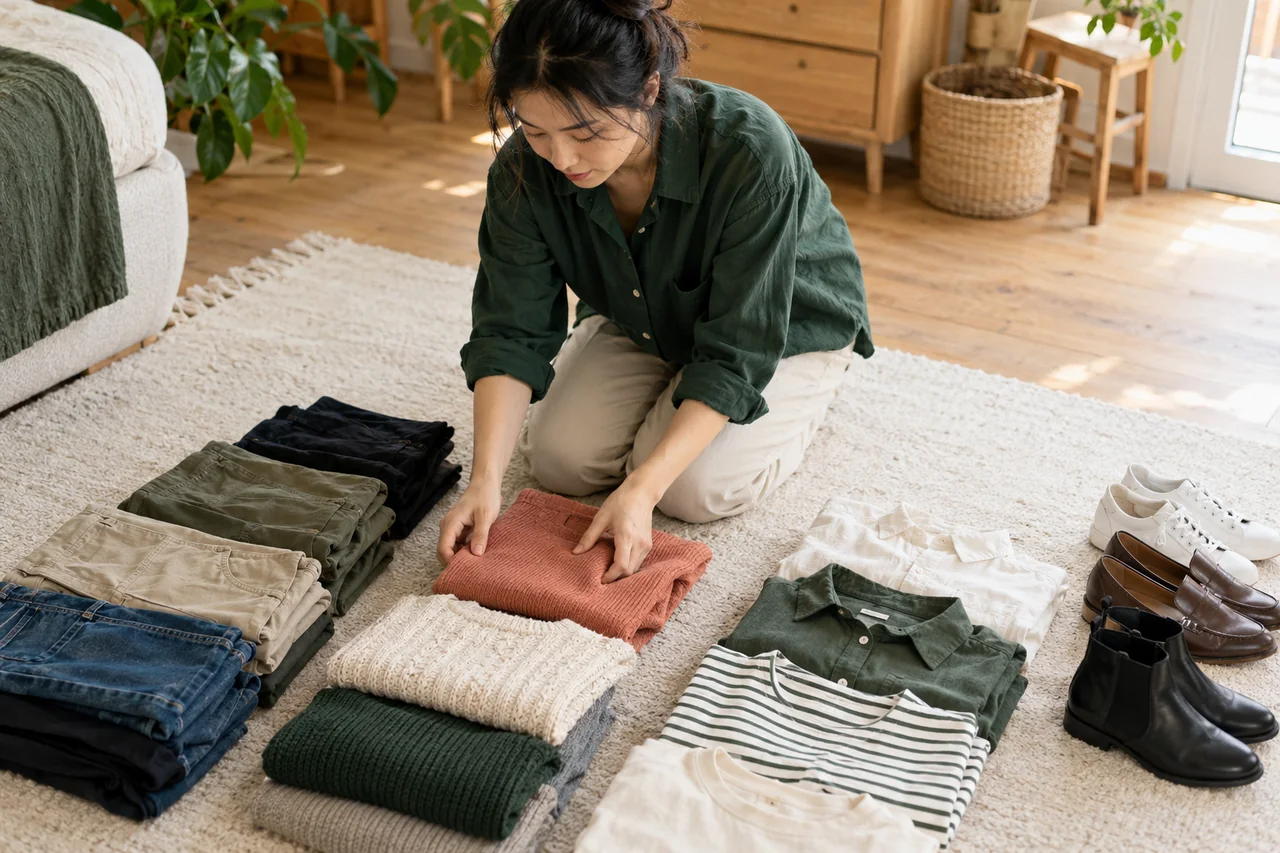
Counting garments does not show how much usable clothing you have. A simple inventory connects each piece with a task and a next step. Focus on the category that currently makes getting dressed difficult.
Use a small practical record
Create columns for category, use, condition and next action. Start with troublesome categories rather than documenting every scarf. Mark pieces in laundry, alterations or seasonal storage so the record reflects actual availability, not merely ownership.
Separate ownership from readiness
Count a piece as ready only if it fits, is clean and needs no urgent repair. A sticking jacket fastening or trousers needing an absent companion belong in a separate group with an action. Discovering fewer usable pieces first suggests care or recombination, not automatically shopping.
Map clothing to activities
For work, leisure, outdoor activity and occasional events, test two complete outfits including shoes. Note the pieces repeatedly needed to connect them. Check lengths and layers too; several attractive jackets do not help if none fits over your usual jumper or provides suitable weather protection.
Finish with three next steps
Choose at most three actions, such as altering a hem, trying two blouse combinations or finding a stored coat. Only then review remaining needs. Date the inventory and update changes rather than maintaining an elaborate record that gives no extra help.
Frequently asked questions
Must every garment be photographed?
No. Photos are useful for stored or rarely used pieces, while clear names can cover familiar daily clothes. Use a format you will maintain.
How often should I repeat it?
Season changes or major changes in daily life are useful occasions. Between them, note additions, repairs and departures; review again when the record stops helping current decisions.



Questions and experiences
Share a question or a useful experience about this topic. Every contribution is checked before publication. Comments may be written in different languages.
Loading reader contributions…
Opening the form sets a necessary session cookie. No email address is required. Publication is subject to moderation and is not guaranteed. For deletion requests: Contact