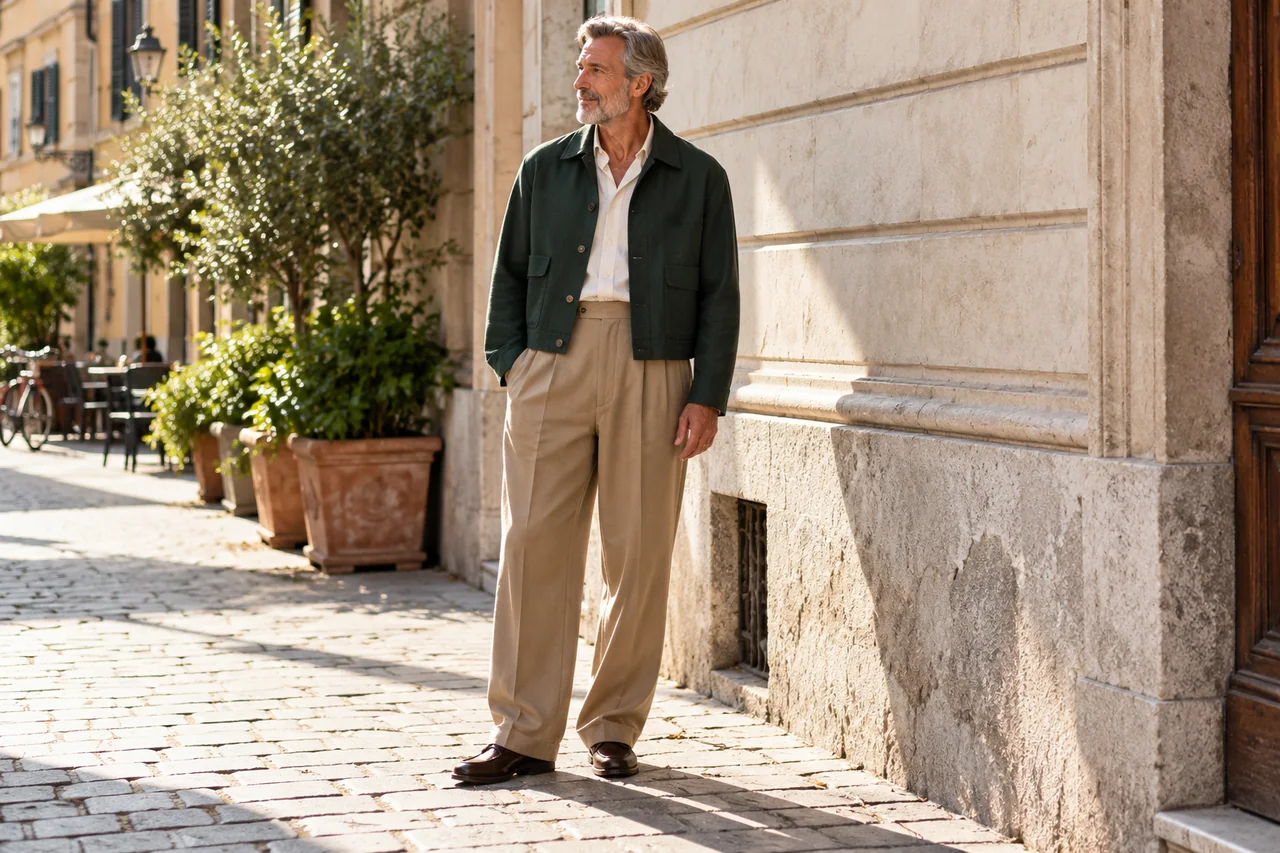
Look first at the outline of the clothes: where tops end, how wide trousers fall and what area a jacket creates. Changing one length or surface helps you see which relationship expresses your intention.
See the large areas
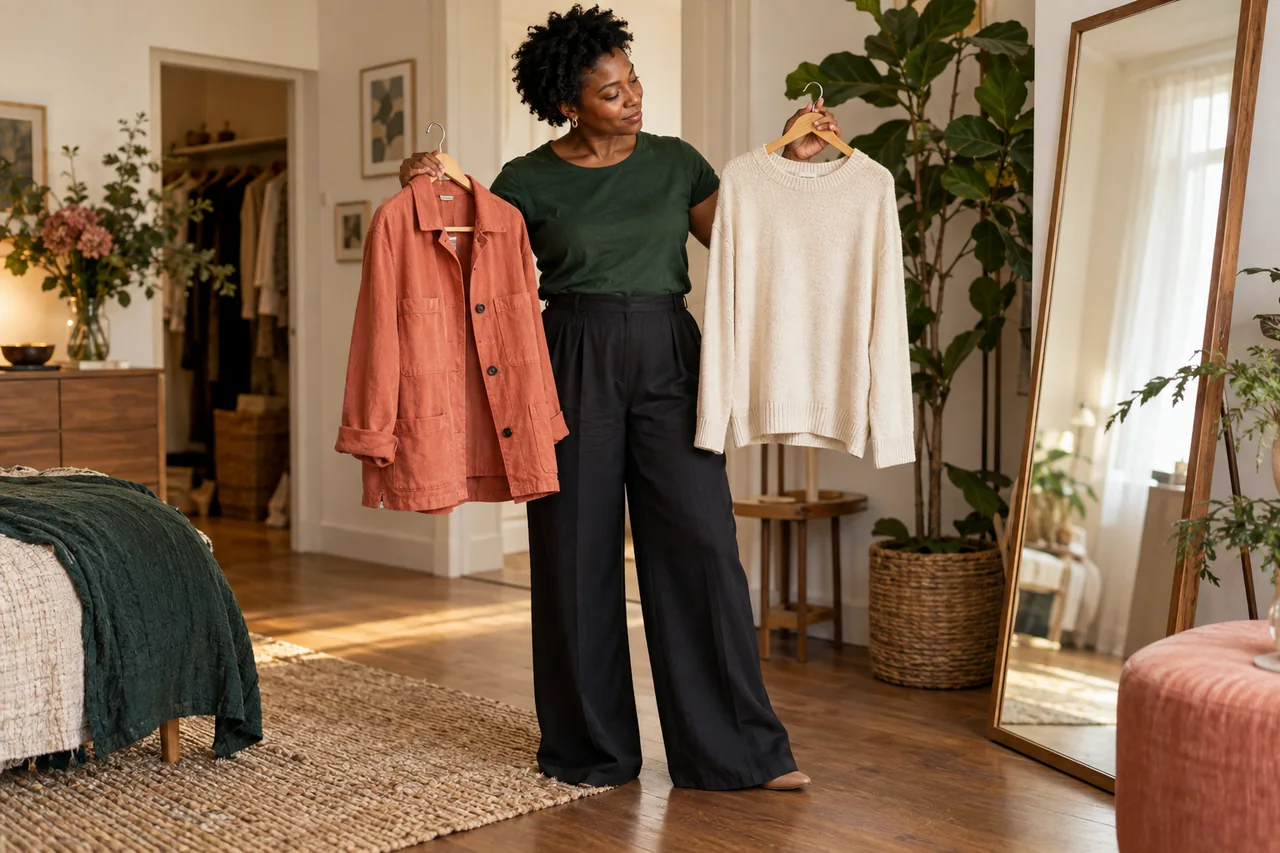
Wide trousers with a long loose jumper create continuous volume, which may be exactly right. For more division, try a shorter top or open jacket. Compare similar-angle photos without judging which version supposedly corrects your body.
Use visible transitions
Hems, cuffs and belts divide an outfit. Try a partial tuck, then move to see whether it stays comfortable. A cropped cardigan over a long dress creates a clear break. Similar shades and soft transitions can instead preserve continuity; a belt is never compulsory.
Combine volume with structure
Flowing wide trousers move differently from stiff denim of similar width. A soft wide bottom and firm boxy top can both be generous yet distinct. Review side and back views as well as movement rather than relying on a wide-with-narrow formula.
Include shoes and outerwear
Heavy shoes, fine sandals and tall boots change the lower outline. Add the real coat and review visible hems. Save successful photos with concrete notes such as short jacket over long dress instead of turning them into universal body rules.
Frequently asked questions
Must I use a rule of thirds?
No. It is one compositional experiment. Equal areas, continuous lines and strong divisions can all work when you enjoy the effect and comfort.
Can wide tops go with wide trousers?
Yes. Decide whether you want flowing continuity or clearer separation, then compare fabric structure, hems and shoes.
Questions and experiences
Share a question or a useful experience about this topic. Every contribution is checked before publication. Comments may be written in different languages.
Loading reader contributions…
Opening the form sets a necessary session cookie. No email address is required. Publication is subject to moderation and is not guaranteed. For deletion requests: Contact