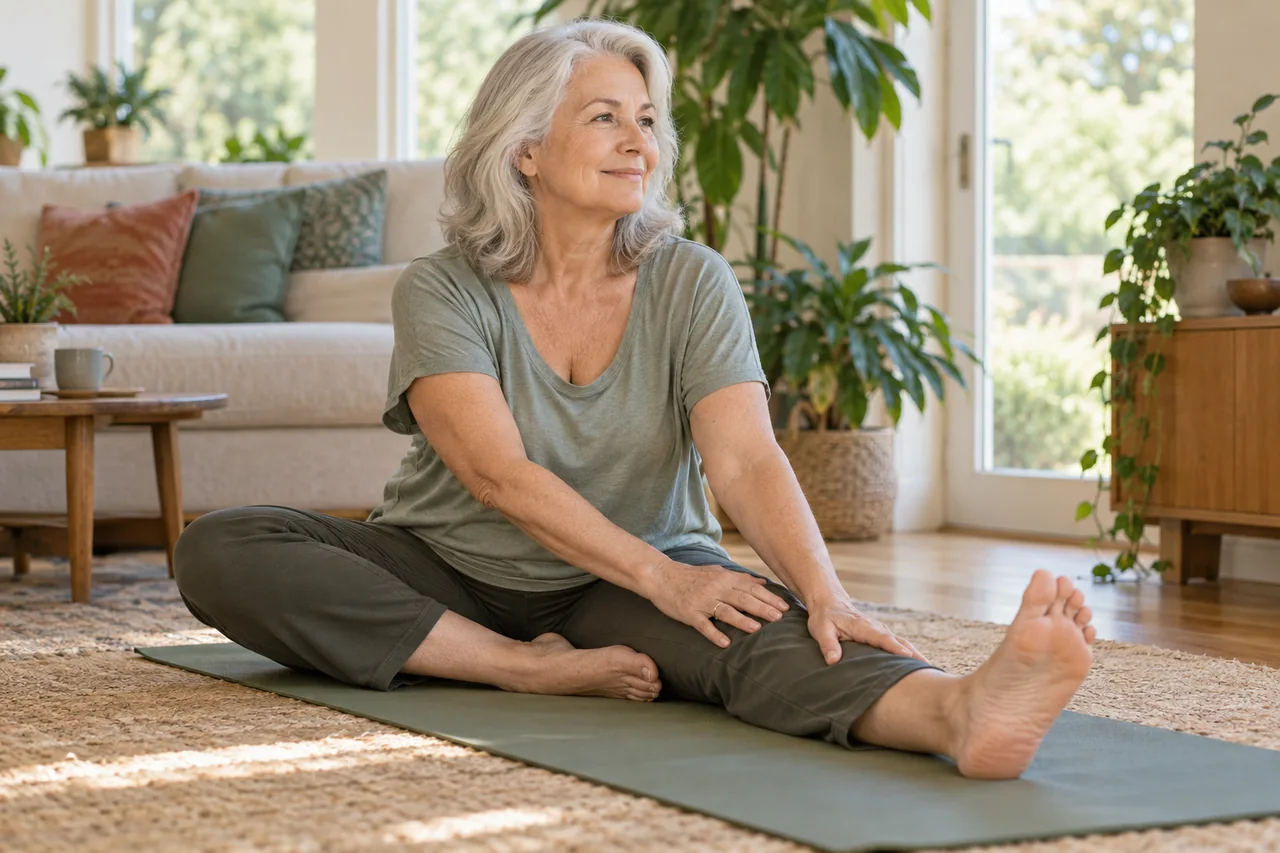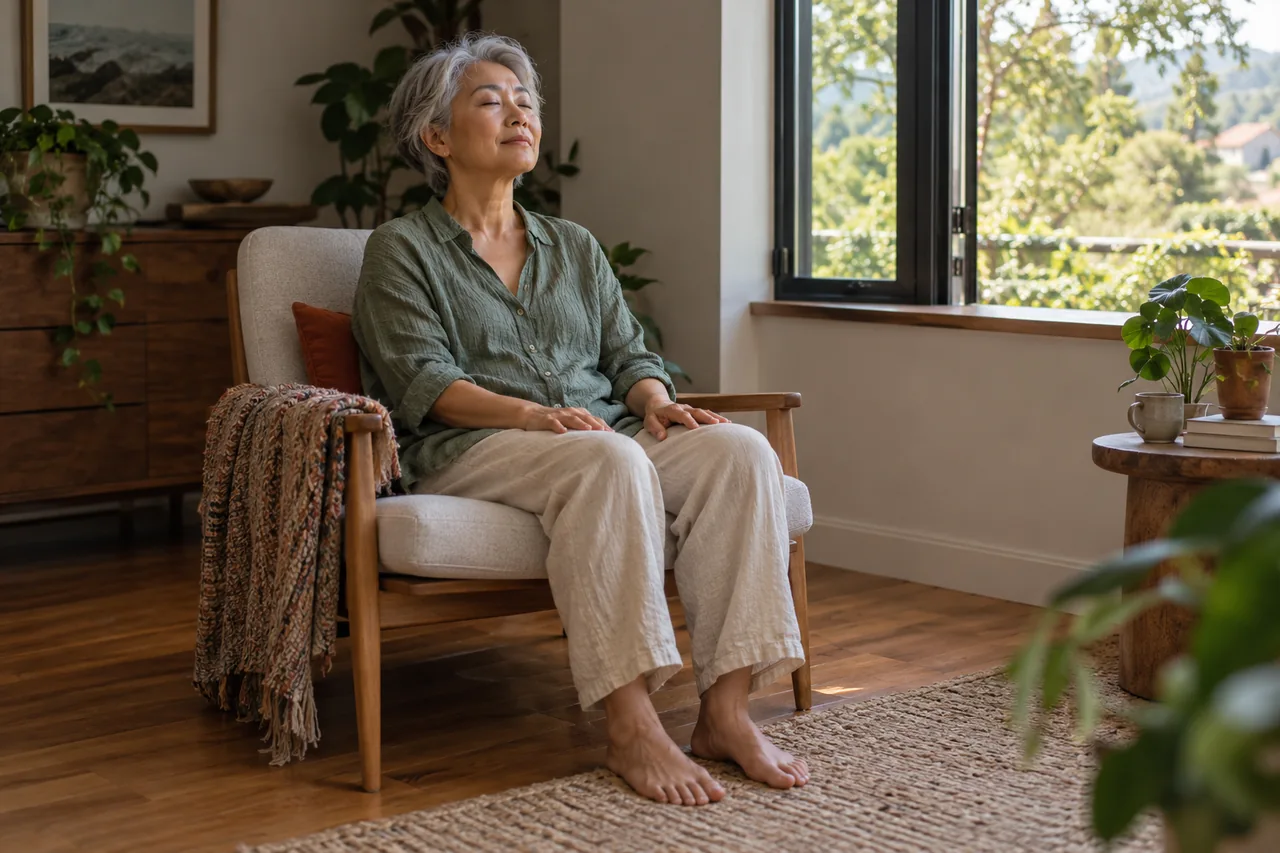
Relaxation may create a pause when body and mind feel tense. Breathing, mindfulness and gentle movement are neither obligations nor proven solutions for every menopausal symptom. You can try what feels comfortable and choose differently when a practice increases unease. A small voluntary beginning is enough.
General information, not a diagnosis or an individual treatment recommendation. Discuss persistent or concerning symptoms and treatment choices with a qualified healthcare professional.
Keep the purpose clear
A brief pause can help you notice tension and step back from demands. It does not mean hot flushes, pain or insomnia are caused only by tension. Evidence for many relaxation approaches as specific menopause treatments is limited. Choose a modest aim, such as two minutes without another task, rather than needing to feel calm and symptom-free afterwards. A realistic goal prevents another performance test.
Try simple awareness of breathing
Sit comfortably and safely, with feet supported, loosening restrictive clothing if helpful. Observe a few breaths without forcing them. Continue slowly and evenly if pleasant, without exceptionally deep inhalation or breath-holding. Continue only while comfortable. Stop if dizziness, breathlessness or unease increases and orient to the surroundings. New or severe physical symptoms need medical assessment independently of the exercise.
Mindfulness need not mean silent sitting
A quiet activity may fit better: holding a cup, noticing surroundings while walking or looking at an object. No special posture, app or equipment is necessary. Wandering attention is not failure. If noticing internal sensations is uncomfortable, choose external colours, sounds or something familiar. Past trauma or repeated intense reactions may make qualified guidance more suitable than an arbitrary online programme.
Find a reachable routine
Link a pause to an existing moment: arriving home, before lunch or before a difficult conversation. Brief repeated opportunities may be easier than a demanding daily course. Allow days when it does not fit. After a few attempts, note whether the practice felt pleasant, neutral or burdensome. A complex score is unnecessary. If it adds nothing, you may stop without guilt.
Distinguish quiet practices from treatment
Meditation, yoga, Tai Chi, progressive muscle relaxation and CBT-I use different approaches. A short relaxation video does not replace targeted care for insomnia or an anxiety disorder. Check a course leader’s qualifications, process and adaptations. Claims of reliably balancing hormones, permanently curing symptoms or making medicines universally unnecessary go beyond responsible relaxation support. Good guidance respects limits and refers to clinicians or therapists when needed.
Create relief beyond the exercise
A breathing minute may feel good while leaving an excessive workload unchanged. Also identify something to simplify, delegate or remove. Support and conditions for rest matter alongside personal technique. Arrange care for persistent troublesome symptoms even after trying several exercises. You need not first prove self-help has failed. Relaxation can remain one optional part of a wider support plan.
Frequently asked questions
Can I breathe hot flushes away?
There is no reliable universal promise. Calm breathing may help some people cope with a difficult episode, but does not replace suitable treatment.
What if meditation makes me more restless?
Stop or choose a different, externally focused activity. You do not need to endure an unpleasant method. Repeated strong reactions may benefit from qualified guidance.