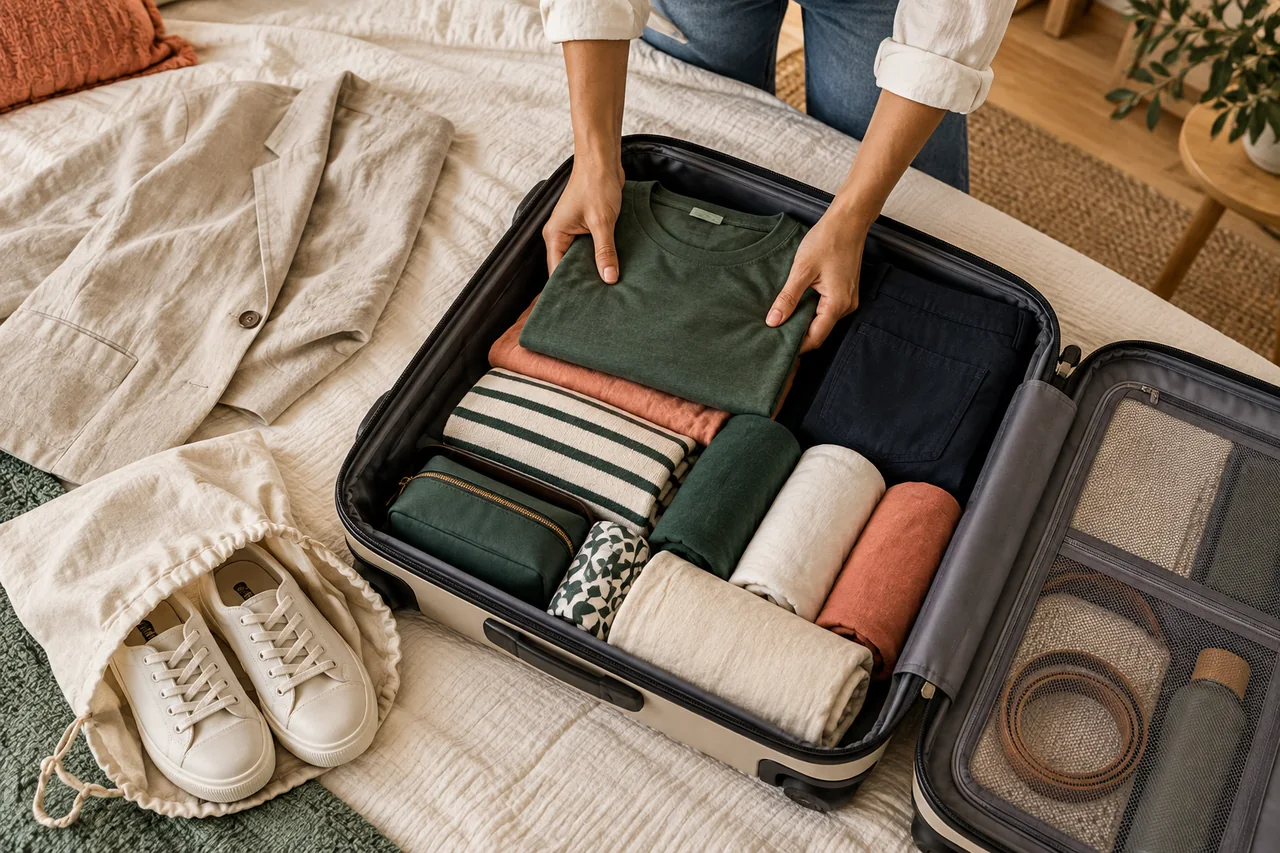
Travel clothing works best when each piece has a clear task. Build around the journey and activities, with appropriate weather protection and personal comfort, then remove duplicated possibilities that add little use.
Divide the trip into clothing situations
List travel days, ordinary days and special activities. Check weather and local requirements close to departure. Confirm washing access and drying time. If laundry is uncertain, do not make the whole plan depend on one fresh shirt on day five. Personal care and comfort needs belong in the calculation.
Build combinations with several uses
Choose two or three suitable bottoms and tops that work with more than one. A patterned dress can serve as a complete outfit, so neutral-only packing is unnecessary. Try new pairs with shoes and outerwear and photograph them rather than packing untested theories.
Give shoes and layers careful weight
Use proven shoes for expected distances; a new pair is not dependable for long walking days. Ask whether a second pair has a different task. Combine layers that work together, but remember that visual compatibility cannot replace suitable rain, cold or activity equipment.
Pack for access and reasonable reserves
Keep frequently needed items accessible. Depending on the journey, first-day essentials may belong in hand luggage if checked bags are delayed; follow current carrier rules. Cover realistic spills or an extra day without multiplying every hypothetical scenario. After returning, note unused and missing items.
Frequently asked questions
How many outfits does a week require?
Activities, laundry and reuse determine this. Plan each day’s task, then identify overlap. Clean underwear and personal needs matter more than achieving a tiny count.
Should I pack special clothes just in case?
Only for a likely occasion or important additional role. A flexible existing option may cover uncertain plans better than one garment requiring several extra companions.



Questions and experiences
Share a question or a useful experience about this topic. Every contribution is checked before publication. Comments may be written in different languages.
Loading reader contributions…
Opening the form sets a necessary session cookie. No email address is required. Publication is subject to moderation and is not guaranteed. For deletion requests: Contact