Waking drenched can disrupt sleep and the next day. Menopausal hot flushes can occur at night, but night sweats do not always have the same cause. A useful first step combines a more comfortable sleeping environment with attention to the pattern. You do not need to replace the entire bedroom or simply tolerate recurring difficulties.
General information, not a diagnosis or an individual treatment recommendation. Discuss persistent or concerning symptoms and treatment choices with a qualified healthcare professional.
Distinguish room heat from night sweats
A heavy duvet in an overheated room can cause sweating. Repeated heavy sweating in an appropriate environment is a different observation. Note whether you merely feel warm or clothes and bedding become soaked. Record medicine changes and other symptoms. These details assist assessment. A normal room temperature does not establish a diagnosis, and presumed menopause should not remain the only explanation for an unusual course.
Adapt the bed with what you have
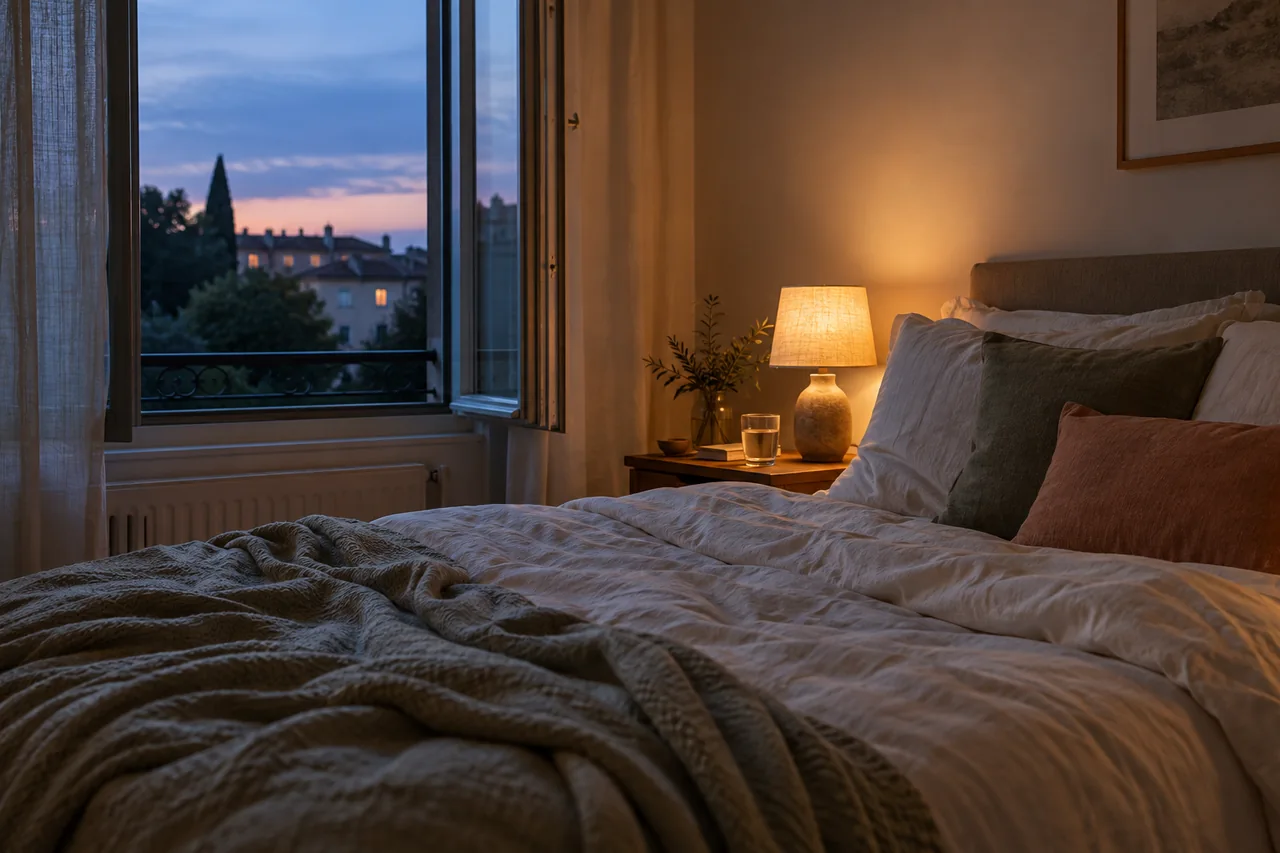
Try layered bedding or a lighter cover first. Separate duvets allow different temperature preferences. Keep a fresh top and, if useful, an easily replaced bedding layer within reach. Ensure comfortable positioning and avoid creating trip hazards. Consider material and laundering before purchasing specialist bedding. The practical question is how to make changing at night easier, not which product supposedly regulates hormones.
Choose airflow and cooling for comfort
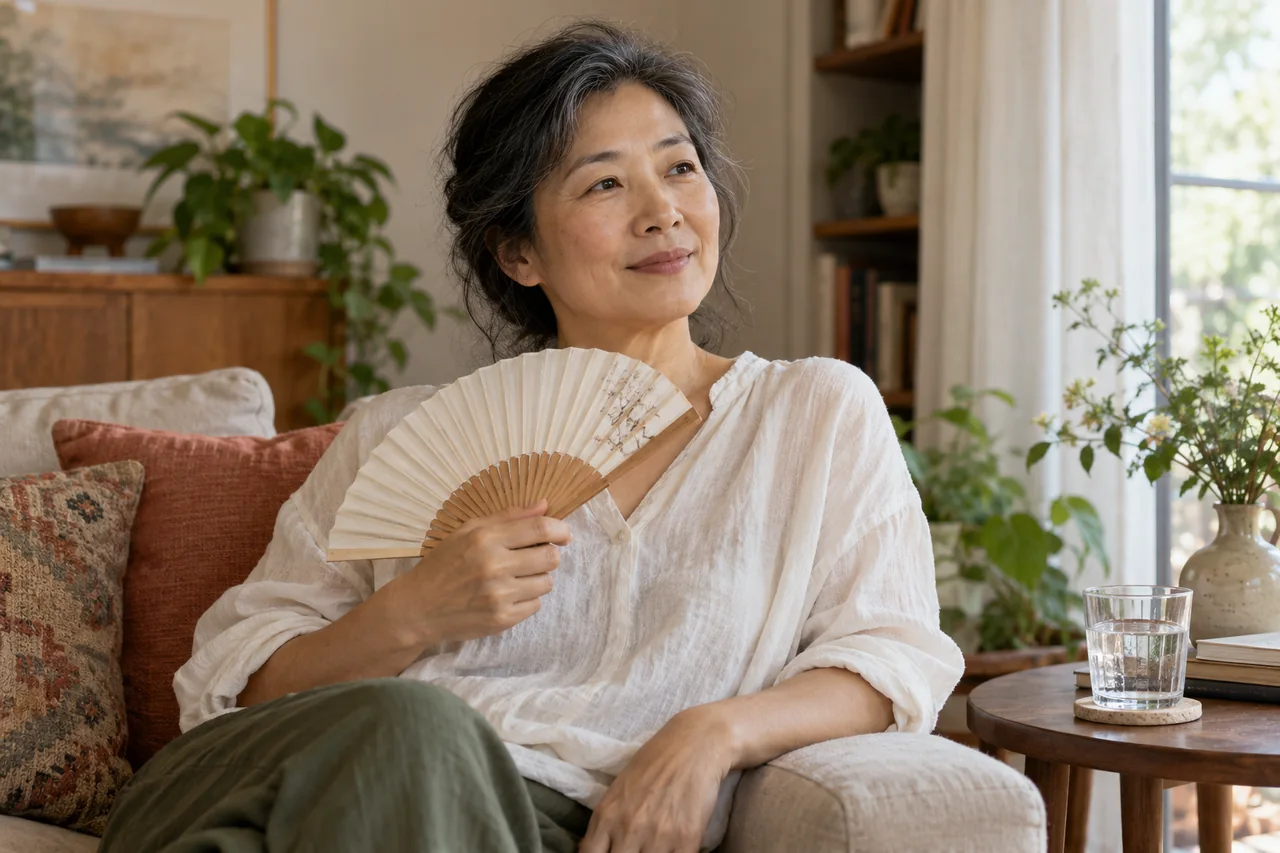
Ventilation or a fan may feel pleasant. Position devices with safe cables and a comfortable airflow. One supposedly ideal temperature does not suit every person or building. Aim for comfort without becoming cold. Noise or security may prevent an open window, but other small adjustments remain possible. Cooling here is a comfort measure and does not replace treatment when symptoms are burdensome.
Keep the work of waking small
Prepare clothes beforehand and use quiet but sufficiently safe lighting for changing. Avoid immediately analysing the episode on your phone or reading messages if that keeps you awake. A brief morning note is enough; timing every night-time minute is unnecessary. If sleep does not return after changing, a quiet activity out of bed until sleepy may help. Continuing sleep difficulties deserve their own discussion.
Know when assessment is useful
Discuss recurrent night sweats that wake or worry you, particularly with fever, persistent cough, other signs of illness or unintentional weight loss. Medicines, infections and other conditions can contribute. Explain duration and whether daytime hot flushes also occur. You need not assume a rare illness: assessment narrows likely causes. Acute threatening symptoms, such as severe breathlessness or collapse, require immediate help.
Agree a shared night-time plan
If sharing a bed, discuss arrangements during the day: separate covers, a quiet changing space or help the next morning. Planning avoids arguments when exhausted. Mention embarrassment about wet clothes or odour if relevant; these feelings need not remain hidden. For the appointment, describe approximately how many nights are affected and the daytime consequences. Successful treatment can mean more restorative everyday life, not only a lower number.
Frequently asked questions
Do I need a specialist anti-sweat product?
Not automatically. Begin with simple clothing, bedding and room adjustments. Frequent or substantial symptoms deserve assessment rather than continual product purchases. Underarm antiperspirants do not automatically treat night-time hot flushes and should only be used as directed.
Should I drink less in the evening to stop sweating?
Severely restricting fluids is not a standard solution. Drink according to your needs and any medical instructions. If urinary frequency also interrupts sleep, discuss it separately rather than trying to solve both problems by drinking as little as possible.