
Smart casual suggests a direction rather than one universal formula. A considered, cared-for combination can still feel relaxed and recognisably yours. The venue and actual activities provide the most useful guidance.
Clarify the occasion
Review time, location and activities, including standing, walking and eating. An outdoor reception differs from dinner indoors. Ask for an example if the intended formality is unclear. A visually appropriate outfit still needs to let you move comfortably.
Change one or two familiar elements
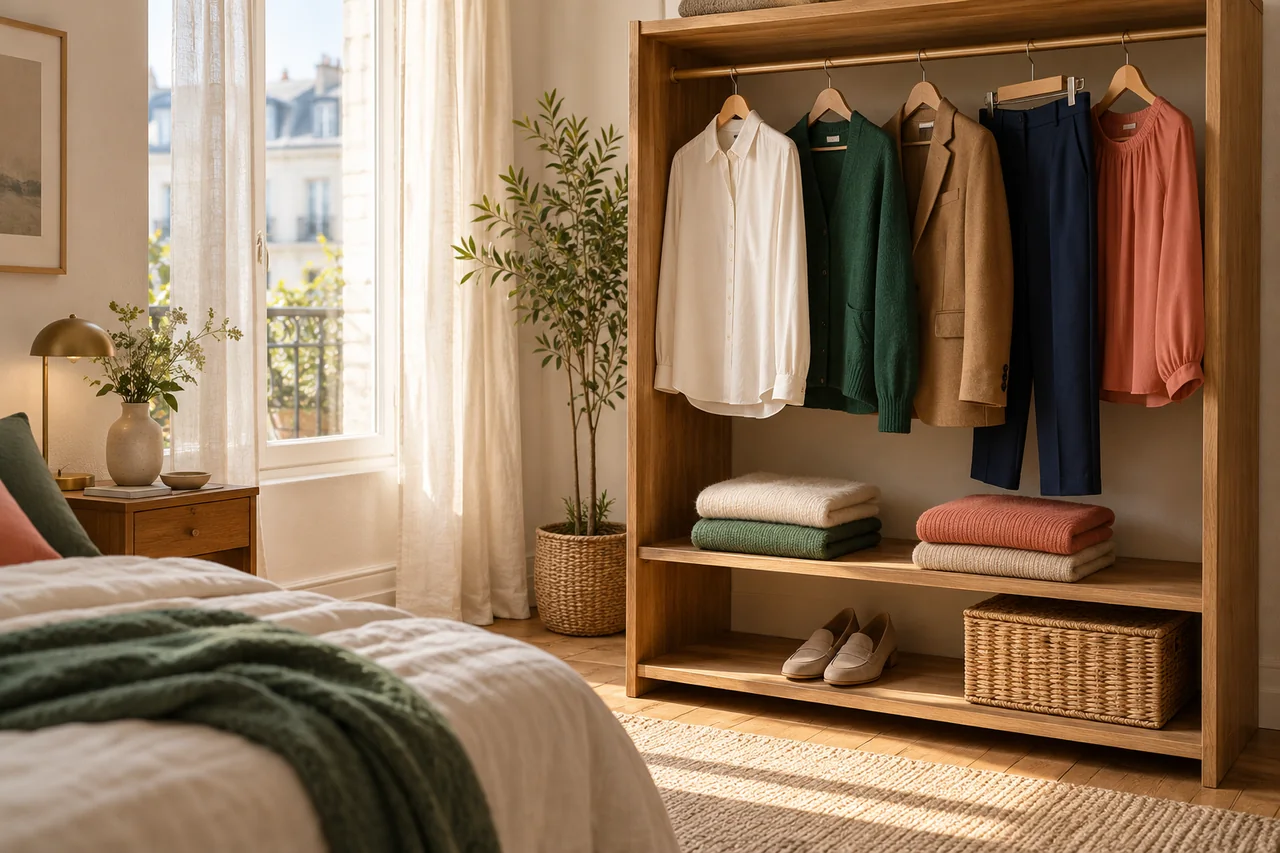
A structured jacket and cared-for shoes can alter straight trousers and a simple top. A relaxed dress can take quiet knitwear and meaningful jewellery. Repeated colours may connect the outfit without exact matching or replacing every piece.
Check condition the day before
Look for stains, loose threads, missing buttons and unreliable bag fastenings. Treat creases according to the care label. This is not a demand for flawless new clothes; ordinary wear can remain, while avoidable problems are handled before the event.
Plan the actual evening
Sit in the complete outfit and check walking comfort, outerwear and removable scarves. Review how it looks without the coat, which may be absent indoors. Prepare a weather alternative and save successful combinations with their occasion for future use.
Frequently asked questions
Is this the same as business casual?
The terms overlap, but business casual refers to work while smart casual also appears in private invitations. Specific expectations are more useful than a broad definition.
Can I wear trainers?
Possibly, if the hosts and occasion allow a relaxed interpretation. Choose a cared-for pair and assess the complete outfit; ask when a more formal invitation is unclear.


Questions and experiences
Share a question or a useful experience about this topic. Every contribution is checked before publication. Comments may be written in different languages.
Loading reader contributions…
Opening the form sets a necessary session cookie. No email address is required. Publication is subject to moderation and is not guaranteed. For deletion requests: Contact